13 minutes ago
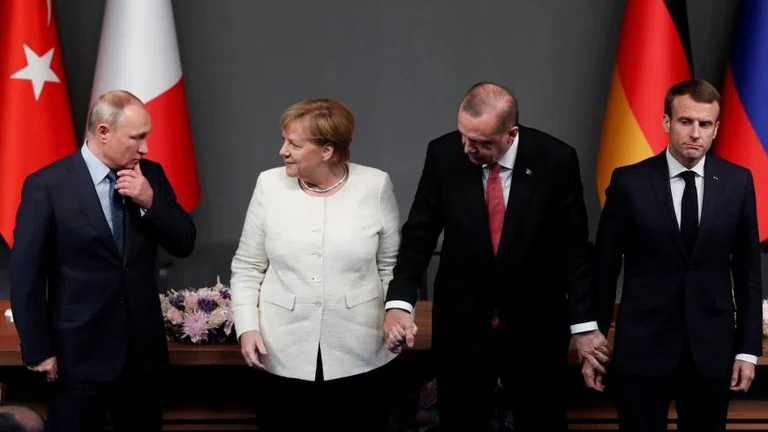
With Russia or the West, who is Turkey with?
Periskopi(4 years ago)
(4 years ago)Ukraine's unprohibited invasion of Russia has a major impact on Turkey's foreign policy. Ankara's balanced behaviour between Russia and Ukraine makes it even harder to manage this conflict. Despite some peace mediation efforts between the two sides, successes so far have been [...]
Despite some peace mediation efforts between the two sides, successes have so far been limited: a prisoner exchange, and an agreement allowing the export of Ukrainian cereals from Odessa and neighbouring ports, under a monitoring mechanism set up in Istanbul by the United Nations.
Even when Russia declared it was withdrawing from the deal, Turkey insisted that it continue, perhaps on condition that Ukraine does not use transport corridors to conceal attacks on the Russian fleet on the Black Sea. Such efforts are praiseworthy, but as such, they do not lead to peace.
If it doesn't happen in the medium term, then peace talks between Russia and Ukraine will probably be promoted by the United States and not Turkey, and because of essential military supplies and guidelines, which Washington offers to the bold Ukrainian forces.
In addition, the truth is that perhaps Moscow would not want Ankara to mediate peace negotiations, at one time NATO members would not necessarily believe the only country that has damaged the alliance's defence architecture by taking over Russian missiles.
As a consequence of this move, US sanctions on F-35 fighter planes seriously caused its air force a serious damage. In times of choice, however, publicity is important. When Central Intelligence Agency Director (CIA) William Burns met with Russian counterpart Sergei Naryskin in Ankara on November 14th, the Turkish intelligence agency made sure to specify that the meeting was held at their headquarters.
In addition, when Ankara first spoke against NATO accession of Finland and Sweden for its domestic reasons, it damaged Turkey's image within the alliance in a historic period for the European continent and the Western world.
It is impossible for this stalemate to end soon, as Turkey's charges against Sweden are exclusively linked to the Kurdish movement in the latter. The bomb attack on a very frequent street in Istanbul's heart on November 13th showed once again that no political cause can justify the excessive murder of innocent people.
Even though the attack was condemned by the Kurdish-related Democratic People's Party (HDP), Kurdistan Workers' Party leadership (PKK) and Syrian People's Protection Units (YPG), security authorities immediately spoke of links between the arrested suspect and the PKK.
So Turkish authorities have turned Kurdish terrorism into a major cause for the 2023 election campaign. The next steps could include more military action against PKK militias in northern Iraq, and with Russia's permission, perhaps even in the Kobe region in Syria; a possible HDP ban on participating in elections; closing the mouths of opposition parties and media on this topic (a ban was imposed immediately on media news on terrorist attacks); and renewed accusations against the United States on supporting the Kurdish forces fighting the Islamic State (ISIS).
More generally, the war between “and” will inevitably be transformed into a key electoral campaign framework. Where does this complex group of issues leave European and NATO, and their electoral consequences?
Internal politics is like always the first. With inflation officially at 80 percent and with a wrong policy of interest rates, the Turkish economy is in a very poor state, but generous measures to help the poor, teachers, students and other voter groups are being declared by the government, but not to mention details about their financing.
Right at these current leadership segments, it aims to win the votes it needs to continue its ruling stance. Meanwhile, strict control of media and civil society will ensure that the real state of the country's economy is not discussed very clearly. The newly adopted law on mismanagement will help.
Turkey's foreign policy will be put in service of domestic political initiatives, to show that in difficult times the country needs a leadership capable of resisting pressure from outside forces and to impose its own independent course.
Several cases will be specifically used to gather the nation around the flag, and shut the opposition coalition down: non-communications on maritime borders with Greece (if not the importance of the Lozana Treaty itself), negotiations on a two-state solution to Cyprus, and new military operations in northern Syria.
The irony is that Greece's most combated narrativas, accompanied by more discussions on direct or indirect recognition of the Turkish Republic of Northern Cyprus “ “Republic of Northern Cyprus” and for battalions sent to Kobe, Syria, would directly undermine Turkey's international position, both politically and financially.
It remains to be seen what the opposition coalition's 6-party electoral platform will propose. So far, this coalition has been joined mainly by joint opposition to President Recep Tayip Erdogan. Its internal ambitions are clear that the return to the parliamentary system, the restoration of the rule of law and fundamental freedoms and movement towards a more rational economic policy, but its proposals on foreign policy are much less known and timed.
Therefore, publication of a comprehensive platform is expected. If the opposition coalition will be able to unite its actions and remain united, it will be a strong test for them, but also for Turkish democracy. / By Marc Pierini “Carnegie Europe”. Abcnews. al