37 minutes ago
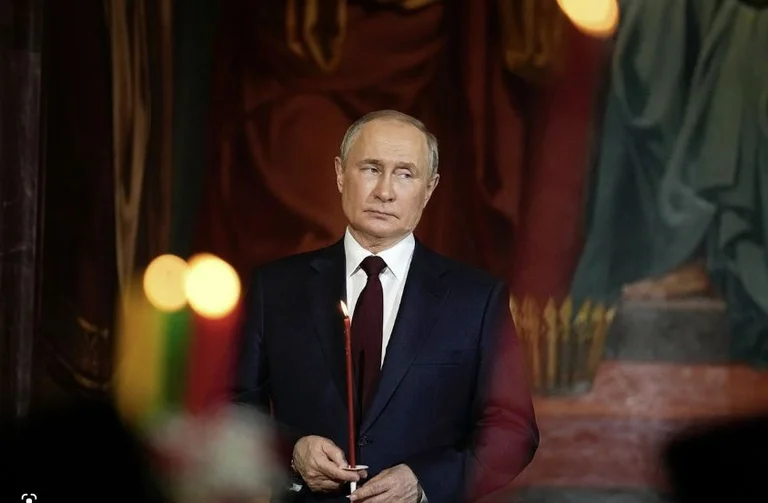
What will Russia be like without Putin?
Periskopi(4 years ago)
(4 years ago)The current situation in which Russia is militarized, isolated, corrupt, dominated by security services and the most talented who are moving abroad to escape engagement in a brutal war. With the hope of a quick end to this reality of [...]
In hopes of a quick end to this grim reality, some look forward to Vladimir Putin leaving the post. But to change Russia is not enough to leave Putin's post or death.
Russia's future leaders must dismantle and transform the structures through which it has ruled for more than two decades. And this challenge is frightening, to say the minimum. But a group of politicians are drafting a plan to realise the transformation of this country.
Made up of prominent opposition figures, as well as new representatives from local and regional governments, Russia's First Congress of Popular Deputies met in Poland in early November. The site, the Jablona Palace on the outskirts of Warsaw, was symbolic.
The first negotiations that led to the end of communist rule in Poland were once held. There during the three days of intense debate, participants submitted proposals for rebuilding their country. Taken together, they constitute a serious effort to imagine Russia without Vladimir Putin.
Of course, the first and most urgent priority is the invasion of Ukraine. All convention participants oppose the war that they assume either Russia will lose or lead us to a nuclear disaster, reports Abcnews.al.
To cope with the consequences and prevent a repeat tragedy, they propose the adoption of a “ax on peace”, which would privatise the army and end the invasion of Ukrainian territory, including the Crimea; the establishment of a joint group for investigating war crimes; the payment of damages for the damaged infrastructure and the families of the victims; and the refusal to engage in the next “invading wars”.
In addition to offering a curb on future expansionism, this promise would provide a real account of the history of Russia's imperial occupation. Officials responsible for the destruction must leave something that has never happened after the collapse of the Soviet Union.
Congress would stop working in state and educational institutions all of those belonging to antix0 criminal organisations” such as Federal Security Services or state television channels or publicly supporting war, as well as restrict voting rights.
It will also create a “-Putinisation commission to review the rehabilitation of specific groups, including those who publicly refused to fight and committed particularly serious crimes, and that would open the archives of security services. Then it's Russia's own structure.
The Russian Federation is highly centralised, with over 80 republics and regions under strong dependence on the president, enabling the Kremlin's chief to accumulate great powers. Relying on visions of decentralisation since the fall of the Soviet Union, Congress proposed the break-up of the Russian Federation and its replacement with a new parliamentary democracy.
According to a draft diaspora formulated on the principle of <x0 <x0vendosje”, the future Russian state needs “to join on the basis of free choice by people who populate it”. Sharing with the current pattern can well correct failed promises of the past. From Vladimir Lenin to Boris Yelts, modern Russian leaders have a history of offering decentralisation to gain support, and later of its refusal as soon as they consolidate their power.
Although all federal subjects are legally equal according to Russia's current Constitution, inequality continues a fact that has been highlighted by the non-professional commitment and the death of soldiers coming from ethnic minorities from the poorest republics like Daguestan and Burythia in the war in Ukraine.
Reviewing the issue of their greater sovereignty, for example, may allow the separatist republic of Checenia to secede from Russia following its brutal submission from Putin, enabling regions and republics to renegotiate the distribution of resources and balance of power, reports Abcnews.al.
This move would create a more fair place by undermining Russian nationalism. Congress is more unclear about its economic plans. One of the programme points promises to review the consequences of privatisation” conducted during the 1990s (which led to the establishment of Russia's oligarchs), while another aims to cancel the highly unpopular pension reform Putin undertaken in 2020.
However, there is no commitment to building a strong social security network or the debate over Russian economy transition from its dependence on energy exports. And that's a huge flaw. As since the 1990s, when privatisation and free elections were implemented simultaneously, wealth and power have been combined.
Political and economic reforms cannot be seen as isolated from one another.
And that's not the only obstacle. The congregator and the convention's principal sponsor was Ilya Pomomarev, an entrepreneur of left - handed technology. Being the only member of the Russian parliament to vote against the Crimea annex in 2014, he left the country, took Ukrainian citizenship and now heads a Russian-language news channel in Kiev.
A very controversial figure in Russian opposition circles, he hailed in August the murder of Daria Dugina, daughter of pro-Kremlin philosopher Alexander Dugin, saying the assassination was the work of a secret partisan army within Russia.
This unconfirmed claim angered his opposition colleagues. Pomarev was then not invited to a forum organised by old Kremlin critics Garry Kasparov and Mikhail Khodorkovsky. Despite domestic disagreements, the Russian opposition has a slightly different vision of the future.
Mr. Khodorkovsky and Alexei Navalny, the country's best-known dissident, who is currently serving sentences in a high-security prison, have also called for turning Russia into a parliamentary democracy with more power transferred to local and regional levels.
But Navalny's associates did not attend the congress, nor did Casparov or Khodorkovsky. His legalisation already challenged by a number of Russian anti-war organisations who said he did not represent them was questioned by some participants, some of whom left in protest of what they saw as a lack of equality and transparency in the way the activity was being conducted.
Such a confrontation does not help the proposals, which may seem distant in relation to when it can be implemented. However, history shows that radical developments are often prepared from abroad or under secret, abcnews.al reports.
During the end of the 20th century and the beginning of the 20th century, political immigrants in communities across Europe plotted the collapse of the Russian Empire. Among them was Vladimir Lenin, who lived in Poland early in World War I.
For now, while the majority of Russia's population is forced to shut down and while others are losing their jobs or freedom for expressing opposition, the possibility of Russia's transformation seems distant. But change can occur just when less is expected.
Early in 1917, an extremely pessimistic Lenin said that perhaps he would not live long enough to see the revolution occur. But just a few weeks later, Cary fell from power. Russia is no longer condemned than other countries to repeat the past. Time to re-imagin her future is just now.
Note: Joy Neumeyer, journalist and historian of Russia and Eastern Europe. / By Joy Neumeyer “New York Times” D-Abcnews. al