17 minutes ago
Missing journalist in Turkey ends up in Iranian Revolutionary Guard handcuffs
Periskopi(4 years ago)
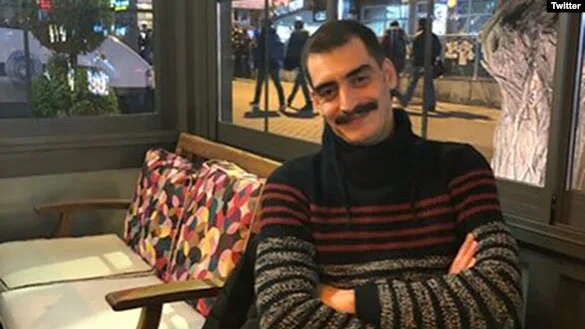
(4 years ago)An Iranian dissident journalist, who disappeared in Turkey in May, is currently arrested by Iran's powerful Islamic Revolutionary Guard, reported on Radio Free Europe (REL) sources that have knowledge of the issue. Mohammad Bager Morad had been expelled from Iran in November of last year, since he was [...]
Mohammad Bager Morad had been expelled from Iran in November last year, after having been arrested “illegally” in Turkey for five months, Salih Efe, a Turkish lawyer representing the journalist's family, told REL.
Morad's family said he had left his home in the Turkish capital, Ankara, on 30 May to buy bread and had not returned. A day later, his car was found abandoned near his home, Turkish media reported.
Turkish media reported that Morad's family, who had visited by Tehran, reported their son's disappearance and told the local prosecutor's office that they suspected he had been kidnapped. Despite an investigation, Morad was not found.
In June, Turkish media quoted the journalist's father, Mohsen Moradi, as saying his son was “stolen” from “Iranian intelligence”.
After several months of silence, Morad carried out a short telephone conversation with his family on November 4th and informed them that he was in Iran, in custody by “intelligence troops”, told REL sources that have knowledge of the case. Morad told his family that he had been sent to Iran several days before calling them, sources said, adding that the journalist has since made two more calls with his family.
Sources said Morad is being held by the Islamic Revolutionary Guard intelligence arm, which stands behind the arrests of several journalists, activists, environmentalists and citizens of dual citizenship in recent years.
Last week, Morad's father was questioned by the Revolutionary Guard over his son's activities in Turkey, sources said. They added that Garda told him to advise his son to make an admission of guilt that would be broadcast on television.
Iran forces political prisoners to admit the crimes and often their confessions are dictated by investigators. Many former prisoners have indicated that they have been forced to make such statements.
<x0)
Morad, 34, fled to Turkey in 2014 after being sentenced to five years in Iran on charges of conspiracy against the state.
Efe, the Turkish lawyer representing Morad's family, told REL that the opposition journalist had won asylum in Turkey. He said Morad's secret expulsion to Iran was a flagrant violation of Turkey's law and international law, including the United Nations Refugees Convention.
Efe said Morad told his family he was kidnapped by Turkish intelligence officials and kept in an unknown location until he was expelled from the state. The lawyer said Morad has been questioned and tortured during holding Turkey.
This could be the fourth or fifth illegal and secret expulsion of an Iranian political shelter from Turkey to Iran”, Efe said. “I think Turkey cannot be considered a safe state for Iranian refugees”.
Turkey, located on Iran's western border, is one of the main destinations for Iranian dissidents and activists leaving the state. But it has also become the main place where dissidents are being followed by Iranian intelligence, or those working for Tehran security agencies. This has raised concerns about the security of Iranian citizens. Morad's fate likely raises these concerns.
London-based Iranian activist Peyman Aref, former refugee in Turkey, told REL that Morad had said a year before being kidnapped that he felt threatened by Turkish intelligence agents.
The last “Vitin he spoke to Clubhouse and found that a person... who works for Turkish intelligence is trying to recruit Iranian”, Aref said, referring to an audio-application that has become a major platform in social media for dialogue among Iranians. “He concluded his statement saying that further Turkish intelligence will be directly responsible for whatever happens to me”.
In 2017, Aref was expelled from Turkey to Lebanon after being arrested by Turkey's security forces, his lawyer told REL Radio Farda.
Aref claimed he was expelled from Turkey after refusing to co-operate with Turkish intelligence.
Iran is known to have killed or kidnapped some opposition figures in exile in recent years, including journalist Ruholah Zam.
Zam, leader of the popular opposition channel in Telegram, Amad news, was executed in Iran in 2020 after being found guilty of charging “corruption on Earth” -- a charge involving cases of spying or attempting to bring down Iran's government.
Zam had lived and worked in France before being arrested in 2019 under unconventional circumstances. According to media reports, the dissident was allegedly deceived by Iranian agents to go to neighboring Iraq.
Habib Chaab, founder and former leader of the separatist group, the Arab Movement for the Liberation of Ahvazi (ASMLA), disappeared during a trip to Istanbul in 2020.
A month later Chaab appeared on a video published on Iranian state television, taking responsibility for conducting an attack and co-operating with Saudi Arabia intelligence services. Chaab, who had lived for 14 years in Sweden, later appeared before trial. (Rel)