13 minutes ago
Leon Trotski's shocking confession of Serb massacres against Albanians
Periskopi(4 years ago)
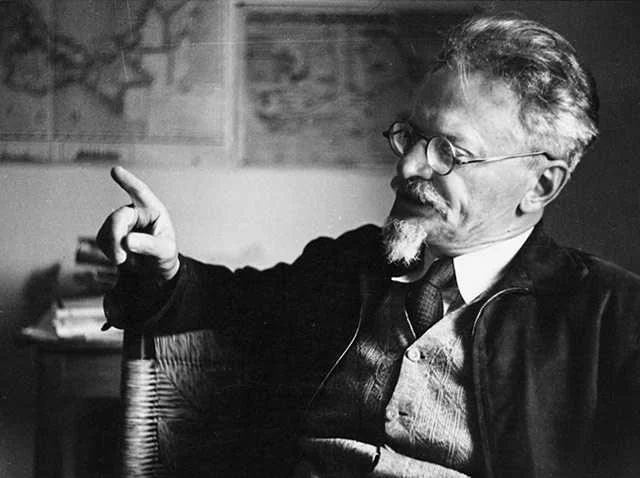
(4 years ago)Leon Trotsky, the Russian revolutionary and a leading figure of the October Revolution, second only to Lenin, has witnessed the shocking massacres of Serbian soldiers against Albanians since 1912 in the famous Ukrainian newspaper Kievskaya Mislú. He would later be founder and commander of the Red Army and the People's Commission for War, but, [...]
He would later be the founder and commander of the Red Army and the People's Commission for War, but under Stalin, he was expelled from the Communist Party and expelled from the Soviet Union in 1928. Trockety was eventually killed in Mexico by a Stalin agent. His ideas formed the base of the tropics, a principal school of Marxist thought.
Long before the Russian revolution in September 1912, Trotsky was sent to the Balkans by Kiev's newspaper “Kievskaya Misl” as war correspondents to cover Balkan wars in Serbia, Bulgaria and Romania. The following is one of the articles Trotsky returned to his newspaper, a report on atrocities committed against Macedonian and Kosovo Albanians in the continuation of the October 1912 Serbian occupation.
Leon Trocket's shocking reports of the violence and Slavic genocide against Albanians in 1912-1913 for the newspaper íevskaya Melí.
After the curtain of Balkan wars
I have had the chance, luckily or unfortunately to visit Skopje, a few days after the Battle of Kumanovo. From the beginning, I was irritated by Belgrade authorities over the permit of circulation. Of the obstacles the Ministry of War has made, I have begun to think that the people who led the war did not have a clean conscience, and from there down there, they were performing actions quite differently than they were shown in the official press. This impression or feeling has reinforced me with the case of meeting an officer who had stayed in Skopje with the soldiers of the General Staff.
This officer I've known for a long time was an honest man. However, as soon as he found out that I was going to Skopje, since I had actually obtained permission to go there, he with an open hostile attitude told me that I should not go there and he didn't understand what Belgrade was doing, according to him, when he allowed the “foreigners to go to Skopje. In Vranje, at the border with Serbia, when he realized that I would not change my decision, the Serbian officer changed his voice and began preparing me for the sights I would see when I arrived in Skopje. These are unpleasant things, but unfortunately, they are inevitable”, he told me. All this has to be admitted to making me even more suspicious. This means that the evil deeds, which were heard of as far as Belgrade, were not random, were not separate and isolated cases, while an officer treated them as the “nevoja of the state”. Someone had to have information on this. Who? Army? Or the government? I learned the answer to these questions as soon as I arrived in Skopje. The sadness began but we just crossed the border. At 5:00 p.m., we're close to Kumanovo. The sun was setting, and darkness had already faded away. The more dark the flames went up. They were burning everything around us. All Albanian villages, near and far away, had been turned into fires of fire to the railway. It was this particular example of a terrible war that I have seen in the fighting zones. For a moment the wealth of those people, inherited from their ancestors ' grandparents and hard earned, was turning into flames. This fiery monoton has followed us all the way to Skopje. I got off the wagon I drove. The whole city was silent, there was no one alive on the street, just in front of the train station there was a group of soldiers, where drunken voices were spread. Each one went his own way, and I was left alone at the station. I went to the band of soldiers. Four soldiers kept the dungonettes on standby. Among the group of soldiers stood two young Albanians, with white plowshares. A soldier who was drunk, had his knife in his hand, and in his other hand was the bottle of raki. Centik ordered Albanians to lie down. They, half dead in fear, sat on their knees. After the next order they get stuck. He repeats this several times...
Then the unethnic, insulting and threatening, led the tip of the knife to other victims. You make them drink rakhi, then... kiss them. Drunk with power, rakia, and blood, he had fun playing with them like a wild cat with rats. Same actions, same psychology. The three other drunken soldiers stood by preserving that Albanians were running away or would object until the centum was entertained. These are “Arauutus”, a soldier tells me, “tas will be crushed” I left the group for fear. There was no point in trying to protect Albanians. They could be rescued from these soldiers with only one armed force. This whole scene was playing at the train station, when the next train arrived, I left to not hear the terrible screams and calls by Albanians for help...
The streets of the city and the city itself were so quiet that it seemed to be desolate. All the doors were closed from six in a day. Once night falls, the Chetniks start their jobs. They violently infiltrate the homes of Albanians and Turks, performing their acts of murder and robbery. Skopje had 600,000 inhabitants, of whom half were Albanians and Turks. Some of them had certainly fled, but most were left. And now, at night, crimes are committed against them. Two days after my arrival in Skopje, the first thing to be seen in the morning was the mass of Albanian corpses with broken heads under the Vardar Bridge, just in the city's centre. Some said they were Albanians who had been strangled by the Chetniks, others said they had brought water from the river. One thing was, those people weren't killed in combat. Skopje had returned to a common military camp. Populations, especially Albanians and Muslims, were hiding in the streets from being seen by Serbian soldiers. Among the soldiers' mass are Serb villagers who have come here from different parts of Serbia. Acknowledging that they have come to find their sons and brothers, they pass through Kosovo robbing. I've talked to three of those <x0horbars”. The youngest of them, a short man of “trims, is praised for killing two Albanians with his rifle, but two others had escaped. His fellow villagers, old villagers, confirmed his confession.
“One thing is not good”, they complain. “We don't have money with us. Here you can get as many horses as you want. The soldier's salary is two dinars (75 flocks). The soldier goes to the first Albanian village and takes the first horse he finds. You can obtain a feather for 20 denarii through soldiers. Serbs from the killing district are massively heading towards Albanian villages in order to grab everything they find. Serbian women have also loaded on their backs doors and windows they have taken to Albanian villages.
Meanwhile, two soldiers arrived. They are part of the Cetres, which disarm Albanians. A soldier asks where he can exchange a lira. I asked him to show me the lira, since I had not seen Turkish coin. The soldier first looks at the side, then pulls the gold out of the bag, confessing that there are others, but he doesn't want to confess the amount. A Turkish lira trades 23 francs. More soldiers came. I was listening to their conversations. “I don't know how many Albanians I killed”, says one, “but I haven't found anything worth taking. And when I took a new bride's head off, I found 10 lira” in her. Their exploits they speak quite freely. This is common to them. People do not realize how many internal changes they have brought about only a few days of war. It can be seen how far one depends on the circumstances. Under the barbarous organization of war, people soon become brutalized, and they may not even understand it. A platoon of soldiers was marching Skopje's main road. A drunk, in all likelihood, a foolish Turk began to curse. The soldiers stopped. They supported the Turk to the nearest wall and shot him on the spot. The platoon went on, just like the population on the street. That evening at a restaurant I met an officer I knew. His unit has been stationed in Ferizaj in the centre of Albanians, Serbia's old “”. With his men, the sergeant has pulled a large dangerous ball during the march from Kocan to Skopje. This ball is sent to the army, which has surrounded Edrene.
I ask you.
We're cooking birds and killing ants. We're already tired of”, he says, making greas and opening his mouth from fatigue.
There's a lot of rich people between them. Near Ferizaj, we entered a rich village with houses like castles. The owner was a wealthy man who had three sons. There were four males and many women. And We brought them forth from their houses, all together, and We set them in ranks, and We cut off the men before their eyes. Women have not cried for fear. They asked us to come in and get their clothes. We allowed them. They gave us a gift. Then we've set fire all over the place...”
- How can you act so brutally?
I don't even know how to teach. At another time, I would not have been able to kill an innocent elder or child. In times of war, as you know, the commander commands you and you must follow the order.
- A lot like this has happened in a while. During the ride of that ball to Skopje, we met a cart along the way, in which four men were lying up to the belt. I smell iodine all the time. Something was suspicious, I was thinking. I stopped the cart and asked who they were and where they went. They were silent, reasoning that they did not know Serbian. With them was only the carpenter, a Magjup, who told us that the four injured had participated in the fighting in Merdar. They were injured and were now returning home. I knew what they were.
Get down “, I command.
They understood what I was saying, but they hesitated.
What can you do? I put the shit on my rifle and I stabbed the fourth... ”
I knew that man. He was a waiter in Kraguyevc. Man with no quality. Not by nature, waiters, like all waiters in other countries. There was also one time at the Camera Union. He was even a secretary, but he left... Now look what he's back on!
Why do you act like bandits, you're killing and robbing, no matter what?
The superior found himself in a difficult situation. Looks like something's crossed his mind. Then, trying to reason with himself, obedient and serious, he spoke a phrase that cast even more black than I had seen and heard.
- “No. That's not it. We, the regular army, strictly respect the rules, never kill anyone younger than 12. I'm not sure I'm telling you anything about Centiles. They're on their own. I can assure you of soldiers”. The sergeant didn't provide for the centiles. And they did not really accept any restrictions. Recruited from among the unemployed, the disabled, the vile and the worthless, from the lower crowd, they engaged in their savagery with crime, robbery, and violence. Acts were a great witness against them. Even the military and state felt inadequate about such bloody banals of degenerate Cets. They were forced to take measures and still without the end of the war, disarmed them, and returned them to their homes.
I was unable to endure that atmosphere further, I had no stomach to endure them. Political interest and moral awareness, to look at how such things are done, sank. I already had only one wish: Back as soon as possible. I found myself in the car again. I was looking at the whole fields around Skopje. What a beauty, what a width. People could live well here. What good it is to speak when you know these ideas yourself, only those in that country sounded ten times stronger. Fifteen minutes from the train's departure, I looked outside and saw a corpse with a lyses on my head, face to face, and hands stretched out. About 50 yards to the railway were standing two Serb guards, part of the forces guarding the railway. Surely this was their work. Get, away, just get out of this place first.
Not far from Kumanovo, in a meadow near the railway, soldiers were digging a large hole. I ask him what that hole was opening up for. I was told that the hole is opening for broken meat, located in ten or 15 trucks, which were stationed along the way. The soldiers had not taken the meat they had met. All their food needs, even more, were taken from Albanian homes: cheese, milk, honey. At that time I have eaten more honey taken from Albanians than I had eaten throughout my life, a soldier whom I knew tells me. Each day, Serbian soldiers slaughtered oxen, sheep, pigs, chickens, which were eaten and discarded. We don't need meat. How many times we have written to those in Belgrade not to send us meat, but they do so under the rules”. This is how things stand when viewed closely. The flesh perishes, both flesh and beast, the villages are burned to the ground, the people are being cast out. “People over 12 years”... all brutalized, losing their human face.
War is coming to the surface as the top and most importantly, you'll see the crimes if you reveal a little bit of the curtain that's redependent on the actions of “er” soldiers...