18 minutes ago
The government heard America: A “jeopardises” The license plate plans to repel northern integration
Periskopi(4 years ago)
(4 years ago)The Kosovo government has had to listen to suggestions from partner countries, the United States of America and the European Union, regarding its decision on plates, opposition deputies and former Kosovo diplomats say. He can do that now, they say, even though the implementation on November 1st has started in the phase of this decision. The decision [...]
He can do that now, they say, even though the implementation on November 1st has started in the phase of this decision.
The ruling in question envisions reregistering Serbia's license plates for Kosovo citizens, considered illegal.
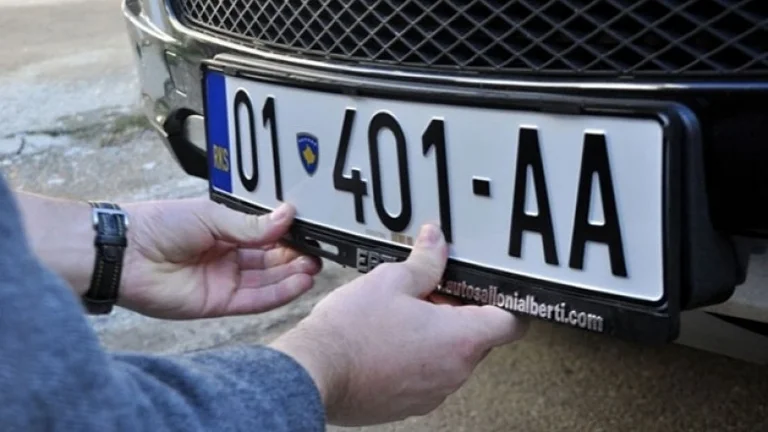
The Kosovo government, led by Prime Minister Albin Kurti, requires that cars with such license plates, which circulate mainly in the Serb-run populated north, be reregistered with RKS plates, or the Republic of Kosovo.
The government of Serbia, which wields influence over Serbs in northern Kosovo, opposes, insisting on neutral plates to Kosovo's status.
Last summer, the issue has caused tensions in the north, for which the implementation of the decision has been postponed for some time.
The US and the EU have demanded that implementation be delayed for another ten months, though they have stressed that Kosovo is right in this decision.
Despite that requirement, the government has started implementing its plan on 1 November. Its first phase envisions the rebuke of drivers with illegal license plates, the second fine and the third test plates.
From April 21st, according to the Government's decision, only vehicles with RKS plates will be allowed in circulation.
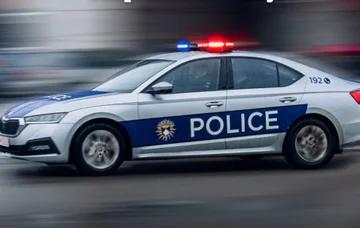
On Thursday 3 November, the regional police director in northern Kosovo, Nenad Djurovic, was suspended from work due to, as it said, refusal to implement the Government's plan for the license plates.
This decision of Kosovo institutions was condemned by official Belgrade, while the Serb List ʹ the main Kosovo Serb party warned of abandoning Kosovo institutions in the north.
The Kosovo government, so far, has not given any signal for the possible postponement of the Targa decision, while in terms of the international community's demand, earlier, has said that “has shown constructive and creative in addressing the sorrows that its allies share for the region”.
Rashit Qalaj, deputy of the Kosovo Assembly from the ranks of the largest opposition subject, the Democratic Party of Kosovo, says the Kosovo government should take into account the US demand and postpone the decision on license plates.
“The escalation on the ground is expected, due to threats and decisions the Serbian state is taking. I don't believe that northern citizens would make any resistance without the insistence and threats Serbia's president is making”, says Qalaj for Radio Free Europe.
Serbia's president, Aleksandar Vuciq, has said Serbs will make “existing”, if “Pristina seizes their properties”, but no more specified.
In late July, before the process of reregistering cars began, some Serbs in the north rebelled and set up barricades.
To calm the situation and with the international community's suggestion, the Kosovo government postponed implementation of the decision.
Kosovo Assembly MP Time Kadrijaj, from the other opposition party, the Alliance for the Future of Kosovo, says the government has had to and should consult Western partners, especially with the United States, for any decision linking with the north of Kosovo.
There should be reconciliation with the US. Let him hear, if he's asked for a deadline, because we're seeing what's happening”, Kadrija says.
AAK leader Ramush Haradinaj wrote on November 3rd in his Facebook account that “unless the prime minister [the verdict] changes the course of action and doesn't comply with American requirements immediately, he is certainly slipping into treason”.
MPs from the Democratic League of Kosovo ʹ have also said they have no position yet on whether the government should withdraw from implementing the license decision.
Avni Spahiu, former ambassador of Kosovo to the United States and Turkey, tells Radio Free Europe that none of the international partners has disputed the legitimacy of Kosovo government's efforts to convey sovereignty in the country's north.
According to him, the demand for delaying the Targa decision has been more political, due to possible circumstances and tensions in northern Kosovo.
Spahiu says the Government of Kosovo has been able to assess this request before the start of implementing the decision on license plates, and adds that it can do so now.
“Of course it can [remove], although now the consequences would be greater, politically. But such an act does not mean that it cannot be done... to say clearly that we are doing this at the request of our partner, the United States of America, who have had such a great contribution to Kosovo independence”, Spahiu tells Radio Free Europe.
The Serbian list, which enjoys official Belgrade's support, warned that on November 5th it will propose the removal of Serbs from Kosovo institutions in the north, including judicial, police and others.
She, as well, said Serbs should strengthen and build its” institutions in the north, in co-operation with Serbia.
MP PDK, Rashit Qalaj, says this is not the first threat of its kind from the Serbian List. He does not expect Serb members of the Kosovo Police in the north to abandon the institution because, according to him, they are needed for the community's own security there.
But, as Qalaj says, abandoning other institutions is possible and, if that happens, he adds, the situation could return in 2011, at a time when Kosovo and Serbia did not have the dialogue to normalise relations, respectively.
There could then be other consequences, because when you don't have representatives in institutions... In this case, mayors of municipalities in the north have been elected by Kosovo laws and if they decide to leave their positions, and the minister [for communities, Goran] Rakiq and other representatives, then we have a situation, which was overcome many years ago”, says Qalaj.
Kadrijaj similarly estimates that the eventual abandonment of institutions by members of the Serb community would bring the processes back.
We don't have the luxury to go back in time, because it's taken a long time to try to integrate Serbs into all institutions. The actions that this Government is doing are disturbing”, Kadrijaj says.
Members of the Serb community, living on the southern side of the Iber River, have been participating in Kosovo's local and central institutions since the war in 1999. Northern Serbs became part of them in 2014, as Kosovo and Serbia reached the first agreement on normalising relations in 2013.
Former Ambassador Avni Spahiu says the language of blackmailing and threatening Serbian List to Kosovo authorities is not new. According to him, its eventual withdrawal from institutions cannot have legal effect and no effect on the functioning of the state of Kosovo.
The truth must be told, because not only with this threat [of the Serbian List], but also with their position in Kosovo institutions, they have been working all the time against the interests of Kosovo and against the state of Kosovo. This should be known and must be said publicly even in the talks we have with our partners. Indeed, the Serbian List is a protracted hand of Serbia in Kosovo and by no means a legitimate representative of the Serb community's interests in Kosovo”, Spahiu says.
The Serbian list has threatened on several cases of suspension of institutions, including one in 2020, when the director of the Office for Kosovo in the Government of Serbia, Petar Petkov, has said Serbs would abandon Kosovo institutions unless the Association of Serb Major municipalities is formed.
After this statement by Petkov, Goran Rakic, the president of the Serbian List, then deputy prime minister in the Kosovo government, has said they will consider when to abandon Kosovo institutions. Such a warning, however, has not been materialized.