5 minutes ago
Germany: Kosovo status no longer be “
Periskopi(4 years ago)
(4 years ago)The Berlin summit expects the signing of agreements, funds for energy reform in the region, but also clear messages. “Alternal crema”, German Chancellor Olaf Scholz's favorite togword, has entered the Berlin Process jargon as well. Government circles from Berlin said on Tuesday that the “History package has already arrived for him [...]
“”, German Chancellor Olaf Scholz's favorite toll, has also entered the Berlin Process jargon. Government circles from Berlin said on Tuesday that “the truth moment has come to Ukraine” for all Western Balkan countries and that “are expected to learn lessons from the new reality, created since the Russian invasion in Ukraine,” said a senior official near the German Chancellor in Berlin Tuesday.
“There is no room for” conflict
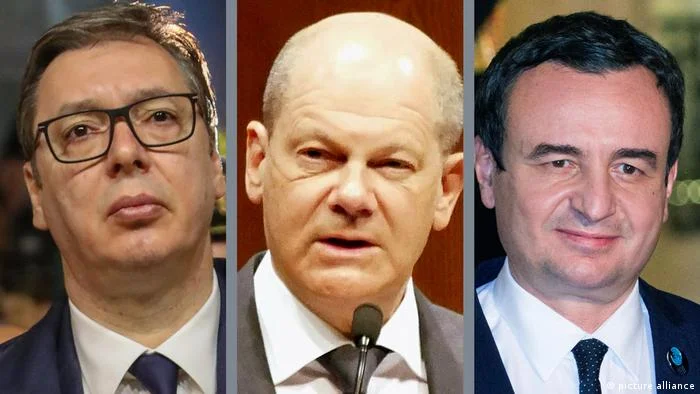
Clear messages are expected to be heard at the address of Kosovo and Serbia. Germany and France are currently making diplomatic pressure for the two countries to agree with their proposal for normalising relations. “Today, there is no room for such conflicts, with explosive potential, such as between Kosovo and Serbia”, the official said.
According to him, these are also French President Emmanuel Macron's clear expectations and German Chancellor Olaf Scholz. “The status quo is unacceptable. It can't be continued so that status can be turned into a fighthole on any case”. According to him, this is also why Germany and France have emerged with a concrete plan for dialogue. According to Serbia's president, Vuciq, he predicts Serbia, without having to recognise Kosovo's citizenship, will pave the way for Kosovo's membership in international institutions, especially the UN, and in exchange to receive economic benefits and faster EU membership.
Agreement signing expected
Unresolved status between Kosovo, Serbia is one of stones preventing progress Common Regional Market, which is the focus of the Berlin Process. Since the Berlin Process was initiated in 2014, by then German Chancellor Angela Merkel, only the removal of rotary tariffs has been experienced. Four Mobile Agreements Reached At the Sofia hybrid summit in November 2020, They remained blocked due to disagreements between Serbia and Kosovo.
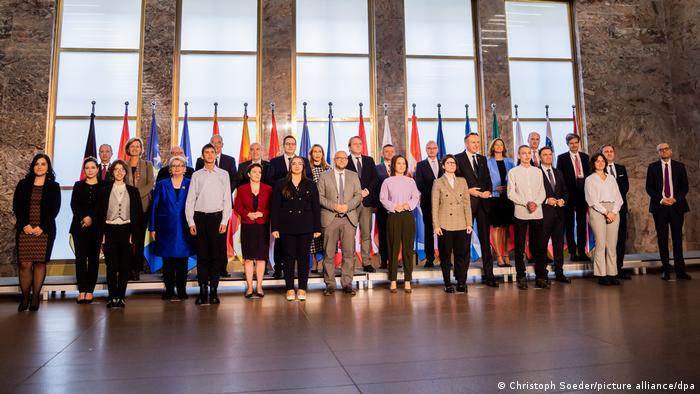 The conference of foreign ministers of the Berlin Process on 21 October 2022 in Berlin. In addition to the six Western Balkan countries, and Germany, there are representatives of the European Commission, the Czech presidency, as well as of eight EU and British countries.
Therefore, the signing of three, expected to take place on 3 November in Berlin, is considered by Germany as significant success. German government envoy to the Balkans, Manuel Sarrazzin, and the Regional Co-operation Council, which is headed by former Albanian Minister of European Integration, Majlinda Bregu, have made many negotiating sessions with the six Western Balkan countries to finally achieve a diplomatic language acceptable to all sides. Three agreements allow citizens' free movement only with ID cards, mutual recognition of diplomas, and recognition of professional qualifications.
Energy Fund
German Foreign Minister Annalena Baerbox called them <x0historic” last Thursday, at the Berlin Foreign Ministers' Conference. For Germany, which has the Western Balkans in focus on its policy, they are a hope of making substantial progress in other areas, both in the security and energy sector.
According to sources near German Chancellorship, countries in the region urgently need to cope with energy supply straits. On Thursday, EU Commission President Ursula von der Leyen is expected to promise assistance to weather winter, but also grants for reforming the energy sector in the region. Even here, the precondition is for countries to be willing to co-operate with each other, is announced by the Chancellor. Last week in Berlin, the energy ministers of the Berlin Process gathered to discuss the issue.
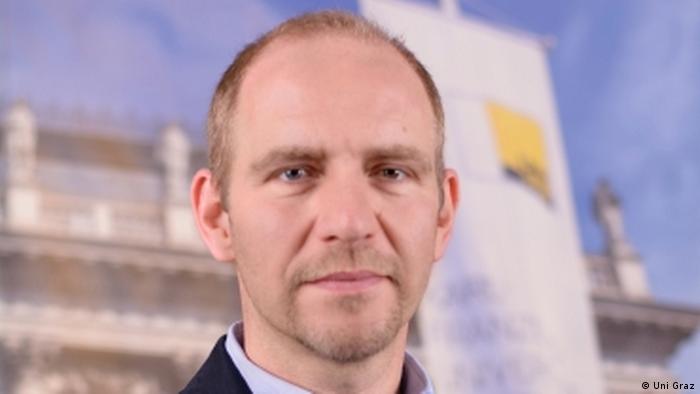 Florian Bieber, director of Southeast European Institute in Graz, Austria
The expert for the Western Balkans, Florian Bieber, tells DW that the agreements to be signed are an attempt to signal that the Berlin Process is more oriented towards concrete successes. But Bieber says the biggest challenge is their living. There have been many memorandums and decisions over the past eight years, but they have often been implemented only partially, because no one has controlled their implementation. The current host country has often set up a new agenda and line up all previously made agreements”, Bieber said. / DW/