11 minutes ago
EU expects response from Kosovo government for new Serbian license proposal
Periskopi(4 years ago)
(4 years ago)The European Union is awaiting Kosovo's response to a proposal concerning the issue of Serbian license plates, which during Tuesday the Special Envoy for Dialogue Miroslav Lajcak has presented to Kosovo's chief negotiator for dialogue, Besnik Bislim, during their meeting in Brussels. That's what free European diplomatic sources [...] have said about Radio Europe.
Sources have confirmed that it is about the proposal to urgently resolve the issue of implementing the decision to change Serbia's illegal license plates in order to avoid tensions in northern Kosovo.
Kosovo's chief negotiator in dialogue with Serbia, Besnik Bislimi, said on 16 November in Pristina that “ka elements that we have discussed the possibility of exits from the crisis, but there is no agreement of”.
He stressed that he does not know what will happen on November 21st, because “we are in talks”.
Kosovo's government on 1 November has started implementing its plan for reregistering cars with Serbian illegal license plates on plates RKS, Republic of Kosovo.
The second phase will be implemented from 21 November and envision fines of up to 150 euros for all drivers of Serbian illegal license plates.
The Kosovo government wants these vehicles to be reregistered with license plates from the Republic of Kosovo, RKS, but Serbia opposes, insisting on neutral plates to Kosovo status.
If the Kosovo side gives answers during the day to this proposal, and depending on that response, the EU's envoy for dialogue, Lajcak, can visit Belgrade to talk to the party from Serbia.
EU sources have reiterated what the High Representative for Foreign Policy and Security, Josep Borrell, had earlier said, that a solution must be reached by November 21st.
One of the possibilities mentioned by diplomatic sources is to extend the deadline for changing plates, for ten months, but the Kosovar side, according to the same sources, has demanded from the EU and clarification on what its position will be after it expires such a deadline.
The EU does not question Kosovo's right to replace car plates, but has so far demanded that this be done by respecting the deadlines for which the EU thinks they have another ten months.
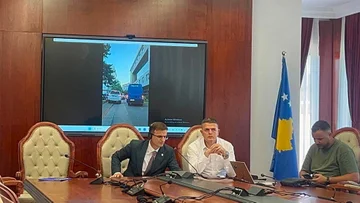
During a discussion with the “Enlargement Report: What's in it for Kosovo? ”, organised by the European Union Office in Kosovo in Pristina, Besnik Bislimi said all steps that are being taken in relation to the situation created in northern municipalities are to establish the law, but possibly without creating tensions.
Otherwise, the Government's plan envisions that all cars with Serbian license plates be converted into Kosovo plates until April 21st, 1923.
There are about 9,000 cars with such license plates circulating in Kosovo's north, inhabited by Serb majority since the post-war, 1999.
In sign of opposition over the Kosovo Government's decision, from November 5th Serbs have left Kosovo institutions in four municipalities in the north: Northern Mitrovica, Leposaviq, Zubin Potok and Zvecan.
The resignations have also been given by the mayors of these municipalities.
Kosovo President Vjosa Osmani has announced December 18th the date for holding elections in these Serb-run municipalities.
But, while the Central Election Commission in Kosovo has started preparations for organising early local elections in northern Kosovo, the Serbian List has said that this party and citizens supporting it will not be part of this election process.
The United States and the European Union have called on the Kosovo government not to start implementing the second phase for license plates that envision fines of up to 150 euros.