17 minutes ago
BQ: The average inflation rate at 2023 is expected to drop to 6.2 per cent
Periskopi(4 years ago)
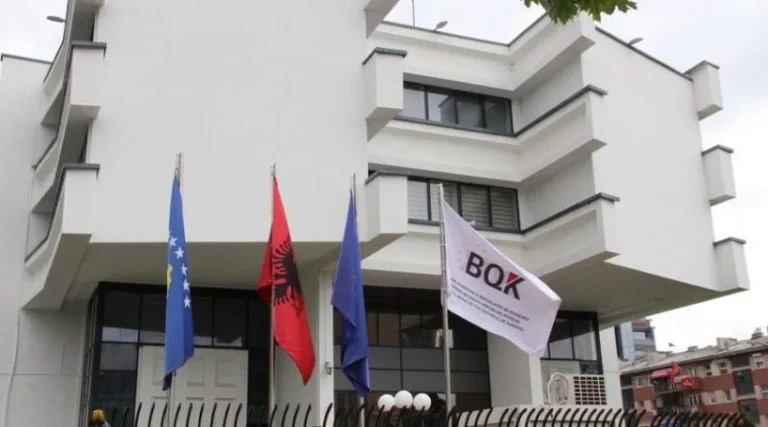
(4 years ago)The Central Bank of the Republic of Kosovo (BQK) has announced that according to its projections, the average inflation rate for 2022 in Kosovo is expected to be 11.6 per cent, while expected to drop to 6.2 per cent during 2023. “According to developments so far and unless additional obstacles are presented in supply chains and [...]
“After the current developments, and unless additional obstacles are presented in supply chains and global trade and prices dynamics on international markets, inflation in Kosovo is expected to reach 13.5 per cent during TM3 2022, and drop to 12.3 per cent during TM4 2022x1>, the Kosovo Republic of Kosovo Central Bank report for “Future Endition of Economy” says.
Bank expectations for inflation, according to the report show growth trends during 2022, but remain below the level projected by the CEC and below the current inflation level so far, RTKlive reports. “To ease the impact of inflation on the economy, the government has taken some measures that include setting the ceiling prices for derivatives (diesel, gasoline, and gas) from June, as well as the approval of the package for inflation worth 150m euros, which are designed to subsidise electricity bills according to criteria that stimulate energy savings, wage increases in the private sector, and a long-term increase of social and pension schemes and financial support for different categories<1x>, the Kosovo Central Bank's report on Kosovo Central Bank, <VEVEVEVEVE of the Euroset.
The CEC estimates that Kosovo's budget has marked the primary budget deficit of 58.4m euros to TM2 2022, as a result of higher budget revenues compared to expenditures, while public debt has dropped to 20.8 per cent of BPV.
According to the report, budget revenues during TM2 2022 reached net 587.6m euros (11.4 per cent growth), while budget expenditures reached 529.2m euros (10.1 per cent increase) and therefore, Kosovo's budget registered the primary budget balance of 58.4m euros during this quarter.
The financial system, according to the CEC, has been characterised with stability and with no materialised risk during TM2 2022, despite concerns about economic slowdown, inflationary pressures and increased uncertainty in international markets.
The bank sector has managed to ensure high levels of capitalisation and liquidity, as well as to maintain low levels of non-aligned loans over the years, which has resulted in increased development of the sector's absorption capacity. While the country's direct exposure of the banking sector to the war in Ukraine is very limited, risks from unfriendly geopolitical developments, macroeconomic and financial development are estimated to have been transmitted mainly indirectly through pressure at price level”, says the Central Bank of the Republic of Kosovo report for “The Three-month economic assessment”.
Even the insurance sector turns out to have maintained the level of increased activity a year ago, favoured by the highest level of cash collection and slower increase in paid damages. According to the CEC, the sector has operated profitably, affecting further reductions in accumulated losses over the years.
With accelerated growth in assets, the microfinancial sector was also characterised, largely attributed to increased credit activity. The financial health indicators also point to stability of the sector in general, while the financial outcome turns to be the highest since the sector's consolidation. In the following periods, the dynamics of increasing interest rates in international markets are expected to reflect on increased financing costs for the microfinance sector”, the report says.
Even foreign trade turns out to have recovered from the marked decline in the preceding quarter, with the growth of exports of goods and services for 13.6.8 per cent respectively, while import of goods and services has scored an increase of 18.0 per cent, respectively, in real terms, while the net export deficit was lower for 16.3 per cent.
According to the CEC, the export of services amounted to 499.6m euros in TM2 2022, an annual increase of around 60.55 per cent. “Exports to services marked significant increases as a result of increased export of services in the travel category, which amounted to around 346.33m euros. In TM2 2022, revenues from the travel utility category had a 16.4 per cent turnout in the total BPV generated in the country. High annual growth of 33.2m euros is also noted in the export of computer and telecommunications services, which reached 52.1m euros in TM2 2021. Import of services during the TM2 2022 has marked growth, with import value in all services reaching 264.66m euros -- an annual increase of 34.3 per cent compared to TM2 2021. The higher growth has also been noted in import of transport and travel services, linked to increased costs as a result of increased primary goods prices”, says the Central Bank of the Republic of Kosovo report on “Tresumption of Economy”.
For direct foreign investment in TM2 2022, The CEC reports it amounted to 210.78m euros, or 74.16 per cent more compared to TM2 2021. The largest <x0.62 per cent increase in capital and investment fund of around 129.12m euros, or 57.62 per cent increase compared to TM2 2021. While the debt instruments marked increases of 36.7m euros or 21.4m euros more than in TM2 2021. The IHD structure remained unchanged, largely concentrated in the real estate sector (56.92 per cent of the total FDI in TM2 2022) and the financial sector. This rise in FDI in real estate among other things could also be attributed to increasing input prices for the cost of construction that marked annual growth of 19.8 per cent during TM2 2022. The performance of companies in other sectors was good where the balance of reinvested to the laugh was for 89.0 per cent higher compared to TM2 2021”, the report said.
Also until June 2022, active loans amounted to 4.12 billion euros, which represents an annual increase of 17.4 per cent.
Within the framework of loans for non-financial corporations, the trade sector is the most credited over the years, followed by that productivity, which has gradually expanded in recent years, as well as construction.
“Creditium to the agriculture sector, despite support from the Kosovar Fund for Cremor jet (FKGK), continues to have very low weight. By June 2022, lending to the productivity sector had the highest contribution to the total increase in loans for the non-financial corporate segment, marking more accelerated annual growth of 45.6 per cent (37.2 per cent in the preceding year), or 158.8m euros. Also, lending to the trade and construction sector marked growth of 108.0m euros (10.7 per cent increase) and 62.8m euros (21.5 per cent growth), but is slower than the previous year (13.4 per cent and 36.1 per cent”, the report says.
While the value of the deposit stock at the end of June 2022 reached 4.83 billion euros, presenting an annual increase of 8.0 per cent, down from 14.7 per cent in June 2021. /Periscopi/