8 minutes ago
Bissley interview with Periscope: Deal is reached only if the parties are put before it, leave it
Periskopi(4 years ago)
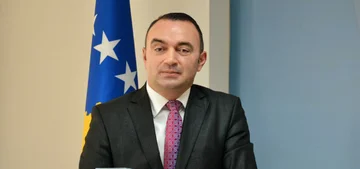
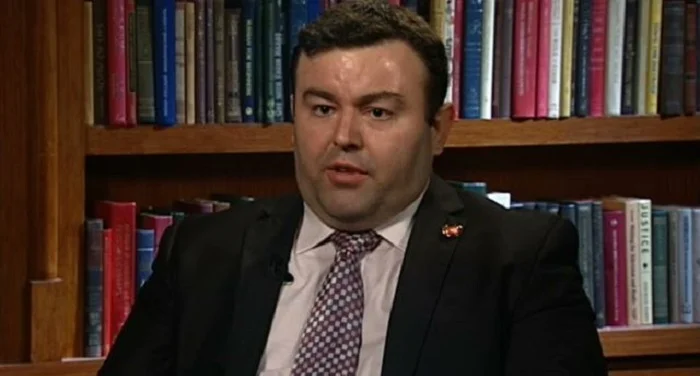
(4 years ago)Former Kosovo MP and Albanian-American Civic League Board member Faton Bislimi in an interview for Periscope has given his opinions and positions regarding many developments and important issues for the country. Bislimi has stressed the importance of the Kurti Government's obedience to international allies, adding that America is a certain heedare [...]
Former Kosovo MP and Albanian-American Civic League Board member Faton Bislimi in an interview for Periscope has given his opinions and positions regarding many developments and important issues for the country.
Bislimi has stressed the importance of the Kurti Government's obedience to international allies, adding that America is a certain heedare of our state.
He has also talked about association, which should be formed according to the country's Constitution, and to allow Serbia's executive authority in Kosovo. As for the Kosovo-Serbia agreement, you think we can only have it if the parties are put before the act committed, in the “tak form it, leave it” (take it or leave it).
For the image of the state of Kosovo internationally, Bislimi thinks we should be one and that foreign policy should be alert and active.
Total interview:
Periscope: The government Kurti was persistent that the license plate deadline should not be extended. Actually, he scaled it. America and the EU expressed disappointment. Can inadequacy with allies have consequences?
Faton Bislimi: The United States has expressed itself very clearly on this issue. The message has been direct and friendly because the US, but even the EU have not hesitated to recognise Kosovo's right to act to implement the law everywhere in Kosovo and everyone, but at the same time, have kindly sought Kosovo's understanding to postpone this implementation process for a period of 10 months. I have no doubt that this requirement is based on corresponding reasonableness. So what I can say is that Kosovo has had to and still has to find the proper mode to implement rule of law in view of specific US requirements. We should see and assess the results of a political or legal action more than the date of that action. Our relationship with the United States is unique and should be forced away. She did not get hurt under any circumstances. After all, without the United States we would hardly have freedom, much less the independence of Kosovo. They say they are heeders of our citizenship and partners who have never hesitated to come up with us, especially in the most difficult days during the 1990s. Ours is to do everything necessary to be on a line with the U.S. because only then are we guaranteed to lose.
Periscope: In addition to the plates, there are other issues that Kurti has opposed, such as the Washington Agreement, the decision on the Decani Monastery, the Serbian referendum, etc. America calls for association. How do you view Kurt's resistance, especially?
Faton Bislimi: Yes, as for the Washington Agreement of September 2020, it has also been embraced in full by President Biden's Administration, and for that it is directly expressed by Shet's secretary, Blinken. In the Association case, the United States has been very clear about it. Even Mr. Escobar well shows that the United States does not support any kind of association that affects the sovereign of Kosovo or the unit of state. So they are against any association with executive rights or that creates a third governing level in Kosovo except the local and central. This means and is directly told by the United States that association cannot be in violation of Kosovo's constitution or law in force.
Normally, no one in Kosovo supports an association as Serbs require. I think the government of Kosovo, and the ruling party, should see the issue of association from the prospect of legitimacy and constitutionality, and beyond that, from the prospect of reciprocity with Albanians in the Presevo Valley. Belgrade ahead of the international factor presents association as a kind of “rescue mechanism” for local Kosovo Serbs and for advancing and securing their rights. At the same time, this same Belgrade continues to discriminate in the harshest way ethnic Albanians in the Valley. It is time for the Valley to become part of the political discur to Serbia even in terms of association.
It is a national obligation of our political elite, the government of the opposition, that relations with the United States treat significantly, specifically, and without any other political calculations other than our national interest as a state. Only in this way do we help the national cause and move Kosovo's development away.
Periscope: Do you think there will soon be a Kosovo-Serbia preliminary agreement, and with association within it, since there is already a French-German plan?
Faton Bislimi: That's the question, really. The diametrically opposing positions between Kosovo and Serbia that do not allow the achievement of a comprehensive final agreement are these two topics: the association that Belgrade requires earnestly and, according to its own satisfaction, that Kosovo cannot accept, and the reciprocal recognition that Pristina desperately demands, and that Belgrade can accept. But the positive difference for Kosovo here lies in the fact that in association we have international support, especially of the United States, not to accept it the way Belgrade wants it, and in mutual recognition, Kosovo has the support of the United States. The deal can only be reached if the palletes are placed before the act committed in the “tak form it leave it” (Take or permission). After all, each international agreement pertaining to Kosovo in the end has come to this kind of conclusion, both Rambouje and Ahtisaari. Kosovo has both accepted, and Serbia has neither gained freedom and independence, along with the support of the democratic world at the helm with the US.
Periscope: How do you assess Vetevendosje's rule since it came to power. And Kosovo's foreign policy. Is it working enough for recognition and image?
Faton Bislimi: One of the most famous American presidents, John F. Kennedy, has said “Foreign Policy can leave you without a state, while domestic politics can only go without power. ” Therefore, Kosovo's foreign policy must be very alert and pro-active. I am aware that this government dictatorship is despised by each government in the country and served, fortunately, as a kind of party employment entity. It should also be mentioned, however, that there are excellent boys and girls in our foreign ministry, although few in number. Our foreign policy should be much more active and vibratory.
We have no comfort in dealing with each other in the international arena. Outside of Kosovo, we are a state, a republic, a nation. Nobody outside Kosovo cares after ideology or our political preferences or affiliations. Outside Kosovo, countries and other international organisations are interested in Kosovo and its positions as a state. So we should also act like one.
But, fortunately, our image in the world has been built mainly by our diaspora and especially by our U.S. lobby, the Albanian-American Civic League, under the leadership of Joe DioGard and Shirley Cloyers Diogard, which for over thirty years works without stopping for the good of the Albanian nation in general and Kosovo in particular. The role of our lobby in Washington, DC, has been strategic and remains crucial to Kosovo's freedom and independence, through ensuring the support of the American Parliament.
Periscope: You've started a letter to American congressers writing to Beden about Serbia. Did you receive an answer or a reaction?
Faton Bislimi: Yeah, whatever. The answer I received almost all of them, and with some we continued communication and they then at least five of them, in a rotating letter became signatories where Serbia was reproved for ties with Russia. We need to understand that the greatest decision-making power in the United States is in the United States Congress. The battle for Kosovo has been won just at the US Congress by the Albanian-American Civic League, because the spears have been broken and the American foreign policy, which in the late 1980s, was totally pro-Yugoslav.
Even today, we are very lucky to have Senator Bob Menandez, chairman of the US Senate Foreign Affairs Committee. To understand the survey that Senator Menandez has, we must remember that it was in this position that Joe Biden became a supporter of Kosovo's cause for freedom and independence and when we established close ties with him and his staff, as was then Antony Blinken, responsible for foreign policy in the then-United Senator Biden's office, which today is Secretary of State.
Interviewed: Missini Horseyard