5 minutes ago
World Bank: Pulling tools from the Trust would further spur inflation
Periskopi(4 years ago)
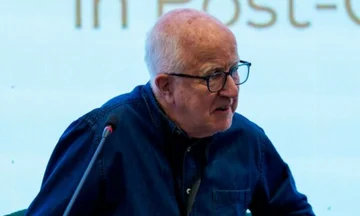
(4 years ago)World Bank expert Richard Records says against withdrawing vehicles from the Kosovo Pension Savings Fund, since, as it says, such a move would increase inflation, which is currently over 12 percent. The proposed “Mas to allow a second round of considerable withdrawals from the Trust [...]
The proposed <x0MS to allow a second round of considerable withdrawals from the Kosovo Pension Savings Trust, would be regrassive, jeopardise the long-term sustainability of the pension system and would further promote inflation”, says Recard, World Bank's leading economist for the Western Balkans, in an interview for Radio Free Europe.
How many months now, the opposition's demand in Kosovo is to enable citizens to attract up to 30 per cent of the funds from the Fund to cope, reportedly, more easily, rising inflation.
The Kosovo government, so far, has rejected, although in 2020, it has enabled citizens to withdraw 10% of their savings from the Trust to cope, as it has been said, the financial difficulties caused by the COVID-19 pandemic.
“The measures in response to inflation must be targeted and with limited deadline”, Records says.
In the interview given REL, it also speaks of the importance of reforming social scheme, ways that Kosovo exports and others could increase.
Radio Free Europe: The war in Ukraine has also triggered inflation in Kosovo. What measures should the country's executive take to enable inflation to decrease? Is there a need to tighten monetary and fiscal policies?
Richard Records: The whole world is seeing an increasing wave of inflation as a result of the war in Ukraine, as well as economic pressures that have increased since the pandemic. [ COVID-19]. According to World Bank's recent estimates, global inflation reached 9.3 percent (year-on-year) in September.
The inflation dance is especially pronounced in Europe, and inflation is already two-sided in almost every country on the continent. Inflation in the Europe and Central Asia region accelerated to 14.5 percent (year-on-year) in July, marking the fastest pace since 1998, while inflation exceeded the limits of central banks in any economy with intended actions to deal with inflation.
Of course, Kosovo is no exception in marking this inflation growth trend. The unilateral adoption of the euro as currency in the early 2000s has generated a range of benefits for its economy, including limited domestic pressures on inflation, stable exchange rate regime and more predictable environment for private sector development.
However, this decision also means that authorities, in fact, have given up their control over monetary policy, and the burden of maintaining macroeconomic stability falls completely over the fiscal sector.
As a new country, Kosovo is still developing its debt markets and, of course, has short maturity on its domestic debt stock, an average of about 3 years. Just to maintain the current domestic debt stock, Kosovo must refinance many of its treasury bonds over the year. Across the globe, sovereign financing costs are tightening, while interest rates are increasing to ease inflation. Thus, in practical terms, Kosovo must maintain adequate levels of budgetary reserves to maintain macroeconomic stability.
Against this background, authorities have limited means to effectively reduce inflation. The best that can be done in this context is first to ensure that inefficient spending or universal tax cuts do not reinforce inflation. Authorities in Kosovo can only help ease the impact of inflation, while they should ensure that they do not reinforce price pressures and leave inevitable scars that shift the fiscal resources much needed to address Kosovo's long-term development needs.
In our opinion, this can only be achieved by having collective understanding that you cannot offer support to all; in fact, authorities would have to focus all their support on the most needy citizens (the figure that decreased as a result of inflation). And this support would have to be offered in a practical and temporary manner.
We believe the measures would have to focus on social assistance programmes and energy poverty-free groups. Over the medium term, the social assistance system would have to be reformed more effectively, to identify who is most needy, and to be flexible to offer automatically support when necessary.
Infographics how much does social welfare cost Kosovo?
Radio Free Europe: How is the World Bank helping Kosovo's executive recover from the [economic] consequences that war has caused elsewhere in Ukraine?
Richard Records: The World Bank works in support of the Government of Kosovo in its efforts to reduce poverty and promote common prosperity through the Partnership Strategy for Country. We are supporting Kosovo with financing in a series of areas, such as competition, access to finance, energy efficiency, digitalisation, agriculture, waters and cadastre reforms.
While our main focus is on supporting mid-term development, some of our projects also provide short-term support ʹ, for example, projects that we quickly activated to support the reaction to COVID.
Our social assistance project, expected to be approved by the Parliament, aims to increase immediate readiness to react to the protection of more vulnerable groups, but to support the full reform of the social assistance system.
This year, we also saw the World Bank's first developmental policy loan for Kosovo, which offered 50m euros in the rapid disbursement of direct resources to the Government budget, following the launch of significant structural reforms (such as the new law on inspections, electronic identification legislation, renewable energy legislation and improvements in transparency of debt management).
However, we aim to be not only a development bank but also a knowledge bank for development. That means we want to offer the Government of Kosovo analysis and advice about politics. For example, we just published our latest assessment of Kosovo's economic perspective in the Economic Rule Report for the Western Balkans.
Radio Free Europe: Is high inflation in Kosovo at risk of increasing poverty?
Richard Records: Recent figures of the Kosovo Statistics Agency (ASK) show annual inflation reached 12.7 per cent in September, 2022. As elsewhere in the world, the rapid increase in food and energy prices is putting pressure on many citizens in Kosovo, as their income cannot take the step.
The situation is particularly critical for citizens living in poverty or near the poverty border because, compared with others, they spend a much greater part of their income on food, energy bills, and heating their homes during the winter. So even a small price increase would have strong implications on how much they can consume.
Radio Free Europe: Is Kosovo's budget endangered by numerous social schemes? What policies should be undertaken?
Richard Records: Kosovo has a social assistance scheme, many transfer programmes according to categories, and recently new provisional measures to respond to shocks. Kosovo has limited fiscal resources and these should be used effectively, giving priority to the protection and support of citizens to get out of poverty. In times of crisis, such as the current impact of food and energy prices, which is especially challenging for low-income families, a country's social protection system is essential to protecting poor and vulnerable groups.
Social protection programmes, which include pensions, social assistance and labour market programmes, play an important role in protecting poorer and vulnerable groups in society from falling into further poverty. At the same time, these promote and protect investments in education and health and help citizens find more productive jobs so that they can master their future and recover from poverty.
The social assistance scheme covers only about seven percent of the population, and this is evident below the poverty rate according to our assessment of Kosovo. The social protection system in Kosovo has come under significant pressure, as a result of the numerous shocks the country has faced in recent years. The recent crisis highlighted the vulnerability of Kosovo's current system and the need to increase its efficiency to improve its impact on poverty and the interdependence impact.
The budget is driven by social schemes
Social reform hostage to 47m euros
After the social assistance scheme is reformed, the poverty-based system would have to become a principle of reform for the wide range of transfer schemes, all financed by Kosovar taxpayers. These funds would have to go only to the most needy citizens.
Radio Free Europe: Do you think the government would have to raise wages, given inflation in Kosovo? It is already expected that the Law on Salaries [prespecting their increase] will be issued to the Assembly.
Richard Records: With limited fiscal space, Kosovo would have to weigh carefully the costs and benefits of new spending commitments, in response to higher energy and food prices, and to address vulnerable families as priorities. The decision on wages is the decision of fiscal policy and should be cut off from the Law on Rewards, as the latter would have to focus on reform of the compensation system ʹ which currently remains very fragmented, for various reasons, including a host of additions with the aim of increasing productivity and efficiency within public administration.
Radio Free Europe: The Kosovo government has also approved the minimum wage of 264 euros gross, or 250 euros, net. Do you think that's enough?
Richard Records: The main challenge for Kosovo, perhaps the most important challenge, is creating more jobs and better jobs for the people of Kosovo. The labour market continues to reflect chronic weaknesses, with low labor force participation especially among women as the key binding restriction for economic growth and poverty reduction.
On the other hand, despite encouraging growth, Kosovo's private sector is still not generating high-quality jobs. And there are serious differences between demand and job offers. This means reform is needed on both sides of the equation, to reduce barriers that prevent citizens, especially women, from participating in the labour market and to facilitate higher levels of private investment. This is likely the best and most stable way to raise wages in the medium-term plan.
Radio Free Europe: Do you think that Kosovo executive has done enough to help citizens by subsidising electricity bills... Will that be necessary in the future?
Richard Records: Like the rest of Europe, Kosovo is currently experiencing a double blow from inflation and energy situations, which is undermining the government's fiscal balance. This crisis is very unpredictable and authorities must maintain readiness for reaction, especially in the context of the next two winters.
In this context, we saw that recent measures of energy efficiency created considerable demand. In terms of support, both in terms of capital budget drafting, opportunities to promote energy efficiency would have to be fully exploited and scaled based on lessons learned. There are many additional measures that can support both the easing of the double inflation crisis and the energy situation, as well as Kosovo's long-term needs for efficiency, including isolation, heating, urban transport and interurban change, renewable energy.
Radio Free Europe: Do you also support a withdrawal of retirement savings?
Richard Records: Kosovo will have to address vulnerable families with priority. Taking on the basis of the distribution of current savings of the [missional] Trust and in view of the prevalence of inflation pressures on the part of the offer, the proposed move to allow a second round of significant withdrawals from the Kosovo Trust of Pension Savings would be reggressive, jeopardised the long-term sustainability of the pension system and further spur inflation.
Measures in response to inflation must be targeted and with limited deadlines. Improving tax compliance, introducing poverty criteria according to income in social protection programmes, along with building energy sustainability through investment in renewable resources and energy efficiency, would have to stay at the top of the policy agenda.
Radio Free Europe: Exporting Kosovo products continues to remain at a low level. How can there be growth versus high value of imports?
Richard Records: In fact, Kosovo marked the fastest export growth rate in the Western Balkans in 2021 during the recovery from the pandemic. However, this increase comes from a low base. To narrow the gap with comparable EU countries, much more needs to be done to accelerate export growth.
If Kosovo's priorities are carefully exploited, such as the young population, the proximity to a large market, which is prosperous but is aging, good digital planning, low labor costs, flexible financial and liquid sector, as well as strong ties with the diaspora, they can lead Kosovo towards higher living standards, faster.
This requires moving to a model of growth that better uses the potential of Kosovo's human capital by enabling firms and farms to grow and increase their productivity, maximize their return from investments in physical capital dealt with, and who fully exploit good convergence through exports, increased competitiveness and more foreign investments.
Kosovo firms must operate at higher levels of efficiency, with deeper efforts to remove regulatory barriers, ensure efficient aloation of scarce financial and natural resources and embrace digitalisation. Human capital institutions must more effectively transform Kosovo's new population into a productive workforce.
And only by improving trade and planning, strengthening competition in the market and promoting high-quality investments, Kosovo can take full advantage of the opportunities its location offers. In the end, the basic requirement for sustainable and inclusive growth is a stable macroeconomic environment and effective rule of law.
Radio Free Europe: What are the government's real figures for opening new jobs?
Richard Records: In Kosovo, information on labour markets is scarce, due to limited availability of data. However, administrative data for the first half of 2022 shows there is acceleration of formal employment and declining trend of registered unemployment.
This is reflected in a 32 per cent drop in the number of job seekers registered in Kosovo employment centres. However, the labor market continues to be marked by sensitive gender inequality, with the employment rate at 44 percent for males and 16 percent for females, and incompatible skills and job migration.
Furthermore, firms report more and more difficulties in completing free jobs.
Radio Free Europe: The World Bank opened its office two decades ago in Kosovo. Do you have figures for the value of investments this institution has made in Kosovo?
Richard Records: Since 1999, the World Bank has provided and, either, managed over $500 million to support development in Kosovo through about 50 operations, including trust funds.
Ahead of Kosovo's membership in the World Bank Group (WBG) in 2009, operations were financed through grants from different sources, mainly the World Bank's net income, the Trust Fund for Kosovo, the Post-Confliction Fund and the International Development Association (IDA).
Kosovo enjoys the right to financing from IDA (with combined conditions) because of post-conflict status. In October 2022, the IDA's active loan portfolio for Kosovo reached 379.55m US dollars in 11 projects in the fields of energy, agriculture, water, health, competition, finance, information technology and communication, social assistance and cadastra reform.