17 minutes ago
US: Welcome Agreement Between Kosovo, Serbia
Periskopi(4 years ago)
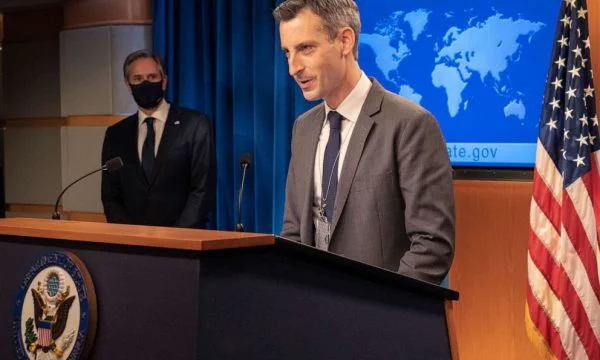
(4 years ago)The United States welcomed the agreement reached between Kosovo and Serbia “for measures to avoid further escalation of” tensions. In a statement by US State Department spokesman Ned Price, the two countries' agreement “is praised to concentrate fully and urgently on normalising relations under the care of the dialogue relieved by [...]
In a statement from the spokesman U.S. State Department, Ned Price, lauds the agreement of both countries “to concentrate fully and urgently on normalising relations under the auspices of dialogue facilitated by the European Union”, which the United States values as the best “way to advance the European future of Serbia and Kosovo”.
Kosovo and Serbia have reached agreements on illegal Serb license plates in Brussels on November 23rd.
European top diplomat Josep Borell has said that Kosovo will end further actions related to reregistering cars until Serbia will no longer issue license plates with names of Kosovo cities.
According to the EU, the <x0Pals understand that all past agreements reached in the talks should be implemented”, as well as the key “issues and principles related to normalisation will be addressed in the context of the proposal (of Brussels)”, an initiative that became known as the Franco-German proposal, supported by the United States.
Negotiations have been held in Brussels between EU envoy for dialogue Miroslav Lajcak, and Kosovo and Serbia's top negotiators, Besnik Bislimi and Petar Petkov.
Kosovo President Vjosa Osmani has thanked the American Embassy in Kosovo for its commitment to reaching the agreement on Serbian illegal plates.
In the spokesperson Price's statement, the parties' <x0-> approval to put the interests of all their citizens at the helm of decision-making and take steps to improve the daily life of their citizens. Both sides took a huge step forward today, with the EU facilitating, towards ensuring peace and stability throughout the region”.
The United States, it further says, welcomes constructive negotiations and encourage further progress towards normalising relations.