4 minutes ago
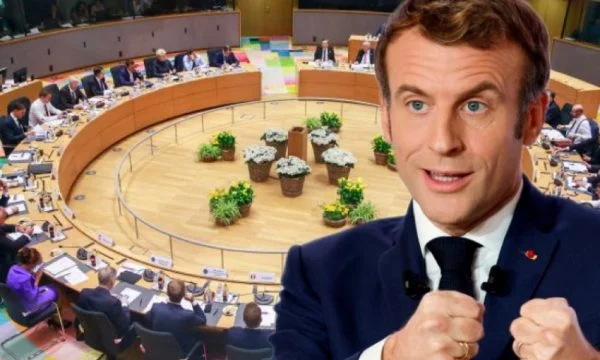
The meeting of European leaders in Prague... What is expected to happen?
Periskopi(4 years ago)
(4 years ago)Prague will be the European policy centre this week, as most of the continent's leaders will gather for two meetings on October 6th and 7th to discuss the war in Ukraine and its implications in various policy areas. Radio Free Europe brings more information about [...]
Radio Free Europe brings more information about what is expected at meetings in Prague.
What's going on?
Leaders of all European states, in addition to Belarus and Russia (both small European states) will meet at Prague Castle on 6 October to discuss security issues on the continent as the war continues in Ukraine. This meeting is also to launch the European Political Community an idea that was initially promoted in May by France's President Emmanuel Macron.
A day later, on 7 October, the Czech capital will be the host of an informal EU summit, which will also be held at Prague Castle. Leaders from the 27 member states will discuss Russia's sanctions on the energy crisis, while the continent is expected to face a difficult winter.
Who will be participants in Prague meetings?
The invitations have been sent to leaders of 44 European states, and according to EU diplomats, there have been “positive responses from all, but some have not yet returned final response”.
It turns out that Serbia's President, Aleksandar Vuciq, is still hesitant, as his Turkish counterpart, Recep Tayip Erdogan.
Britain's new prime minister, Liz Trus, has not yet decided whether to attend, while reporting that she is reluctant to be part of something that has a lot of <x0... Ukrainian President Voldymyr Zelensky will address the attendees through the video connection because of the security situation in his country and instead, Ukrainian Prime Minister Denys Schmyhal will travel to Czechia.
The councilors of 44 leaders have met in Brussels on 29 September. Therefore, the prospect that leaders will take part is positive, given the fact that foreign ministers are not allowed to submit to replacement heads of states at these meetings. The deadline to confirm participation is also generate: when the meeting starts at 1: 00 p.m. on October 6th...
What exactly is the European Political Community?
Maybe it's better to start with what it's not. This community does not replace existing political organisations, structures or processes and does not intend to create a new one at least at this stage. EU diplomats constantly stress that the EU is only “ex1> and this is not the “processes that are led by the EU” or some type of “EU+”, which candidates for membership in the bloc or potential candidate states in the Western Balkans and in the eastern neighbourhood, must fear it will replace the European bloc's enlargement process.
There will be no final declaration or written statements at the end of the meeting. The sources of Radio Free Europe, which spoke on condition of anonymity, said they want to avoid having the end of the meeting conveyed to “over formulas and veto for the final text that would still be easy on content because of the heterogenous list of guests”. At the end of the meeting, there may be no media statements.
So, what is the European Political Community? It is essentially a new platform for European leaders to meet once or twice a year to discuss key issues. Many have doubts that such a platform is necessary, given that there are only structures like the Organization for Security and Co-operation in Europe and the Council of Europe, and as a diplomat put it: <x0). Many things have started with just one meeting, is the beginning of the process and we have to wait to see what happens next”
Will there be any specific “results”?
Eventually, there will be common pictures of all present. Otherwise, the result is the meeting itself, which usually means nothing. But by the time Russia declared partial military mobilization and has claimed to have annexed parts of Ukraine after holding false referenda, the very fact that almost all other European leaders are meeting in the same country is symbolic.
The day will begin with an hour-long plenary session, before leaders are divided into groups of 1012 to discuss issues related to peace, security and stability, but also energy, climate and the environment. Also, there may be an ad-hok discussion on migration and movement for those who may be interested before the afternoon is dedicated to various bilateral meetings. This may be the most interesting part of the day, as there is a possibility that there will be discussions between different Western Balkan leaders and the leaders of Azerbaijan and Armenia, with the possible participation of the presidents of France and Turkey.
Another plenary session will be held at dinner, before the meeting is concluded. An EU diplomat, who has known about planning the meeting, said the whole “idea is that it shouldn't be very formal and strict, and everyone can talk to each other”. The result, according to another EU diplomat, is to bring all European leaders to an equal position in the spirit of unity to promote political dialogue on issues of common interest” and that they must come with ideas and proposals at the upcoming meeting of the European Political Community, to be held next year. It is preferred that next year's meeting be held in a state that is not part of the EU.
What will happen at the informal meeting on October 7th?
There is expected to be tough discussions at this meeting regarding the EU's response to the war in Ukraine. Before this meeting, reconciliation is expected to be reached for the new EU sanctions package. And while Brussels is likely to target Russia's steel, wood, cigarette and cryptomite sector, one of the sanctions proposed but will probably not pass, it is setting a ceiling price for oil in the EU.
Hungary has already signalled that it will veto any possible sanctions on Moscow's energy, and that some other states also oppose such a move. But there is expected to be a fierce debate on this topic and the possibility of setting the ceiling price for gas, while states are divided whether this measure should affect only Russia, or be for all. The divisions over whether or not the Russians who are leaving military mobilization should be welcomed, and whether the new financial aid package for Ukraine of $3 billion should be in the form of grants or loans, so the second day meetings in Prague, Czech Prague, can be discussed. / REL