3 hours ago
Liz Truss ruled only 45 days with such short-term European leaders? Euronews ranks Nano, Kurtin, Abazovic
Periskopi(4 years ago)
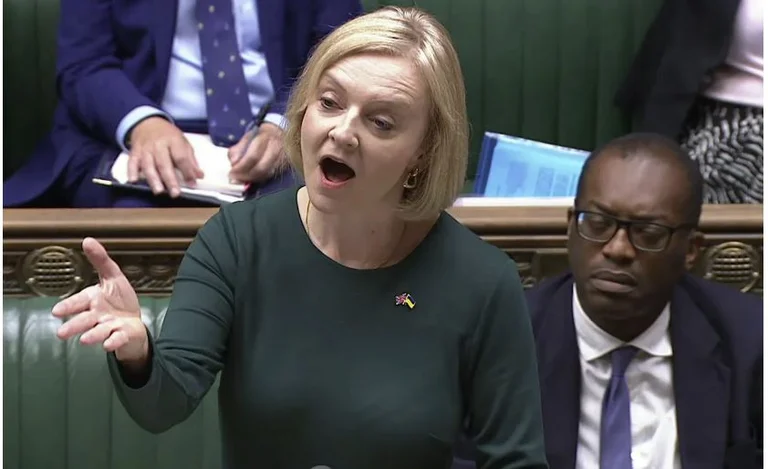
(4 years ago)British Prime Minister Liz Truss resigned after only 45 days in office. She officially took office by Boris Johnson on September 6th, but, after a series of chaotic political decisions, the decline of economic indicators, media outlets, and the resignations of high profile persons to not mention public opinion polls that [...]
British Prime Minister Liz Truss resigned after only 45 days in office. She officially took office by Boris Johnson on September 6th, but, after a series of chaotic political decisions, the decline of economic indicators, media outlets and resignations of high profile persons to not mention public opinion polls that showed a decline in her conservative Party, while the opposition Labusist Party had an increase in ♫ Trus decided it was time to resign.
Truss is officially the prime minister who ruled for less time in Britain's history, passing it on to his next candidate, George Canning, who was prime minister for only 118 days until he died in office in the 1820s.
But who are some of the other prime ministers with the short term governance in Europe?
Below, you will find a list of some of the main cases of the last 50 years of politics, politicians who have served 200 days or even less by excluding those who have been temporary stewards or prime ministers.
Montenegro: Dritan Abazovic 176 days (yet continuing in office)
Abazovic is the latest case of leaving office among European prime ministers after losing his position as a result of parliamentary no-confidence vote on August 20th, but remains in office at the moment.
The leader of the liberal and green party, The URA came into office after the fall of the previous government in April, with the division of political allies due to the lack of progress in the country, nationalism and obstructism -- a practice where laws and policies are deliberately delayed.
Abazovic's own coalition with mainly pro-European and minority parties was disbanded after he signed the controversial agreement with the Serbian Orthodox Church on real estate in early August, prompting immediate protests by the opposition after local media reported that the contract was signed in secret.
Montenegro's new prime minister has not yet been appointed.
Belgium: Paul Vanden Boynants ] 165 days
Paul Vanden Boeyants twice served as Belgium's prime minister -- the first time for two years, in the 1960s, and then again for only 165 days, between October 20, 1978 and March 3, 1979.
Following his tenure as prime minister, Vanden Boeyants had a dynamic life, both inside and outside politics. He was sentenced to three years in prison on bail in the 1980s, after being charged with false tax statements.
Then, in 1989, he was kidnapped by a gang of criminals and held hostage for a month after they demanded a reward of 30 million Belgian francs (about 30m euros).
Vanden Boynants left active politics in the mid-1990s. He died of pneumonia in 1991 after heart surgery.
Estonia: Andres Tarand 161 days
Serving as Estonia's prime minister for just 161 days, Andreas Tarand was the shortest governing leader in this Baltic state so far, who remained in office from November 8th 1994 to April 17, 1995.
As a life - term environmentalist, Tarand had studied the climateology at the university and had been the minister of Estonia's environment in two different governments.
Tarand was later elected to the European Parliament and served as Eurodeputs from 2004 to 2005.
France: Bernard Cazeneuve 161 days
French Socialist Prime Minister Bernard Cazeneuwe was on duty for just five months and four days from December 2016 to May 2017.
He was appointed to office by President Holland after his predecessor launched a presidential campaign. Cazeneuve resigned at the end of Holland's mandate, when Emmanuel Macron assumed the post of president of France.
Kosovo: Albin Kurti 121 days
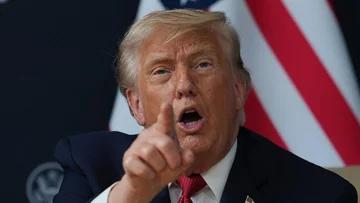
When the protester for many years, at the same time as the leader of the main opposition party in Kosovo, Albin Kurti, finally became prime minister in February 2020, after months of negotiations with his coalition partners, he did not expect US President Donald Trump would bring him down by the government.
Trump was eager to be involved in resolving open political issues between Kosovo and Serbia, and Kurti was apparently not yielding.
US envoy to the Balkans Richard Green brought together a coalition of parties in parliament that would organise a no-confidence vote on Kurti. The initiative worked and Kurt crashed after exactly four months in power.
That said, when the government supported by Trump was disbanded several months later, Kurti was re-elected by a majority vote.
Albania: Fatos Nano: 103 days
Fatos Nano came from a prominent family of communist Albania, and he gradually climbed the steps of Albania's Labour Party.
He was appointed prime minister of a transitional government and tasked with organising the first democratic post-communist elections in 1991.
His party won the election and he became prime minister. However, a general strike organised by independent unions forced him to resign several weeks later, in June 1991, after just 3 months and 13 days in power.
Nano continued to reform the Labour Party, turning it from an anti-revisionist, Marxist-Leninist front, to a Social Democrat party and calling it the Socialist Party of Albania.
He was re-elected prime minister for two more terms, in 1997 and 2002.
Italy: Fanfani Amminor à 102 days
Amenintore Fanfani has been the prime minister of Italy a total of six times the first time in just 22 days, in the 1950s, but it was his last term in office that makes the former politician a fascist part of this list.
He was prime minister from April 18th to July 29, 1987, for just 102 days.
Fanfani began his political career in Mussolini's Nationalist Nationalist Party and wrote about his vision of a fascist Europe led by two authoritarian governments in Rome and Berlin. He played an important role in abolishing the right of Italian Jews to be employed in government or academy, and after Mussolini was killed, he fled to Switzerland and stayed there until the end of the war.
When he returned to politics, he became a Christian Democrat and led six different governments in the 1950s, 1960s and 1980s and continued to be active in politics, keeping high roles in the Italian Senate until the mid-1990s.
He died in 1999, at the age of 91.
Romania: Mihai Rãozvan Ungureanu é 89 days
Mihai Rãozvan Ungureanu was appointed Romania's prime minister in February 2012, in an effort to stabilise the country in the midst of a serious political crisis.
Ungureanu was appointed to office by Romania's president and by the chairman of the conservatives, Traian Bãoscu.
Bãosescu's movement was labeled by some as a copy of how Vladimir Putin was promoted by Russian President Boris Yeltsin but Ungureanu and Putin failed to pass the no-confidence motion by the country's big coalition in early May of the same year.
Ungureanu remained active in Romanian politics, serving as a member of parliament in the years ahead.
Finland: Anneli Jätttheenmäki
Anneli Jätéenmäki was Finland's first female prime minister for a very short period, from April 17th to June 24, 2003.
She led her Centre for Victory Party in the 2003 general elections, but was soon involved in a scandal when serious questions began to be asked about how she had managed to obtain some confidential foreign ministry documents concerning the war in Iraq, which she used in the election campaign to discredit the opposition.
Jättheenmäki claimed that someone had faxed the documents to her without anyone asking, and that she did not know how much sensitive information they contained. A senior civil servant rejected her version of the events and, after losing confidence, Jättheenmäki had to resign.
However, the political career of Anneli Jätéenmäki did not end here. It became Eurodeputte in Brussels and remained in office from 2001 to 2019.
Bulgaria: Andrey Lukanov 22 days
Although this Balkan country is not known for political unrest, as there have been four general elections and four prime ministers in the last 18 months alone, Andrey Lukanov holds the record for the shortest time as Bulgaria's head of state in late 1990.
As the Soviet Union's influence in Eastern Europe waned, many communist countries found themselves at a crossroads, including Bulgaria.
Lukanov served as the last prime minister of Bulgaria's Socialist Republic, and as the country began transitioning to a Western-style democracy after the first pluralistic elections, he held the task until December 7th 1990.
Despite his bids to form a coalition government with the opposition, he was rejected with the argument that Lukanov a former Communist Party believer and high-ranking politician should be held responsible for the destruction of the economy and crimes of the former regime.
He was eventually forced to leave the office after mass demonstrations and a general strike.
Lukanov was killed in an assassination in 1996 outside his residence in Sofia. The true motives of his assassination remain unclear, while the authors continue to be free.
Croatia: Josip Manoliić 22 days
Josip Manoliić's brief stance as Croatia's prime minister came at a very turbulent time after Croatia declared its independence from Yugoslavia on 25 June 1991, which brought the start of a war with ethnic Serbs in the country, supported by Belgrade and the remains of the Yugoslav People's Army.
Manoliić became the country's first prime minister to have just declared independence, without passing an election process, continuing his post as Croatia's prime minister within Yugoslavia -- a position he had taken in August 1990.
However, after President Franjo Tu '%man signed the Brijuni Agreement in July 1991, further severing the country's ties with the other Yugoslav republics, Manoliić was replaced by Franjo Gregoryić, who was commissioned by Tuymann to lead a major coalition government known as the National Unity Government.
Manoliić, a former head of the Yugoslav security agency, O ZNA, also a member of the anti-fascist partisan resistance in World War II, was one of the main founders of the centre-right Croatian nationalist party, HDZ, considered to be the second most powerful man in Croatia at the time after Tu '%man.
However, after Manoliić's 1995 attempt to organise a massive evacuation of HDZ members to deprive Tu '%man of the parliamentary majority failed, his importance waned and his influence on the country's politics declined.
Manoliić, who turned 100 in March 2020, is one of the oldest former prime ministers in the world.
Lithuania: I'm sorry.
Known as one of the signatories of the Lithuania State Refounding Act in March 1990, effectively declaring Lithuania's independence from the Soviet Union, Macau became prime minister of this Baltic country on January 10th 1991 after the previous government resigned due to economic turmoil.
However, three days later, the Soviet army entered the capital of Vilnius and surrounded the main buildings in the city in what was later called January events.
Viewed as one of the worst stains of the rule of the USSR leader Mikhail Gorbachev, violent confrontations with the Lithuanian population led to 14 civilians killed and about 140 injured.
Since '%mnas was nowhere to be found during these riots, Gedmias Vagnorius another signatory of the March 1990 act held an emergency session and took over the country.
ãomanas resurfaced on January 14th, joining the Vagnorius government as economy minister until that government collapsed in July 1992.
Sweden: Magdalena Andersson 75 hours
Sweden's first female prime minister, Magdalena Andersson, remained in office for just seven and a half hours at her first time.
In November 2021, after negotiations that had lasted for many days, Social Democrat leader Andersson succeeded in creating a minority government with the support of the two smaller parties.
After parliament voted to approve its appointment as prime minister, she presented a new budget plan for the country, but one of the parties withdrew her support and she resigned only seven and a half hours after being confirmed as prime minister.
A few days later, the budget returned to the discussion table, was changed and approved, and Andersson was voted back as prime minister of Sweden, a role she continued to carry until it was replaced in October 2022 after general elections. /Euro