5 minutes ago
What is known so far for Halloween's deadly catastrophe in Seoul?
Periskopi(4 years ago)
(4 years ago)Most weekends, the narrow alleys of ItaeWon, the neon-lighted night neighborhood in the South Korean capital, Seoul, are busy with festives and tourists. It is now home to one of the worst disasters in the country. Saturday evening, tens of thousands of people flocked to the area in downtown Seoul for [...]
Most weekends, the narrow alleys of ItaeWon, the neon-lighted night neighborhood in the South Korean capital, Seoul, are busy with festives and tourists. It is now home to one of the worst disasters in the country.
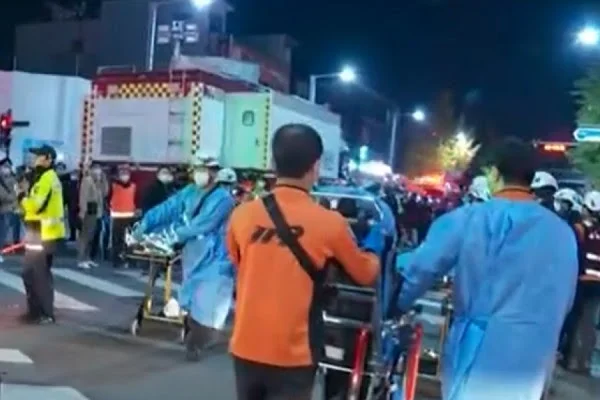
On Saturday evening, tens of thousands of people flocked into the area in downtown Seoul to celebrate Halloween, but panic broke out as crowds grew up, with witnesses saying it became difficult to breathe and impossible to move.
Until Sunday, the death toll rose to 154, with dozens more injured. Authorities have now launched an urgent investigation to find out how what was supposed to be a night of celebration went so wrong, while families throughout the country mourn and search for lost loved ones.
Why were the crowds so large?
ItaeWon has long been a popular place to celebrate Halloween, especially since the holiday has become more popular in Asia in recent years. Some even fly to Seoul from other parts of the region for celebrations.
But for the past two years, celebrations were eased by pandemic restrictions on crowd size and mask mandates.
Saturday night marked the first Halloween since the country lifted these restrictions, giving special importance to many eager participants in Seoul, as well as to international visitors, including foreign residents and tourists.
Hotels and tickets events in the neighborhood were reserved in advance, and large crowds were expected.
What happened?
The Witnesses told CNN that there was very little if there was no mob control before the mass of people became fatal.
Videos and photos posted in social media show people gathered together, standing side by side on the narrow road.
Crowds are not unusual for that area, or for the people of Seoul, who are accustomed to metros and crowded streets in a city of almost 10 million people.
An eyewitness said that it took a while for people to realize that something was not right, with the panics of people competing with music heard from clubs and surrounding bars.
Who were the victims?
The victims were young, mainly in their teens and early 20s, authorities said. Known for his nightlife and fashion restaurants, Itaewon is popular among international students.
Among the 154 dead were at least 26 foreign citizens, according to authorities, victims from countries including the United States, China, Iran, Thailand, Sri Lanka, Japan, Australia, Norway, France, Russia, Austria, Vietnam, Kazakhstan and Uzbekistan.
All victims except one have been identified, South Korean Prime Minister Han Duck-soo said at a news conference. The number includes 56 men and 97 women, South Korea's Interior and Security Ministry announced.
The South Korean Ministry of Education said on Monday that six schoolchildren were among the dead, including one in high school. Three more teachers are dead.
Since 5 p.m. According to local time Sunday (04:00 ET), the number of wounded had increased to 133, of which 37 were seriously injured, the ministry said.
The town government of Seoul said more than 4,000 reports of missing persons were received. This number may include numerous reports of the same person, or reports presented on Saturday evening, for people who have been found since.
Police said there is no active search for missing people reported as they believe no one has disappeared from the scene; on the contrary, they said reports of missing persons have been used to help identify those who died.
Questions Asking
As a surprised and grieving nation faces tragedy, questions are also raised about how such disaster could have occurred in a popular area where people are known to gather.
It is difficult to determine exactly what the printing might have caused, but the authorities “would have predicted high figures... before Saturday evening”, said Juliette Kayyem, a disaster management expert and national security analyst for CNN.
“There is a responsibility on the part of authorities to monitor the volume of the crowd in real time, so that they can understand the need to get people out,” she added.
Sah Cho, 23, was caught by the crowd but managed to escape into a building along the alley. When asked if she had seen an official trying to limit the number of people entering the alley, she replied: “Before the incident, not at all”.