an hour ago
Should you fear what is happening to China
Periskopi(4 years ago)
(4 years ago)“radition of Xi Jinping with Mao Ce Dunin is “pointless” That is how Rebecca Carl, a professor of Chinese history at New York University, ironifies. If you want to compare two people, you have to say something. It's like comparing Putin to Stalin or Liz Trussin to Margaret Thattcher.” At first glance, the parallels are surprising. Mayor Mao [...]
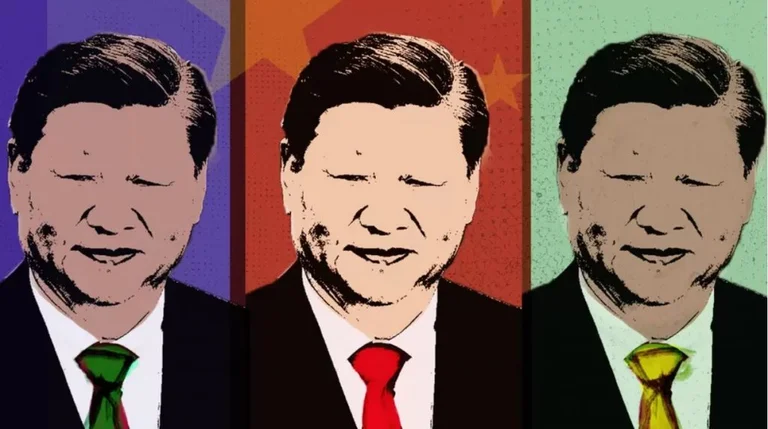
Xi Jinping became the first leader since Mao to be elected party chief for a third term. In his decade at the top, he has centralized power in his hands. He ruthlessly eliminated the rivals. He promoted a cult of personality. He eliminated criticism and had his ideology. Xi Jinping's view of socialism with Chinese characteristics speaks of a new era, embedded in the Constitution. With half a joke, he is known as “Chief of All Things”.
“It's still a mistake to remove a straight line from Mao to Xi”, argues Carl. This, according to her, rejects everything that happened between them. The Chinese dreamed or fought for another country. This suggests that the autocratic is in their blood, is in their water or is in their culture,” She says.
The truth is, Xi's path to power was by no means inevitable. This is defined as much by his ambition, even by the party's failure to prevent what they did not want. A repeat of Mao's catastrophic rule.
My first visit with China was in the 1980s. The arguments about China's future were then major, but there were consequences. The party itself was involved in those debates. But in 1989, they closed “ Says Carl.
In 1989, while the Soviet Union was breaking apart, China's hopes for change were crushed by tanks and gunfire.
“We've come too late”
The country was still recovering in that decade. More after Mao's death. Tens of millions had died in his day. First by hunger because of his devastating mission to industrialize China overnight. Next were violent, paranoid purges of rivals, dissidents, intellectuals, and <x0 class enemies”.
Mao's mantel finally fell into Deng Xioping's hands. He had survived the two purges and insisted on collective leadership that would change every 10 years. In the spring of that year, hundreds of thousands of students and workers invaded downtown Beijing. They protested corruption and price hikes and called for reforms. Following the high walls of the Communist Party's leading complex, Zongnanhai, the party's high dome split.
Modests led by reformist Zhao Ziyang tried to use protests to promote further reforms. The hard line, led by Prime Minister Li hostage, believed the students' goal was to overthrow the party. They decided that the protests would die down.
Zhao visited the protesters, asking them to interrupt the strike on what is now a historic speech: We came too late. It's fair that you talk about us and criticize us as you wish... We're all old and for us no longer matter, but you're still young. You have to take care of yourself”
In late May they won the hardline. Early on the morning of June 4th, tanks took to the streets. The massacre in Tiananmen Square ended the debate on political reform. Instead, the Communist Party addressed economic reforms. In 1992, Deng ʹ who had remained “top leader” China's é stated the party should allow some “to enrich”. It didn't sound very dramatic, but it was another decisive break from maoism. The revolutionary tribulation was given the door.
One cold winter morning in January 1990, I landed from a night ferry in the city of Guangzhou. It was my first view of China. The air smelled sulfur from burning coal. There was a river of bicycles outside the street. There were workers in blue hats and Mao's jackets. From time to time, bicycles were divided into an official bus or car.
For the next six months, I have pedaled through the mountains of Yunnan. I walked through the imperial palace in Beijing and got on a train that was moved by two steam engines that were sooted in the deserts of Xinjiang. The landscapes were submilimes, but abject poverty.
Everywhere I went, people told me how much the backhand” was China compared to the West. But there were algorithms for change.
By the time I returned 1998, the whole country had taken to heart Deng's call “made rich is glorious”. That year, the Communist Party issued a decree to sell state buildings in China. Part of Beijing's historic gray - brick courtyards were being destroyed and replaced with glass and steel.
The word on everyone's lips was “xia hai” or “hid and to sea”. It meant quitting your old job at a state company and diving into private business. I remember the day one of our assistants walked into the BBC office, handed in. His ID and said: I'm going to Shenzhen” It's a town on the southern coast of China.
Mao had closed China's economy from the world. Now his descendants were opening it. In 2001, China joined the World Trade Organization. New cities appeared as mushrooms along the southeastern coast. Some were specialized in buttons and chains. Others were lighter. In Jéjiang, I found one who made only socks, tens of billions of them. As I prepared to leave China in 2008, the airport in the Soviet era had given way to a glistening medal designed by Norman Foster. The first high-speed railway line opened from Beijing to Tianjin.
China was getting richer than any other country in history. But this led to other problems.
Falling one prince and raising another
“Hill is high and the Emperor is away from” It's an old saying in China. It means no one sees what you're doing. This certainly seemed to be the case of Xi's predecessor Hu Jintao. Corruption was on the rise, and his authority was being ignored openly and even challenged.
As land prices rose due to reforms, party officials across China were confiscating them from rural farmers, selling them to developers and putting a large part in their pocket.
In 2005, a DVD smuggled from a village called Dingzhou in the province of Hebei was handed over. It showed a fierce battle between local farmers and dozens of armed bandits employed by a state energy company demanding to force them to abandon their land. Farmers had dug deep holes in their fields. The bandits attacked them at dawn, setting fire to hunt and beating out iron farmers. Six people were killed.
Division deepened. In Beijing, I remember going to a nightclub. The owner was known to have illicit drugs and attractive young girls for those with enough money. His business partner was the Public Security Bureau, the police.
This was just the tip of a large iceberg”, Richard McGregor, former chief of the Financial Times office, says. Everything and everyone were destroyed, but it was out of control. It was becoming more like the Indonesia of Suharto, where the foundations of the” system were being eroded.
At this time there was a trade war between China and the EU on textile quotas. I received a rare invitation to interview the minister of commerce. Interviews with senior Chinese officials are extremely boring, but that turned out to be the opposite.
The minister's name was Bo Xilai. Tall, handsome and with a deceitful charm. Bo seemed to enjoy the challenge by answering questions with intelligence and discernment. This is a guy who can succeed as a politician anywhere”, I thought to myself.
In 2007, Bo was sent to lead Chongqing, a large city that crosses the Yangtz River in the mountains of southwestern China. He was then notorious for organized crime.
Bo launched a ruthless campaign against corruption, killing hundreds of criminals, businessmen, politicians and policemen. He built luxury infrastructure, including public residences. Surprisingly, he also revived “red culture”. He requested that all learn songs from Mao's era praising the Communist Party. Many were terrorized by Bo's rule, but he was extremely popular in the working class.
Politicians came from Beijing to study “Chongqing” model. One of them was a climbing star called Xi Jinping.
In 2012, Bo, who had built its base of power for years, was brought down by a remarkable history of killings, corruption, and international intrigues that shocked China. Today he suffers the sentence of life imprisonment.
His model, however, was undoubtedly the prototype for what Xi would soon launch across China. Xi was a prince. The son of one of Mao's lieutenants, Xi Jongxun, who had been cleaned up and later rehabilitated. Colleagues describe young Xi as humble, self-disciplined and hardworking. Even on the eve of his establishment at the post of Communist Party Secretary General, there was little information about what would come.
By the time Xi was appointed to lead the party in 2012, corruption had reached the highest levels. This terrified the old party, who saw it as a major threat. But they also gave Xi an opportunity to present himself as a savior.
They thought this would take 3 to 6 months. It turned out that this was not just an anti-corruption campaign. It was a correction campaign within the party and was to be held forever,” Professor Steve Tsang, who heads the China Institute of Oriental and African Studies in London, says.
After Bo's fall, hundreds of thousands of party quarts were put under investigation. More than 100 thousand were indicted for corruption, including 120 high-ranking officials. Corruption declined, and Xi's popularity grew.
Now he had ammunition to destroy his most powerful political rivals. In 2014 he ordered the arrest of Jou Youngkang, who until 2 years earlier had been a member of the permanent committee of the Political Bureau and one of the most powerful people in China. Condemned in 2015, Zhou is also in life imprisonment.
This was unprecedented in the post-Mao era.
“ Mr. McGregor says.
Xi's ruthless and dramatic consolidation of power has led many people to compare it to Mao. But Mao's restructuring was rooted in his desire to build a socialist utopia. What does Xi want to build?
Nothing Mao would know” Prof Carl says.
There are no socialist characteristics today. Submission to capital work is complete. If you're a real socialist, you should have a notion of class, justice, hierarchy and anti-hyerarchy democracy. None of this goes into mind Xi Jinping” She says.
The only thing left of Mao-era China is the party. And that, she says, is what Xi really cares about. He believes that in the world of hyper-competitive capitalism and a hyper-competitive arms race with the United States, the only reliable way that China can remain competitive is to stay under a party called the Communist Party”.
Grand helm cell
Nothing gives legitimacy to the Communist Party the same as Mao. The icon revolutionist, whose portrait still reigns on Tiananmen Square, where he declared the founding of the People's Republic of China. So his destructive legacy was dishonored. And now, Xi doesn't miss a chance to get back Mao. Even usurping his missing titles: “But what he wants is much bigger.
“The great Emperor” is the title Xi have his ambition” Prof Tsang says. Xi's goal, according to him, is to establish a glorious Chinese mythic culture called “Xia” or “all under paradise”. A united China that is home to a united people. The Chinese “is someone who loves China, the Communist Party and its leader. And with Chinese it means the Han” culture says Prof Tsang.
In Xi China there's almost no place for diversity. Xinjiang's 12 million Muslims are being assimilated by force. Similar programmes are under way in Tibet and Internal Mongolia.
“The policies Xi has applied to the Water reform camps are cultural genocide” Mr. McGregor says. This is completely different from Mao's idea of a multiethnic state where, theoretically, different groups had more autonomy. Xi's father also had a reputation for reconciliation and respect for China's ethnic minorities.
But his son is leading a harsh ethnicity. He seeks to unite the Chinese in the country and remove foreign powers, which, in Beijing's view, are trying to surround and weaken China. In November 2015, I left Palaean Island of the Philippines on a small Cessna plane. Our destination was the Philippines-controlled Atalay Pagan, 400 miles in the middle of the South China Sea. Our plan was to pass a new Chinese military base built on an artificial island. The coast of a track and the remarkable island of 9km appeared as we approached.
Then, with a loud voice on the radio, came a warning in Chinese and English: A military plane from the northwest of the bad rock. This is the Chinese Navy! You're approaching Chinese airspace. To avoid further action, turn around and leave immediately! ”
We were a civilian plane flying into international airspace. But that didn't matter. These islands of the South China Sea are only the bravest and most visible of Xi's movements to take over close external control. Taiwan could be next.
“Kina is now doing all sorts of things she always wanted to do, but it wasn't strong enough to do. Taiwan was always there. South China Sea was always there. Facing America, driving him out of Asia was always an ambition, but they didn't say it out loud” Mr. McGregor says.
Now China is saying it out loud, and its diplomats, named “warriors --”, according to a patriotic action film, are going to verbal offensive. In China this is extremely popular. But Xi politics are creating only the hostile world he claims to be protecting, believes Susan Srik, a China expert in former US President Bill Clinton's administration.
“Solving disputes with your neighbours? Downloading plans to build great artificial islands and strengthen them with military installations. Increasing pressure on Japan and Taiwan. It's a kind of self-circulation that has produced Chinese foreign policy,” ) She says.
China's insolence has been promoted by its extraordinary power as the largest factory and market in the world. So far it has seemed unstoppable, ready to bring down the United States as the largest economy.
Afterwards, David brought a key to the task.
Shutting Down in the Home
Early this year, a Chinese friend spent 83 days alone in a hotel room in Shanghai. <x) He says. It was a mixture of depression and anger. After a while you feel that you cannot breathe. The body starts to close. Every day is the same. It's like time stopped. ”
He was caught in the biggest and longest deadlock of Coddy's in China. It had to last four days. Then four more. Then another one. Soon the hotel staff stopped telling them.
It's amazing how China continues these isolation for so long. They're too shocking” Says Professor Dali Yang at the University of Chicago. He studied the zero-Convid policy Xi personally approved.
In the first year of David, says Prof Yang, the impasses made sense. They were short and allowed life in China to continue. There was even pride in how the country was treating pandemic much better than the West. “This is no longer the case” He says.
Economic growth is shrinking to 2%. Lower in more than three decades. China's property market is on the run. Youth unemployment amounts to around 20%. A trade fight with the United States is not helping. And anger has begun to appear.
“Every night after midnight people start distributing videos on social media” Remember my friend from Shanghai. “They expressed their anger at the Communist Party. Even the highest executives. They speak of how heartless and cruel this system of things has become. ”
Videos are off. The Internet immediately hides any signs of disagreement or criticism. However, the rage for “zero-Cavid” has been visible. There were even rare signs of protest. Even for a few moments before they are silent. It's hard to deny that millions of Chinese personally hold Xi responsible for the cruelty of the grim blocking of China.
Fear and Loyalty Have Lead to “excessive match-up and overcompliance of what Xi himself originally wanted”Mrs. Shirk says.
And it seems that they have been rewarded. Li Qiang, the chief of Shanghai's party, who oversaw the city quarantine, has been promoted as prime minister. Second in command after Xi.
After the scenes of Congress, the Communist Party of China awaits a harsh world. Surrounded by loyalty and with no heir on the horizon, Xi is now indiscriminate at the head of a much richer country. With a much stronger army. And for the first time, the world is uncertain about what to expect from China. Xi left the old guard behind. Both critics and moderates.
In the past, we could always rely on China's leaders to be pragmatic about economic and prudent policy in their foreign policy. We don't see this now” Mrs. Shirk says. Deng Xiaoping's statement that China should be famous “to hide its capacity and stay at its time”
That time has come.
In 2017, at the beginning of his second mandate, Xi declared: “Kina has risen, enriched, became strong and is heading towards the central stage”. He deliberately echoed Mao's words in 1949 at the helm of the Heavenly Peace Gate in Tiananmen Square: The Chinese people have risen to their feet” But Xi China is not Mao's China. Xi's ambition for himself and his country far outweighs everything Mao had ever dreamed of.
Mao was a destroyer who destroyed the book of rules not once but sometimes. Xi is not anarchist. He's not even a rebel. He certainly doesn't want the chaos of Mao's years back, who broke his family. What he wants is to be the most powerful leader China has ever had... and the Communist Party just gave him that victory. /Lapsy.al/
Author: Rupert Wingfield-Hayes, BBC