 15 minutes ago
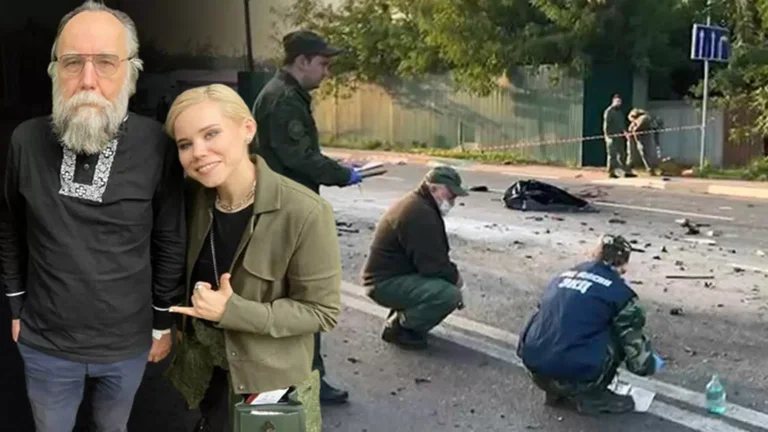
Why the US discovered Ukraine's involvement in Dugin's daughter's death
Periskopi(4 years ago)
(4 years ago)The release of news from the New York Times about Ukraine's involvement in the murder of Dugin's daughter comes after a series of conflicting signals regarding relations between the US government and Kiev. First of all, the US did not hide their role in preparing Zelensky's forces long before the invasion. Training, supplies, and one [...]
First of all, the US did not hide their role in preparing Zelensky's forces long before the invasion. Exercise, supplies, and a sea of intelligence improved Ukrainian resistance units. As soon as Russian aggression began, the Americans explained in detail how they helped resist on a daily basis. And they did that by revealing confidential details.
Second, the Pentagon began to complain that it did not know everything about the movements of Ukraine. “We have more for Russians”, said at one point claiming that no accurate information came from Kiev, even hidden from them.
But when the offensive started east and south, the United States “discovered” that there was a close co-ordination with Ukraine, with movements studied in war games and then successfully reproduced.
Did they or did they not know? Not just for this case. After the murder of many senior Russian officers, it was rumored even though denied by the White House, that it was always American intelligence that guaranteed precise coordinates, even if they later tried to distance themselves from the possible elimination of commanders by declaring “we tell you where the base is, not who is under the” roof.
Third. In recent months the question has resurfaced in some American comments, perhaps inspired by government circles - how far can Ukrainians go? The answer depends (and will depend) on the battles, enemy response and Zelensky's intentions.
It is a question that moves us to think about the supplies of war, the giving of weapons that not only allow the ban on aggressors (what has happened) but that allows for the release of territories. Cremea, which was considered lost, is now also seen by the United States as a legitimate goal, to recover.
Does everyone in Washington think that? Or is there anyone concerned about developments and unpredictable costs?
Fourth. The White House, along with NATO, has been generous: it has provided over $15 billion in materials, has just launched an extensive aid programme. However, it rejected demand for modern tanks, fighters and especially long-range missiles. This is about to drop, if possible, tensions with Moscow.
This kind of ammunition may allow the target of Russian territory, and Joe Biden wants to avoid it. Kiev has tried to ease its positions by saying it is ready to share the list of targets with Americans, a move to provide a “agreed upon”. The offer is clearly evidence that Ukrainians know they need to calm the riots.
Fifth. War has a secret component, sabotage and explosions that occurred even before the start of the February aggression. But the attack on Darya Dugina was carried out in the heart of Russia and included a symbolic figure.
New York Times intelligence sources have questioned Ukrainians, assuming they were services or perhaps only one component of them. The scenario of “Theattri” offered could be linked to the difficulty of understanding with certainty who acted in the assassination planning (accepting the same resources), but it also becomes a way out, a maneuver for Kiev.
Amazingly, this reminds you of the weak thesis of uncontrolled Russian agents responsible for the attacks on exiles in the West.
Sixth. However, the NYT article is a message to the Kremlin. American spies say: “we're not involved in the cladest operation, and if we knew we would have rejected”
True or false, they point to their position of distance.
The observer's interpretations follow, assuming that it could be a declination gesture to balance apocalypse scenarios, is a warning not to get involved in dangerous movements sensitive to responses to the same level.
It's a signal that even though convinced of the massive support of resistance, they think it's time to find alternative routes. If not today, perhaps a little later while Ukraine recovers from mile after mile. (Cerrie della Sera)












