8 minutes ago
COMM STT ready for investment in Vallach
Periskopi(4 years ago)
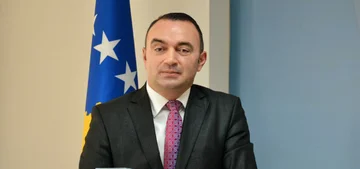
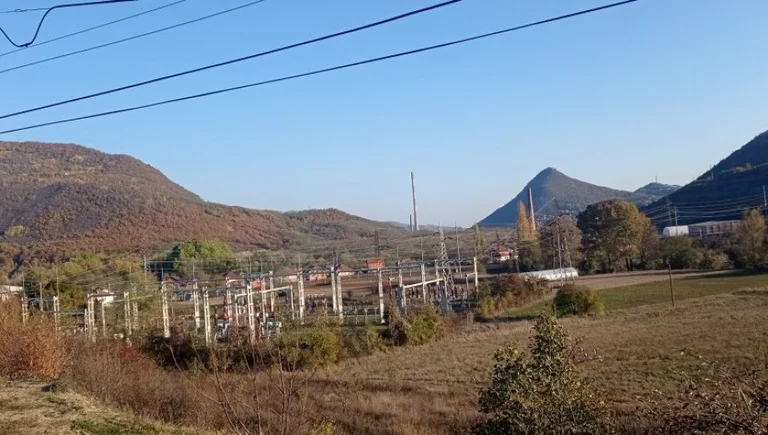
(4 years ago)System, Transition and Electricity Market operator in Kosovo (KOSTT) is ready to invest in the Vallaci substation, which is located about eight kilometers from northern Mitrovica, inhabited by Serb majority. So says in an interview for Radio Free Europe, Jeton Mehmeti, chairman of the Board of Directors [...]
So says in an interview for Radio Free Europe, says Mehmeti, chairman of the CoSTT Board of Directors. He adds that this substation has not been managed by Kosovo institutions since the war ended.
COSTT access to this substation is provided under the Guide for the Energy Agreement between Kosovo and Serbia.
The electricity substation in Vallach is one of the points that supplies electricity to the four Serb majority municipalities in northern Kosovo and to the Uyman hydropower plant (Gazioda), as well as to the Kosovo distribution network and to the 2013 and 2015 Brussels Energy Agreement.
The European Union announced on Wednesday that COSTT and the Serbian company, Elektrosever, in northern Mitrovica, have reached technical agreements on the implementation of the Energy Guide.
After signing the deal, according to the EU, Elektrosever has handed over to COST consumer data in the north, just as it is envisioned with Guides.
Radio Free Europe: The European Union has announced that COSTT and the Serbian company, Elektrosever, in northern Mitrovica, have reached technical agreements on the implementation of the Guide for the Energy Agreement between Kosovo and Serbia. What does that mean in practice?
Memeti lives: In practice it means that COSTT has fulfilled its obligations to the electorate, as well as the electorate has fulfilled its obligations to COSTT. This means that they have accepted and signed the Agreement for Access to Market Rules, the Agreement for the Balance sides, as well as the Energy Buying Agreement from renewable energy sources.
This is about COSTT's obligations, based on Guide.
Radio Free Europe: What specific obligations are fulfilled by COSTT?
Memeti lives: The COSTT has signed the agreement for access to market regulations. This agreement implies that the side, which will be registered or licensed by the ZRRE, will participate according to COSTT market regulations in nominating electricity.
Also, the side has signed electricity balance agreements, [which falls] all sides on the electricity market should respect the electricity market code, which means they are parties responsible for balance.
The third agreement is the deal dealing with the purchase of electricity from renewable sources. All parties in the market should give priority to buying that electronic energy from renewable sources initially, then purchase from local generators and finally buying electricity from import.
Radio Free Europe: When we're buying energy, who will supply the licensed Serbian company, Elektroserver?
Memeti lives: Now Elektroseverer as a side on the market can be supplied by various businessmen, as can all other parties that are licensed by the ZRE. So we can't prejudge or give estimates on this because all companies that are in the electricity market have their right to electricity supply.
Radio Free Europe: After reaching the deal, what are the steps ahead?
Memeti lives: After reaching that agreement, normally, Elektroseveri has other obligations to other parties. As far as COST's obligations have been fulfilled to some extent, then point 2 and 3, there's also point 5 of the Guide.
So, we as COSTT in our field of co-ordination with the RERE, after we get the approval of the ERRE, which will confirm that Elektroseveri has fulfilled his obligations based on the Guide, the side will be registered in the registration of power market participants in COST.
The side will also be registered on the market platform. It is sent to manuals, various templates, and instructions needed for the process of nominating electricity.
Radio Free Europe: When is the electricity to the north expected to begin, for Serbian citizens?
Memeti lives: I think that more question belongs to Z. The HR and the side with which they will have commercial agreements, between KEDS and Elektrosvere, which was preceded by the Guide. It's not in our domain or our scope to comment on it.
Radio Free Europe: Kosovo pays for several years for the current spent in the north for citizens that part. Does he need to pay this year?
Memeti lives: Now that's a question that even though it was in our responsibility as KO The STT that we are obliged to balance electricity and we have unjustly accepted or delegated to us that we are responsible for this energy.
I can't say anything because everything depends on the dynamics of the agreements they have more responsibility for, as a commercial deal with KED. Even at the end of the ZERE, the final verdict should be issued, which implies whether all conditions are met according to Guide, or not.
I think that if all the conditions are met, that's just my personal opinion, very soon the installations would have to be implemented or from the data we've received from the Elektrosseverer to start getting fat. But for this responsibility, KEDS and ZERE are responsible.
Radio Free Europe: Why did KOSTT charge for the unfortunate energy?
Memeti lives: First, as you are aware of or as we discussed earlier with the media, electricity in the north is paid. Initially, it has been paid from the Kosovo state budget for a certain period. Then, with the decisions and recommendations of the Republic of Kosovo, where there was no budgetary line at the time, it was paid by the COSTT budget itself.
According to the recommendations, it is pre-arranged for these means to be returned through the dictatorship or another form by the Parliament of the Republic of Kosovo. Part of the division has returned from the finance ministry. By the end of 2021, we've been paid as COST.
Then, with the Government's decision on sharing means for electricity payment, a large portion of electricity by June 2022 has been paid from the Republic of Kosovo's divided budget as a subvention for COSTT, but paid by COSTT. And from June to today, it's supplied through deviations because in the absence of COST's budget to pay for that energy, we're diverting it to a certain moment.
Radio Free Europe? By whom?
Memeti lives: The search is due to COSTT, the energy is taken from the European Intercontaining System. The energy that is then damaged by the JAO, which is the ENTSO mechanism and this limited energy is paid off by COSTT.
Radio Free Europe: Has any calculations been made that if the implementation of the agreement starts, and the citizens of that section pay their bills, how much will the institutions, whether COST or Government, save?
Memeti lives: Actually, we can count on how much it has cost in the previous months, but we can't predict calculations or predict electricity prices for the coming months.
But if we take the amount of energy spent and calculate it at the average price, at the reference price that is today, the value of electricity, especially in the winter months, is extremely high.
Last year, I remember that a month's bill has been about 12m euros. This year, however, may even be higher because the price of electricity has almost doubled.
Radio Free Europe: As long as KO STT has no access to the Vallach substation, which is located in North Mitrovica?
Memeti lives: At Vallach's substation we've sometimes had the necessary approach, which has been in communications unless it's in a series of minor actions.
But the general approach or management of Wallace has never been in COST management since the war, because we haven't had access to the north or access to Vallach for management. Operators in Vallach are operators who are paid off by EPS (Electroprivreda Srbije) or EMS (Electrreza Srbije) do not understand exactly how they acted there from illegal structures.
Radio Free Europe: Do you have any information about the state of that substation, or does it need additional investment, and can the four municipalities be supplied with that substation?
Memeti lives: Infrastructure, how much information we have is not in good shape. COSTT has always provided investments for Vallachi. But given the lack of access there, we couldn't invest.
We will always be willing, to realise our business plans and our investment plans. Given that we've expected access to it earlier, we have consistently approved investment plans, but we haven't had access or opportunity to invest.
The situation is not so good, I think that at the moment we have access, we will have investments that will increase the capacities of this substation, which will certainly provide better and more quality supplies to citizens of that area, including municipalities in the north, but also the rest of Kosovo.
Radio Free Europe: What winter awaits you when we consider the global energy crisis?
Memeti lives: I hope that the necessary measures will be taken to get a winter as easy as possible. So it's not COST's responsibility for the power supply issue. We have licensed people who are obliged to meet the deal, their contracts for the universal consumer's electricity supply. COSTT is just a balanced pair in case we have a production gap for a certain period.
But always the parties that fail in electricity supply are responsible, which is KESCO, which is responsible for electricity supply. Also, generation that is KEK's responsible party.
If KEK blocks fail, we will have a difficult winter, but I hope we will have luck and not have problems with KEK blocks.
The rest of which is imported is the responsibility of KESCO and I don't know, I don't know what the KESCO plan is, as well as the Government for electricity supply. I hope we have a concrete plan and a concrete strategy on how to get through this winter.
But since it's not in COST's scope of supply of electricity to citizens of the Republic of Kosovo, I can only declare the part that belongs to us. We had a lot of difficulties last year. In a very concrete case, last year we also had very large variations, for which we received warnings from NTSOE.
As you know, COSTT has a lock-up agreement with ENTSOE and we have obligations to the European community and also to the ENTSOE, for not violating these conditions that are responsible for the agreement. We had problems last year, but I hope this year we don't have problems and respect the terms under the agreement.