9 minutes ago
American experts say Serbia's co-operation with Russia is not in interest
Periskopi(4 years ago)
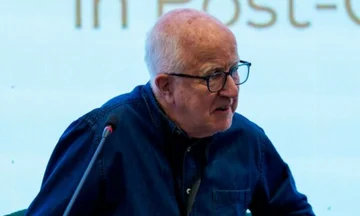
(4 years ago)American experts say the escalation of Russian aggression in Ukraine reflects President Vladimir Putin's failure, but also his strategy to intimidate Kiev and the West and force him to accept his control over parts of Ukrainian territory. Senior adviser to the Atlantic Council, Ian Brzezinski, said that from his viewpoint [...]
Senior adviser to the Atlantic Council, Ian Brzezinski, said that from his point of view Russia might try to stir up problems in some areas around it, while failing to rule out the possibility that Russian President Vladimir Putin tries to stir up unrest and crisis in the Balkans.
“There are tensions in the Balkans among different ethnic groups in certain countries, different countries have tensions with each other, and Kosovo and Serbia are a classic case. Then there is a possible instability in inside Bosnia and about relations with Serbia. These are obvious cases where Russian intervention may be interesting for Putin as a way to foster a kind of crisis that would distract the West”, Brzezinski said.
Ambassador Jennifer Brush, who has once served in the Balkans, thinks the biggest influence of war in Ukraine could extend to Bosnia and Herzegovina and to the Serb-run northern Kosovo.
“Those Serb populations have been actively promoted by the Russians. It is the only area where you can have a Putin poster and where Putin is popular, it is perhaps even more popular in Banja Luka than in Moscow”, Brus said.
She told the Serbian-language Voice of America programme that the Russian concept of the Russian world had prompted the revival of the idea for the Serbian world, but Russia's apparent failure in Ukraine would fail even Serbian efforts for such a world.
The two experts deemed an inappropriate signing of an agreement between Serbia and Russia for “consultations” on foreign policy issues. The agreement, signed in the works margins of the United Nations General Assembly, prompted American and European reactions.
Brzezinski said it is interesting to see the Serbian government and top Serbian officials be critical of Russian aggression in Ukraine and Russia's referenda. However, mixed signals are also sent from Serbia. “and the signing of this agreement is certainly useless and not at the right time”, he said.
Brush said signing the Serbia agreement is an unfortunate signal.
Russia is failing on the battlefield. Her economy is getting worse. For Russia, except for Serbia, there is no support from any other part of the world. China and India have also left support for Russia. So it remains only Serbia, which is heavy in the Balkans, but probably not on the world scene, which turns out that we are with you Russia, and we will sign this deal”, Brush said.
Earlier this week, an American State Department spokesman said that the “further approach with Russia is a step in the wrong direction and contrary to Serbia's stated European aspirations”.
MEPs said “The EU cannot continue Serbia's membership negotiations unless it joins EU sanctions against Russia”, warning that this stance will be part of the bloc's next enlargement report.
Brzezinski said it is unfortunate for the Serbian people that the Serbian government is not making a more active effort to integrate its economy into the wider European economy and integrate into the bloc. EU membership is like the one in NATO is driven by the country's wishes and actions, which require membership rather than by Brussels' directive.
“ ...one of the false claims made by Putin is that EU enlargement and enlargement NATO has been an implantation from Brussels from Washington from Berlin to Central and Eastern European democracies. Quite the opposite. The process has always been driven by the wishes of peoples and governments and, after all, their actions to meet the requirements for membership in these relevant organisations”, said Berzezinski.
Serbia, a candidate for membership in the European Union, has refused to join Western sanctions against Moscow due to its aggression in Ukraine, while declaring its military neutrality.
“I think it is unfortunate that Serbia should choose neutrality in such a clear case of brutal and unjustified aggression”, Brzezinski said.
Brus said, meanwhile, that concerns by some American political analysts, but political analysts within Serbia, that there has been a kind of soft approach of the European Union towards Serbia and that he has not asked much of it since he wants to integrate.
So, it is in the EU's interest that Serbia is a rational constructive actor in Europe, but for example, they have not asked Serbia to answer for the years CHA90-ta”, Brush said, underlining atrocities committed in Bosnia and Kosovo.
The Kremlin supports Belgrade in its ongoing opposition to recognition of Kosovo's independence, which was proclaimed in 2008 with the support of the United States and major Western countries.
Brush said the best move for Serbia would be recognition of Kosovo's independence instead of dragging on a negotiation process that has secured some agreements, but very few have been implemented.
So it's 100 percent in Serbia's best interest to overcome this obstacle. It will not automatically introduce them into the EU, but will ease many tensions in the region and help the entire region move ahead of”, Brus said.