6 hours ago
Kosovo exults: Report shows Roma, Ashkali and Egyptian history ignored in textbooks
Periskopi(5 years ago)
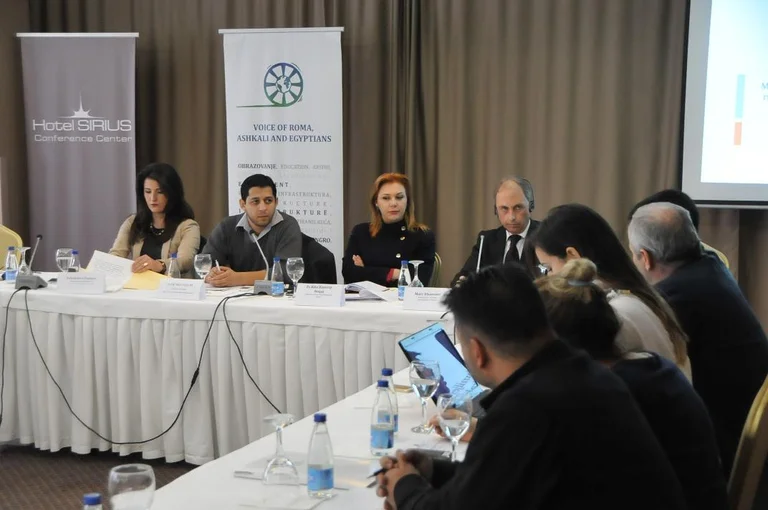
(5 years ago)The nongovernmental VoRAE organisation [The Voice of the Roma Community, Ashkali and Egypt”] along with the other organisation “Terre des Hommes” have released a report in which Kosovo is ashamed. Tolerand and interethnic harmony appear to be untranslated and to celebrate and teach the history and culture of the most discriminated minority communities in our country. This is how it comes out [...]
Tolerand and interethnic harmony appear to be untranslated and to celebrate and teach the history and culture of the most discriminated minority communities in our country.
That's how it comes out of the ratio of these organizations.
According to this report, the history and culture of the Roma, Ashkali and Egyptian communities is completely ignored in textbooks, and in this regard students can easily come to conclusions that learning about their history and culture is insignificant. ” write organizations, follow Periscope.
The lack of learning about the history and culture of communities in question leads to maintaining the culture of stigmatisation and discrimination.
You Can Read the Complete Report THESE Meanwhile, its interpretation below.
VoRAE and TDH report: Roma history and culture, Ashkali and Egyptians are completely ignored in textbooks
Nongovernmental organizations, Vicice of Rome, Ashkali and Egyptian, and Terre des hommes, which focus on their work on Roma communities, Ashkali and Egyptian, have recently released a report entitled Diversity and Social Advision.
The aim of this report, among other things, is to explore and identify to what extent antigipsism, through discriminatory language and exclusion to Roma, Ashkali and Egyptians is present in Kosovo's low and elementary school textbooks.
According to this report, the history and culture of the Roma communities, the Ashkali and Egyptian are completely ignored in school textbooks, and students can easily come to conclusions that learning their history and culture is insignificant.
In addition, the level of knowledge and information on cultural diversity in Kosovo textbooks is said to be extremely limited.
According to the report, students have little opportunity to obtain information about the existence of a variety of cultural and ethnic groups within Kosovo society.
The report published by these two organizations says that one deermining factor affecting the appearance and increase in prejudice is ignorance of the other.
)Ethnic marginalised communities such as Roma, Ashkalis and Egyptians took a turn of interest in social status because of discrimination and prejudice against them as the form of manifestation of antigipsism. A deermining factor affecting the appearance and growth of prejudices is the non-recognition of “to”. Therefore, their lack of knowledge of identity, history, and cultural values from the community may be a serious obstacle to promoting and developing a multiethnic and inclusive societyIt says in the report.
According to them, building an education system based on comprehensive textbooks is necessary for addressing social inequality in our country and a proper step in combating ways of showing antigipsism
)Building an education system based on comprehensive textbooks is a necessary and important starting point in addressing social inequality in our country and a proper step in combating ways of showing antiopsism as a specific form of racism against Roma, Ashkali and Egyptian., says among other things in this report.
Also, the Wojce of Rome, Ashkali and Egyptians, and Terre des hommes have issued several recommendations. They say:
1. To review/fulfill textbooks through access to cultural and historical dimensions of non-most communities, with the aim of eliminating disfellowshipped and discriminating language and replacing it with inclusive languages.
2. The inclusion of experts in the fields of anthropology and the knowledge of the culture of non-US communities in Kosovo, and the involvement of information in social and philological science books.
3. Establish special units in school textbooks for the history and culture of non- majority communities in Kosovo.
4. Create special training programmes for educators on legalising topics of social inclusion and cultural diversity and promoting critical thinking.