3 hours ago
Afghanistan, Kosovo, Vjetnam, Iraq: Why do states built by America quickly bring down corruption?
Periskopi(5 years ago)
(5 years ago)The following article was written by The Economist, and translated by Periscope. As soon as America announced that it would not save the state of its client, things were quickly broken. The enemy was taking over the province after the province, and government soldiers were taking off their uniforms and leaving. The military had hundreds of thousands of soldiers with good weapons on paper. In [...]
The following article is written by The Economist, and translated from Periscope.
As soon as America announced that it would not save the state of its client, things were quickly broken. The enemy was taking over the province after the province, and government soldiers were taking off their uniforms and leaving. The military had hundreds of thousands of soldiers with good weapons on paper. In reality, those few loyal commanders had to buy ammunition from corrupt officials and pay cash. Special forces fought well, but regular troops were often led by disabled relatives of politicians. Soldiers were left without salaries, as officials had stolen military budgets. Citizens remained loyal to their families and clans, not to the corrupt government that was as likely to leave them in the trash as to help. The state was a village of Potemkin, built to please the Americans. When they left, that country fell.
That was the case with South Vjetnam in 1975, and again this week with Afghanistan. The similarities between these two senseless collapses. They go beyond the failure of intelligence, false words and abandoned allies. The two states fell because they had been overwhelmed by corruption, an ancient disease of governance for which US state-building projects have strong trends [also think about Iraq, Kosovo, Bosnia and Haiti]. Political researchers once viewed corruption as a small problem, but many today see it as a key part of understanding how American friends fail but also how states work.
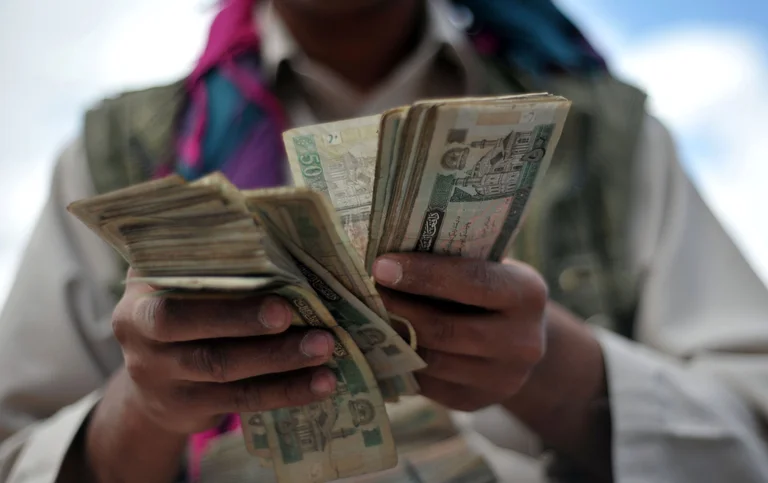
Corruption is often defined as public duty abuse for private gain. His simplest form is bribery, which was all over Afghanistan. “due to birth certificate and death certificates, you had to bribe,” said Ahmad Shah Katawazai, a former Afghan diplomat [He left the diplomatic service after writing an opinion denouncing government corruption]. Customs, police and other officials were constantly seeking tips [of bacteria]. With Taliban advancing in recent weeks, the tip to obtain a passport went to thousands of dollars.
But such bribery is the least threatening type of corruption. More trouble brings government approval for large investments by giving ministers or commanders a stake. Even worse, a government job with access to bribes is a valuable commodity. As Sarah Chaynes discovered, corruption experts who led an NGO in Afghanistan between 2002 and 2009, government officials often bought their positions. They would then have to bribe themselves to pay for their bribe while giving their bosses something. Mr. Katawazai said that to become chief of the police district cost $100,000.
Such corruption creates networks that threaten the state's integrity. The official's main goal is, not to carry out their job mission, but to drain revenues for their families and relatives. Even before America invaded Afghanistan, this country was partly guided by networks that were managed by regional war commanders.
And rather than disassemble these networks, America strengthened them by paying the commanders to maintain peace, according to a report by Special Inspector for the Reconstruction of Afghanistan. [ Footnote] SIGAR. Afghans became furious at government corruption and became closer to the Taliban. A 2015 study by Transparency International cited the baptism of a policymaker: <x0-days finally send money to those at the top of the system, and boys at the top of the system provide protection to them below the mafia. ”
By 2009 America paid no serious attention to corruption. Mrs. Chase became a consultant to Stanley McChrystal, the reformist general who later led the ISAF, the coalition of NATO-led forces in the country. An ISAF investigation known as Shafafiyat [“transparency” in Pashto] made progress in preventing fraud in the prosecution [the Afghan anti-corruption government authorities merely persecuted political enemies].
But under subsequent command, Shafafiyati stopped. By the time of the recent Taliban offensive, the state had become so corrupt that most of its governors made arrangements with jihadists to change sides. Afghan Army was in poor form for war: its numbers were swollen by “ghost soldiers” missing people listed on salary lists in that form for commanders to steal those salaries.
Americans of a certain age can remember the term “missing soldiers” [by far the default “veterian false”] from Vjetnam, when corrupt commanders used the same system. Maybe a quarter of the names of the South Vjetnam Army. [ The ARVN was fake. Even in Afghanistan, police and military forces benefited from heroin trading.
The 1978 report on the fall of South Vietnam is the same as the latest report on Afghanistan published on July 31st. South Americans believed that corruption was “fundamentalist evil was the greatest responsibility for final collapse”. The problem was diagnosed in Vjetnam by visionary officers early in the '60s. Why, then, did America refuse to treat it as a matter of importance when it invaded Afghanistan decades later?
One answer says that this would require a change in perspective. In the last two decades, many scholars have viewed corruption as a governing form in itself. It resembles pre-modern states that Francis Fukuyama, a politicologist, called the government “Personalistic”, where power was based on family or friendly ties more than on my own institutions. Such major concerns have the calming of war commanders by violence in economic goods.
This description applies to mafias, feudal systems, both in medieval Europe, and regimes by war commanders in South Vietnam and Afghanistan. States like these can be stable. But they lack the loyalty and cohesion they want to overcome disciplined ideological uprisings such as the imperfect communists or the Taliban.
Another problem is that American interventions were led by military seals, tending to optimistic reporting and short-term thinking. Military officials are “focused actively on doing things during their nine-month rotation, which is not very compatible with resolving the problem of corruption,” says Mark Pyman from CrbingCorrupsion. Mr. Payman, who had led Transparency International's study, said the officers rushed to peace in their districts by paying the commanders of war. Relief agencies, meanwhile, have a suspicious expression of success judgment based on how much money they secure and how much they can spend all of it.
This leads to an interrelated problem: The loss of a lot of money in small countries causes corruption. Even in South Vietnam and Afghanistan, the large influx of US dollars generated inflation, losing public sector wages [Afganistan, with GDP about $20 billion in 2020, received 145 billion in aid between 2001 and 2021. Inflation averaged 17.5 percent between 2003 and 2008]. Neither did the government have the capacity to collect enough taxes for the salaries of soldiers and civil servants to maintain peace. Nor could honest public servants resist asking for tips to help themselves.
Therefore, a recommendation by anti-corruption experts is that aid in countries like Afghanistan should be spared and focused on reaching more than the size of grants. This is easier said than done. America is also among the richest and most idealistic countries, and at one point I must decide to save another nation in suffering. If you do not learn that dollars cannot build real governments, you may end up building another false government. /Periscope