The diaspora vote count is continuing, VV achieves the 53rd term, PDK remains at 22, LDK falls to 18
 8 hours ago
 (5 years ago)
Three microfinance Islamic institutions in Kosovo issue interest-free loans to their clients, but with profit to them. “Start”, “TMI Invest” and “Pro Finance Home” are institutions licensed by the Central Bank of the Republic of Kosovo (BQK). Bank officials agree that “Start” and “TMI Invest” are registered as institutions offering [...]
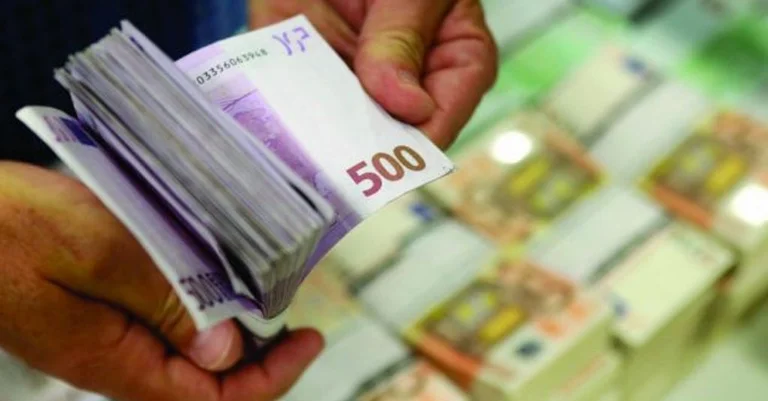
Three microfinance Islamic institutions in Kosovo issue interest-free loans to their clients, but with profit to them. “Start”, “TMI Invest” and “Pro Finance Home” are institutions licensed by the Central Bank of the Republic of Kosovo (BQK).
Bank officials agree that “Start” and “TMI Invest” are registered as institutions offering Islamic financial services. One has a license to function as a microfinance institution (IMF) and the other as a nonbank financial institution (IFJB).
“They are registered, have licenses to conduct loan activity and practice financial services with Islamic principles”, said in a BQK response.
Current number of customers in “Start” and “TIM Invest” is over 700, until the value of remaining loans amounts to over fivem euros.
Even the nonbank institution “Pro Finance Home” is licensed to BQC, but is not specified to provide Islamic financial services. However, one of the shareholders of this institution, Vedat Salihu, confirms to Radio Free Europe that they too handle Islamic financial services.
Microfinance institutions (IMF), primary activity have credit delivery and the provision of a limited number of financial services. In contrast, the non-bank financial institution (IFJB) is engaged in lending, lending and financial rental contracts ézing, in signing, trading, mediation, or distributing valuable letters.
Microfinance institution “Start” was founded and registered in BQC in 2002. Information on this institution is scarce on the internet. On the social Facebook network, the institution in question has no information on the purpose and activity, while the official site is not working. “Start” is registered as a microfinaciary institution with foreign capital.
According to the Central Bank of the Republic of Kosovo, the institution has 498 creditors with over 2.7m euros of remaining loans.
The efforts of Radio Free Europe to contact any officials of this institution have resulted without success.
Next “institution TIM Invest”, as stated on its official page, aims to build and maintain modern banking techniques without interest, secure a transparent development system and “become a powerful organisation”. “TMI Invest”, according to the CEC, has had 221 more remaining loan creditors, with over 2.6m euros.
Nexhemdin Kahriman, owner of this non-bank institution, in an answer to Radio Free Europe acknowledges that banking is free of interest, but not without profit.
According to him, the interest is generated by the sale of the money as <x0 small>”. And from the trade of a commodity which the institution (in this case “) TIM Invest” buys it at the price of the majority, when this product is sold in retail at a higher price, profits are made. This funding is called interest-free credit.
The funding of this institution is private and local. The institution's expenses are covered by the trade in various goods on the market. The difference, which is created by the price of the majority at the price of the minority, is the winning of this institution, Kahriman explains.
The third institution, “Pro Finance Home”, is the non-bank financial institution in Kosovo, which was licensed by the CEC in 2018, with private capital from Kosovo and offers products and financial services to citizens, regardless of racial, ethnic, religious, political, and official sites of this institution.
The Central Bank of the Republic of Kosovo monitors all financial institutions that are licensed.
Two microfinance institutions do not give cash to customers, but they pay directly to the customer's accounts for the product purchased by the client. For a product, for example, at the price of 1,000 euros per year, the client must pay 80 to 90 euros more, or 8-9% of the sum.
Islam Hasani, Professor at College E LSG, author of the book “The economics and banking of Islam”, published in 2013, says Islamic banks work without interest but do not work without profit. These institutions, according to him, have other forms of profit.
“make a profit, but profit is defaulted on a percentage of profit sharing, but not predefined as a form of interest”, Hasani points out.
Islamic financing or Islamic bank activity is defined with legal provisions in Kosovo. In one of the Law paragraphs for Banks, Microfinanciar Institutions and Nonbank Financial Institutions says that “Islamic financing or Islamic bank activity is performed with the consent of the CEC and, under these conditions and in compliance with regulations that can be determined by the BQC, can be authorised to engage in Islamic bank activity”.
Besides this disposition, the CEC does not release any other regulatory instrument, which regulates financial activity under Islamic rules”, says in response to the CEC.
The law also says that the Islamic bank is the kind of bank that conducts banking activities according to Sheriat's [v.i. Islamic law] and subjecting itself to the principles of this law and regulations issued by the CEC. “Picka of the Islamic banking service” refers to a department or division of a yoislame bank, which provides financial services according to Sheriati's principles.
Sheriati is a legal code based on the Koran and other Islamic writings.
 10 hours ago


 11 hours ago