8 minutes ago
Biden: There will be peace until the region acknowledges Israel's right to independent Jewish state
Periskopi(5 years ago)
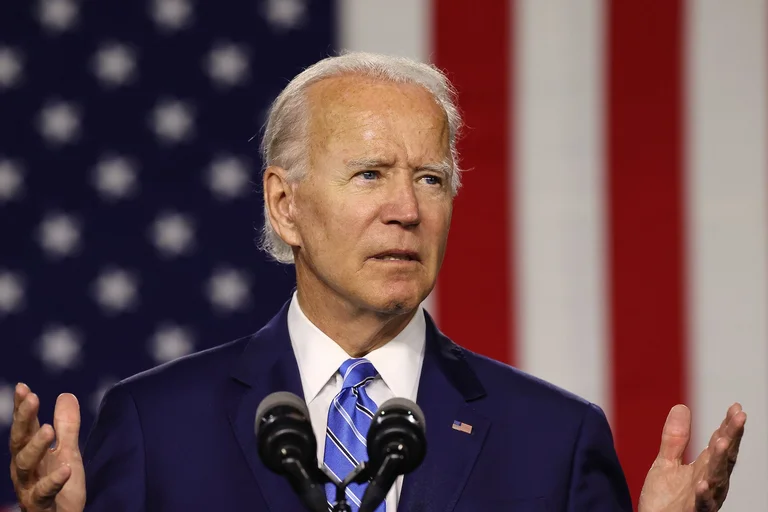
(5 years ago)US President Joe Biden said on Friday that the Democratic Party continues to support Israel, and he hopes that the ceasefire between Israelis and Hamas will be sustainable. At a press conference at the White House, Mr. Biden said a two-state solution was the only answer for resolving the conflict between the two [...]
At a press conference at the White House, Mr. Biden said a two-state solution was the only answer for resolving the conflict between the two sides and pledged to create a large package with other countries to help rebuild Gaza.
Israel and Hamas on Friday ended 11 days of fighting that killed 248 people and wounded 1,900 others. Humanitarian officials say it will take years to rebuild in Gaza, at a cost of tens of millions of dollars.
President Biden called for an end to fighting by extremists from both sides, and said it was necessary to establish security for Palestinians in the West Coast and help Gaza residents. He said he would also insist that Israeli citizens like Arabs and Jews be treated equally.
He said Palestinians should also recognise Israel's right to exist.
Let's make something clear: until the region says unequivocally that it acknowledges Israel's right to exist as an independent Jewish state, there will be no peace,” Mr. Biden told reporters at a joint press conference with South Korean President Moon Jae.
Biden refused to talk about his recent talks with Israeli Prime Minister Benjamin Netanyahu, but said he believed the Israeli leader would respect the ceasefire.
I pray for the truce to hold. I believe the word of Biby Netanyah when you promise me. He never violated his word on me,” said Mr. Biden.
Mr. Biden took office in January determined to focus his time and energy on the Corleone pandemic and the economic downturn in the country and major challenges abroad like China, Russia and Iran.
But after the Gaza conflict that called for intensive diplomatic efforts behind the scene by the United States, its advisers are having to change the line of priorities as they seek to make an Israeli-Hamas ceasefire stand, draft a plan to help rebuild Palestinians and prevent a repeat of what became Mr. Biden's first foreign policy crisis.
An American official said the focus is on the “that comes next, looking beyond violence, so we can do everything we can to minimize the chances of being here again. ”
The administration's most active tone is a clear change from a reserved stance in the first months in office to address the ancient Israeli-Palestinian conflict.
However, he has shown no immediate interest in engaging in a new effort to revive long-standing peace efforts at a time when most analysts see little or no prospects for successful negotiations.
But there have been increasing signs of a new United States engagement now that Gaza missile fire and Israeli bombings seem to have stopped. This comes after Mr. Biden faced great pressure to take on a more decisive role as well as a stronger line with Israel from progressive Democrats whose support was essential for his victory in the 2020 elections.
After those US officials described as diplomatic contacts during the day that helped reach a ceasefire agreement Thursday, Mr. Biden is sending Secretary of State Antony Blinken to meet with Israeli, Palestinian and regional leaders in the coming days on his first visit to the Middle East.
A Large Relief Package
Topping the US task list will be the collection of huge humanitarian aid and reconstruction for Gaza. After several days of Israeli air strikes, Gaza officials said 16,800 homes were damaged and residents had only three or four hours of electricity per day. Palestinian officials said the cost of reconstruction was tens of millions of dollars.
Biden said Thursday that the United States will work through the United Nations and other international actors and that such assistance will be co-ordinated with the Palestinian Authority, the rival of Hamas, who rules only parts of the Western Coast occupied. Hamas is valued as a terrorist group in the West and by Israel, which militants have vowed to destroy.
American officials said the administration was preparing a bailout. This would be in addition to $235m aid to Palestinians announced in April, who were a re-launch of funds for the United Nations Agency to support refugees and return the next interrupted aid from former President Donald Trump.
Another movement aimed at repairing ties with Palestinians who were damaged during Mr. Trump's mandate would be the reopening of the American consulate in East Jerusalem that served Palestinians and which Mr. Trump closed, a close person said.
At the same time, the administration of President Beden is seeking to use the so-called Abraham Accords, reached under Mr. Trump for normalising relations between Israel and Gulf neighbours Bahrain and the United Arab Emirates, as well as Morocco and Sudan, to help facilitate contacts between Israel and Palestine, American officials said.
Many Palestinians say they had felt betrayed by their Arab brothers after having made agreements with Israel without seeking progress towards establishing a Palestinian state.
What we've learned from Abraham's agreements is that when you ignore the Palestinian-Israel conflict, it not only dims the prospects for negotiations, but actually paves the way for frustrations,” said the American official.
Any attempt to establish a link between Israel's normalisation with Arab states and the recent violence is likely rejected by Israeli Prime Minister Benjamin Netanyahu. Mr. Biden spoke to him six times during the ceasefire negotiations, and although the right-wing leader, who was close to Mr. Trump, finally agreed to stop air strikes, they remain divided over Iran's nuclear agreement and other issues.
Progressive Democrats said they were satisfied with the ceasefire, but called on Mr. Biden's administration to work towards a long-term solution.