5 hours ago
Legal regulation required for virtual money services by commercial banks
Periskopi(5 years ago)
(5 years ago)Despite the rise and value of the currency, the circulation of virtual money is still not regulated by the framework of Kosovo Central Bank (BQK). Investment in these currencyes according to the CEC carries the risk of [...]
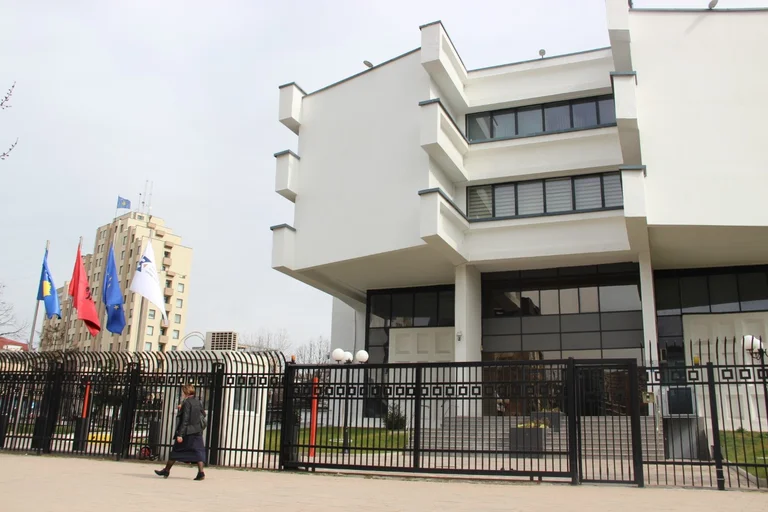
Despite the rise and value of the currency, the circulation of virtual money is still not regulated by the framework of Kosovo Central Bank (BQK).
The investment in these currencyes according to the CEC carries high risk due to the huge fluctuations of their market value.
While economic connoisseurs are considering that despite many young people in the country working on cryptovatluta, the CEC has not moved on with the trains that are being developed in the region and Europe to regulate the cryptova peace market with necessary legislation and regulators.
Economy expert Bardh Ahmeti tells Kosovo that it is necessary to legally regulate the return of cryptovalus from commercial banks to Kosovo.
Kosovo is a country with a huge part of the new population, we are also very accessible to technological developments, and we have a very advanced sector of innovation and information technology that are competitive across Europe and working, exporting services to all of Europe, and we haven't been closed to developments that have occurred with cryptova. There are many young people and young people, but not limiting the age that uses cryptovatlus and variations with cryptovatluts, work with them, but, the Central Bank of the Republic of Kosovo has not moved on to the trends, which are developing and has not regulated the cryptovalus market with necessary legislation and regulatory. Of course it would be necessary, the almost overwhelming part of our country's legislation is harmonised with European Union legislation, and we aspire to integrate there. We are in the process of integration and it is on our way to open up new opportunities even amid the embrace of this” legislation, Ahmeti points out.
Kosovo Central Bank spokesman Kuqim Ahmeti stresses for Kosovo that those who invest in these currency must bear in mind that they may suffer losses of invested means, as he says investment in these currency carries high risk.
Despite that, Ahmeti adds that the CEC cannot stop their circulation.
“The encryption of cryptova peaces, virtual money, is not regulated by the legal or regulatory framework of the CEC in force. After cryptovalus, virtual money, are not regulated, the BQK cannot stop their circulation. Also, BQK through previous publications has presented its position, which is in line with the central banks of other countries and which continues to be the same, that investment in these currency carries high risk because of the huge fluctuations of their market value, so those who invest in these currency must consider that they may suffer loss of invested”, Ahmeti says in a written response.
Why the return of cryptovatlus from commercial banks is not accepted, directors of the Kosovo Banks Association have also indicated, according to the association's executive director, Petrit Balija, who stresses that until the legal regulation of this issue, the citizen is vulnerable.
This activity is not legally regulated in Kosovo. Therefore, financial institutions in the country must take into account the legality of this activity, since the citizen who invests has no kind of institutional protection in case of losses from this activity. We are dealing with investors, with Kosovo citizens who are protecting the state of Kosovo with laws in force, and in this case we are dealing with the capital with which they are investing in an investment that is not regulated at the moment and means that the citizen is vulnerable. So the dilemma is how to protect the investor and it's not about developments that are happening in Blockchain” technology, Balija points out in a written answer.
Antigona Limani Bajtullahu, chief of the Marketing and PR department, in Raiffeisen Bank Kosova, likewise says.
Bejtullahu tells Kosovo that until this is regulated by law this bank cannot provide such services.
“As far as cryptovatlutes are concerned, we apply regulations and laws on the Bank and Microfinance of the BQC and according to these regulations we also act, anything that is allowed by the BQK is then applied and allowed by commercial banks in Kosovo, since the use of virtual money is not regulated by law in Kosovo, until it is regulated by law, nor can we offer such service”, notes Bey.
But the lack of legal regulation is not preventing Kosovars from winning these waves. In most commercial banks in Europe where even banks prefer the purchase of cryptovalutes, this phenomenon is happening in Kosovo, but that the state and commercial banks in this case are not benefiting anything.
These days a Bitcoin in the monetary unit has reached about $60,000 or over 50,000 euros.