7 hours ago
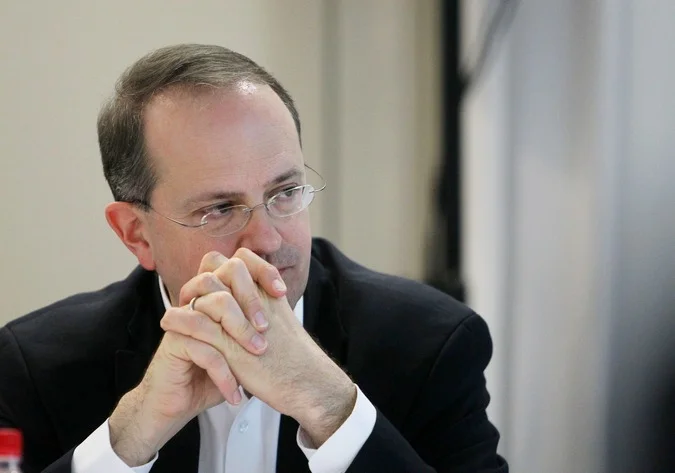
Weber: Dialogue must resume to recognise Serbia state of Kosovo, something symbolic must have for Belgrade
Periskopi(5 years ago)
(5 years ago)The victory of the Vetevendosje Movement is unprecedented in Kosovo, and if this country does not face elections again, Kosovo Prime Minister Albin Kurti has much work ahead of him. But even if elections are held, due to eventual disagreement over the president's position, such a scenario is not in favour of opposition parties. That's how you appreciate [...]
But even if elections are held, due to eventual disagreement over the president's position, such a scenario is not in favour of opposition parties.
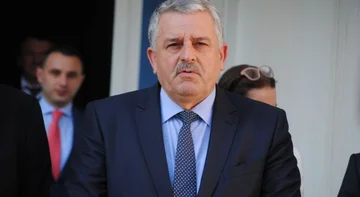
So estimates Bodo Weber, an expert for the Balkans and a senior associate of the Council for Democracy Policy in Berlin.
“It is difficult to assume that they, (oppressive parties), would do better in the new elections, which would only disrupt the formation of Kurti Government for several months, and endanger the health of citizens, holding new elections under the conditions of pandemic. This would only harm the opposition and the outcome would be the same, or Kurti would gain even greater rates”, Weber said in an interview for Radio Free Europe.
In the February 14th parliamentary elections, the Vetevendosje Movement has won 50.28 per cent of the vote. On 22 March of this year, this party has formed the new government, with 67 votes from Kosovo deputies.
Kurti has formed the new executive with parties of non-Serb communities. His government has three deputy prime ministers and 15 ministries, five of whom will be headed by women.
Among Kurt's first challenges is the election of the new president. For this position, LVV has nominated Vjosa Osman.
However, the Democratic Party of Kosovo and the Alliance for the Future of Kosovo have said they will not have votes for Osman.
Lumir Abdixhiku, chairman of the Democratic League of Kosovo, part of which was also Osman until recently, has said that within days the LDK will be informed if Osman's candidacy for president is to be supported.
After a meeting held between Osman and Abdixhik on 24 March, the LDK leader has said the decision to do so would be taken within party bodies.
Who contributed to the LVV's victory?
During the interview, Weber has said that the outcome of the February 14th elections in Kosovo is about the biggest change on Kosovo's political scene, and that this reality, in addition to supporting the Vetevendosje Movement, has contributed to a range of issues.
Of course this is also the result of major changes between war generations and post-war generations, generations that have shaped politics in Kosovo. Meanwhile, we have had Hashim Thaci's departure from the position of president and his successor removed from the position of president of the Democratic Party of Kosovo, as well as elections in the Democratic League of Kosovo and the removal of Isa Mustaf from the chairman's position. This is a key point, but also a major test for LVV, which wins power without any political party coalition”.
However, Weber believes that establishing government by only one party has created new dynamics on the political scene in Kosovo, but also unrealistic expectations.
We have long had dualism between the Democratic League of Kosovo and the Democratic Party of Kosovo, as the Vetevendosje movement grew as the third key party. This is the first time we have government, which has not been formed through the coalition, which affects the decline, on a large scale, of the opposition role. But this situation also creates unrealistic expectations toward the government, which cannot blame anyone, nor the opposition, or any undisciplined government partner”.
“should define dialog principles”
Despite why Kurt has not included the dialogue between Kosovo and Serbia, for normalisation of relations, among its governance priorities, the Balkan expert estimates that the process should resume, but initially needs change in terms of transatlantic co-operation, as according to him, the European Union and the United States, must return credibility to dialogue.
This process has affected the lowest point in the last four years of negotiations, towards the so-called comprehensive final agreement. This is also caused by the EU team's negative role, that world, (former High Representative for Foreign Policy) Federica Mogherin and its team, and taking the key role of the administration of (former American president, Donald) Trump, which has heavily discredited this process. This process would have to resume even if it wasn't Kurti Government, which has a clear message about how you see the dialogue. We must resume in transatlantic co-operation because the European Union and the United States must restore the credibility of this process. The principles and intentions of this dialogue must then be defined. These are the tasks of the European bloc and the US.
In his view, Kurt's approach to the entire situation can alleviate but also complicate the process.
His “plugins that Serbia must accept that Kosovo is independent and will continue to be independent, and that Kosovo is an equal party in negotiations, has been at the heart of the start of dialogue and should be part when the process is resumed. But there are other principles. For Western negotiators, problems arise from Pristina's insistence that no other compromises should be made. If this is about lack of compromise for Kosovo's status, it is absolutely right. But if you want to hold negotiations with Serbia, in order for Serbia to recognise the state of Kosovo, then at least something symbolic must be for Belgrade. No status should be discussed on this level, but bilateral issues, in which there is room for real negotiations”.
Kurti's request that Serbia face the past and war crimes committed in Kosovo, Weber sees it all reasonable from Kosovo's position.
But these demands, according to him, cannot match Serbia's political scene.
“Fokus should be for Kosovo to complete its sovereignty, territorial integrity and international subjectivity through Serbia's recognition at the end of the process, and thus ensure recognition by the five EU non-recognitional states, which have indicated they can follow that path to Serbia)”.
“The theme of changing borders is not on table”
The idea that Serbia could take a part of northern Kosovo, in exchange for the Presevo Valley, has been first launched in 2018.
Former Kosovo President Hashim Thaci has been among the first to mention this topic in public, while Serbian President Aleksandar Vuciq has also been in the best position to correct the borders.
The United States has not ruled out the possibility of exchanging territories, if both sides agree, until within EU countries, this idea has prompted pro and counter reactions.
However, Weber believes that such a thing will no longer return to the negotiating table. And not just because Thaci is no longer in power.
The issue of border change has just been dismissed by former US President Donald Trump and Moghrin. As for concern that the Association of Serb majority municipalities could become an instrument for regional autonomy or the third branch of government, this concern is on the table, but in the dialogue currently under way in Brussels, the essence of association has not been found. The Vetevendosje movement has had a harsh stance in any form, leaving it more of a substance of any association. I'm sure this will be a difficult point to negotiate”.
Unlike the critical tones for the manner of including the Trump administration in the Kosovo-Serbia dialogue process, Weber is optimistic that the solution can be made at the time American President Joe Biden heads the White House.
He hopes that restoring dialogue in another format may happen in the first half of this year, at least in some respects.
If principles are defined and dialogue can be restored, I strongly believe the solution can be found during the Benden mandate of”.
“V liberalisation date is due to collateral damage”
European Union diplomatic sources have said months ago about Radio Free Europe that the main obstacle to completing the visa liberalisation process for Kosovo continues to be France, which currently does not support visa liberalisation. France's present attitude has also supported the Netherlands.
The European Commission and the European Parliament have confirmed that Kosovo has fulfilled all criteria for visa liberalisation.
However, this issue has stalled in the EU Council, as some states disagree on free movement for Kosovo citizens.
Weber estimates that Kosovo has done its jobs in this direction, in terms of meeting the conditions.
I must say I am deeply angry. It is shameful how Kosovo has been blocked on the issue of visa liberalisation, although conditions have been met for several years now.... The fate of the visa liberalisation issue is collateral damage and something that has nothing to do with Kosovo. The whole problem lies with the lack of unity within the European Union on asylum and migration issues, so it has nothing to do with Kosovo, which has done its jobs. There have been signs last year that there will be progress this year, but unfortunately, recent Paris statements that continue to block liberalisation have not increased expectations.
According to him, the past Kosovo government has not been very intense in this process.
Kurti's government must work hard. In contrast to the past government, I hope that this government will have smarter and more intense expansion of Paris and to spread the situation, because many allegations of illegal migration, related to the process of liberalisation, are not based on facts, so there is still room for voice raises, which has not been filled by the government of past”, has stated among other things Weber.