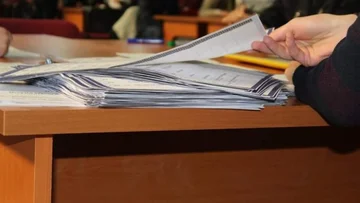
The diaspora vote count is continuing, VV achieves the 53rd term, PDK remains at 22, LDK falls to 18
 8 hours ago
 (5 years ago)
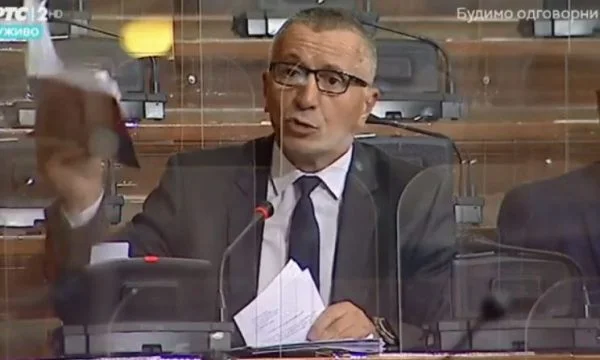
MP scep Kamberi has again reminded Serbia's prime minister, Ana Brnabiq that Kosovo is independent and that it needs special permission to enter Kosovo. Kamberi has said those words at a session in Serbia's Parliament, until he has commented on the provocation of Serbian President Aleksandar Vuciq, [...]
Kamberi has said those words at a session in Serbia's Parliament, until he has commented on the provocation of Serbian President Aleksandar Vuciq, who published a photograph of Kosovo's map with Serbia's flag.
“Earlier, the man in charge to create provocations and tensions in Serbia's name, as was the case of the Iraqi train, has been Marko Djuric, but now, his role has unfortunately been taken by President Vuqiq. Publicising Kosovo's map with the Serbian flag is symbolic provocation, which further shows Serbia's colonial claims in relation to Kosovo”, Kamberi wrote on Facebook.
Kamberi added that the picture Serbia's president, Vuqiq, has published in his profile in Instagram, features the campaign's launch for the upcoming presidential and capital elections on Facebook.
For all these provocations and the instigation of interethnic and regional tensions on the part of Serbia, Kamberi says it further turns Serbia away from integration into the European Union.
Full Facebook mailing:
Mrs. Brnabiq, the hate speech being used by your ministers associated with your silence, contributes neither to interethnic relations nor to the agreement with Kosovo and peace in the Balkans.
Otherwise, Miss Brnabiq, whether or not Kosovo is independent, you know better you and your ministers need special permission to visit Kosovo.
Since receiving this mandate as a popular MP, despite how my speeches are experienced here, I have tried to warn of the need to take measures under which the Republic of Serbia would ban distribution and institution of hate speech and interethnic provocations.
I talked about this phenomenon, I think, in Serbian fluent language, but me and you obviously don't speak Serbian.
When I did this by exploiting my constitutional right and speaking in my native Albanian language, I have faced the noise of my colleagues and the unwillingness to hear me for even five minutes.
I understand, despite being chosen in the same way as you are, despite the fact that in terms of form-juridical I have the same rights with you, I am here” imaginary Albanian” These are prejudices, sown for over a century in a people's collective memory.
No matter what this is about, I will continue to talk about topics that some are not liking, but about which I consider to be crucial to respect for human and minority rights, building democratic society, good interethnic reports and for lasting peace in the Western Balkans.
It is a fact known that “following armed conflicts or periods of serious human rights violations and wars, rare are tasks that are as current as if reconciliation.
Compliance with self, reconciliation with the new reality, reconciliation with the enemy.
The reconciliation implies that older enemies have found a basis for common life. Therefore, reconciliation is the process in which the reality of conflict is seen in future prospects.
For this very purpose, with the EU and the US's approach, dialogue has been launched between Kosovo and Serbia, which is aimed at normalising relations between two peoples and two states.
The normalisation of relations with Kosovo has particular significance even in determining the speed of dialogue for membership with the ultimate strategic goal of full membership in the European Union.
In order to normalise relations, create good interethnic reports and stability in the Western Balkans, with the aim of calming passions that often run to boiling and which seriously endanger the process of dialogue between Serbia and Kosovo, The EU has always called on all political acts in Serbia, Kosovo and the region to account for shares for “declarations which create and promote the atmosphere appropriate for reconciliation, regional stability and co-operation”.
The EU's position is that Serbia and Kosovo should refrain from actions and statements that are contradictory to normalise relations between them and work on reaching the comprehensive” agreement.
Even in spite of these requirements coming from the EU, even beyond the strategic goal of EU membership as soon as possible, we are witnessing frequent and unnecessary provocations that risk dialogue turning to zero point.
Earlier, the man in charge to create provocations and tensions in Serbia's name, as was the case of the Iraqi train, was Marko Djuric, but now, President Vuqiq has unfortunately taken his role.
Publicising Kosovo's map with the Serbian flag is symbolic provocation, which further shows Serbia's colonial claims in relation to Kosovo.
Kosovo symbol without Albanians, symbolic of 1990s-year slogan “Albanians beyond the New Yorkers “.
We all know how that policy ended.
” States like individuals, have inherited trends of its geopolitical aspirations and its definition of history- so that they (states) differ according to the ability to distinguish between realistic ambitions and incorrect fraud” Z. Brzezinski.
We are also aware that on the Serbian political scene, Kosovo for more than 30 years, presents the barn for the collection of nationalist votes, so, even the photo that President Vuciq published in his Instagram profile, represents the campaign's beginning for the upcoming presidential and capital elections.
And we're also aware that, based on the old and often proven recipe that, whenever any internal problem arises, it should trigger tensions of foreign policy so that the attention of the opinion can be drawn to the other side.
But I don't think it's in the interest of anyone that Jovanjica and other relatives, who threaten Serbia with repetitions in the history of the Plenum of the Brions, should not be used to further make relations with Albanians and Kosovo worse. There should be no need to use big words and reasons to peel off internal or interparty accounts.
I consider that the photograph that the president has published on social networks is a clear sign that he does not want an agreement with Kosovo despite frequent references to the necessary <x0kompromis”.
This policy of provocation and promotion of interethnic and regional tennis keeps the country further away from integration into the European Union.
Serbia I believe should define its role and make a more realistic balloon between its aspirations and potential.
So my question about the Government of the Republic of Serbia is: What will the government do in preventing the expansion respectfully institutionalising hate speech and provocations that increase tension in the region and what will be undertaken in order to reach the comprehensive agreement on normalising relations with Kosovo?
 10 hours ago

 12 hours ago