3 hours ago
Lajcak expects Kurti-Vucciq meeting to be realised before summer season
Periskopi(5 years ago)
(5 years ago)EU Special Representative for Kosovo-Serbia Dialogue Miroslav Lajcak has said that what he can get out of his visit to these two states is that there was will from both sides to continue the dialogue and that one of the purposes of the visit was to inform Vetevendosje leader Albin Kurti as negotiator of [...]
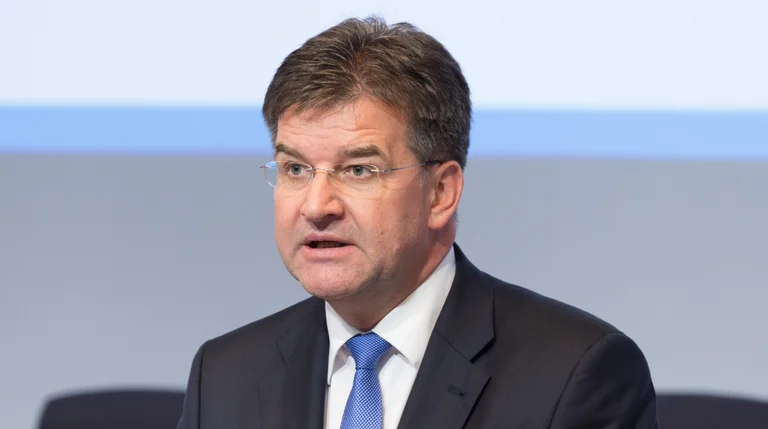
EU Special Representative for Kosovo-Serbia Dialogue Miroslav Lajcak has said that what he can get out of his visit to these two states is that there was will from both sides to continue the dialogue and that one of the purposes of the visit was to inform Vetevendosje leader Albin Kurti as future negotiator with information on the process so far.
I think we have enough space and I expect the first meeting to take place at a reasonable time after the formation of all necessary institutions (in Kosovo) and this may be safe before the summer”, he says.
Lajcak said some parts of the dialogue have so far agreed on agreements regarding missing persons, internally displaced persons, but also regarding economic co-operation. Right now, he says, it's property.
Ten years have passed since the EU developed dialogue between Serbia and Kosovo, during which time actors in Belgrade, Pristina and Brussels have changed. Something has been agreed and implemented, but some controversial topics still remain.
In an interview for N1, Lajcak said the main outcome of his visit to Pristina and Belgrade is that there is a will for dialogue on both sides, and that there is a “an absolute meaning that dialogue has no alternative”.
“Dialog is absolutely key to normalising relations, for the European road, but also for the normal atmosphere between Kosovo and Serbia. It is important to me that none of the actors I met in Kosovo and Serbia asked if dialogue was needed, and that is the main message”, he said.
Asked whether it refers to more technical or political dialogue, Lajcak said he does not see there are two dialogues and that it is what, by definition, is political.
Speaking of the previous ten years, Lajcak recalls that prior to his appointment, the dialogue was directed by the EU High Representative for Foreign Policy, who, as he points out, had many things he was responsible for.
He adds that these are issues that have not been on the table so far, but also those that have been fulfilled but have not been fulfilled or only partially fulfilled.
Lajcak said one of the main goals of his visit this time was to meet with Vetevendosje leader Albin Kurti, who, he says, received a strong mandate from voters and to discuss continuing dialogue. EU representative claims Kurti was not informed of the dialogue, so, as he says, it was important for him to provide the Kosovo official with full information on dialogue.
Speaking of the conversation, which he said lasted more than three hours, Lajcak said the outcome was that Kurti understood it needed dialogue, that he was willing to continue with him and that it was he who would lead the Kosovo delegation.
“He is willing to come to Brussels, meet with President Vuciq, and that should happen within a reasonable time, following the formation of the” institutions.
Asked how certain they will meet in the near future, given that Kosovo is choosing a president and following the process of forming a government, and on the other hand the elections in Serbia, Lajcak said Kurti is convinced that all these issues can be resolved relatively quickly.
We certainly have enough space by the end of the year to focus on dialogue. Because Serbia expects elections next year, in spring. I think we have enough space and I expect the first meeting to take place at a reasonable time after the formation of all necessary institutions (in Kosovo) and that may be safe before the summer”, the N1 guest said.
He says dialogue is necessary because of the agreement, but also because, as he emphasises, it is the only platform for talks between Kosovo and Serbia. Lajcak claims it takes too long for the Union not only to negotiate this agreement but also to talk about how much existing agreements are being implemented. There are many challenges there “it means.
If there is no dialogue, tensions increase, if there is dialogue, tensions fall, says Lajcak, who claims without that platform, existing issues are resolved “through messages through the media, which is not the most efficient way to solve them”.
All actors know that dialogue is necessary and that it should be a normal atmosphere, because this is the most important thing for people, the EU official stresses.
Lajcak agrees with the statement that there were double interpretations of the rounds of dialogue earlier and defended, as he stressed, that there was only one interpretation of what had been agreed on so that no one would leave the negotiating room until it is clear to all what was agreed upon.
“We have already agreed on some parts of that future agreement -- some texts concerning missing persons -- internally displaced persons, but also about economic co-operation. There's no double interpretation in those texts, everything's agreed there who, when and how it will do. But we didn't find those texts because there's a principle we're negotiating a comprehensive agreement, so nothing's agreed, until everything's agreed. But for me, it's very important that there is no double interpretation”, says Lajčak.