6 hours ago
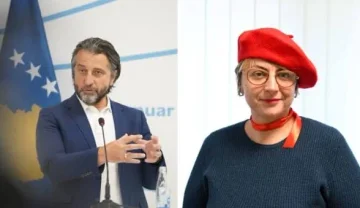
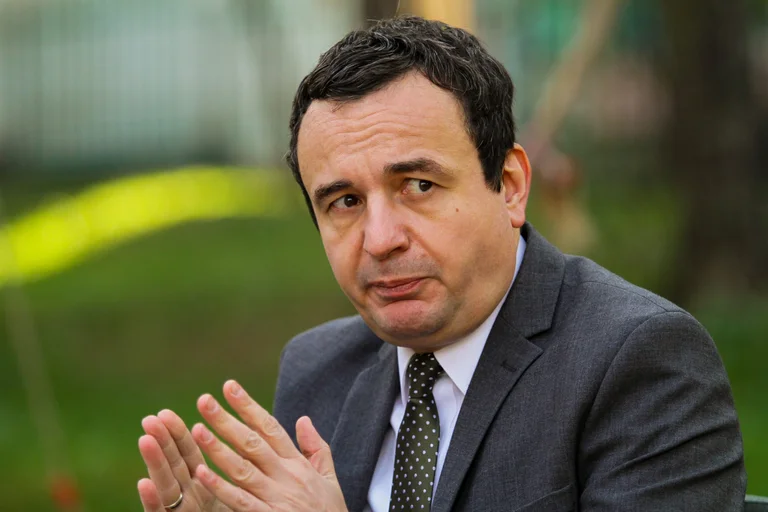
Kurti for the Montenegrin newspaper: Vuciq no longer mentions partition, is asking for Kosovo “bosing”
Periskopi(5 years ago)
(5 years ago)In an interview with the Montenegrin newspaper “Pobjeda” of Podgorica, Kosovo Prime Minister Albin Kurti says that to countries emerged from the breakup of the great Yugoslavia, Serbia today is behaving partners and hegemonistly, just like a small “Russia”. Evidence of this is the recent tensions at the Serbia-Kosovo border, after which forces [...]
Evidence of this is the recent tensions at the Serbia-Kosovo border, after which Kosovo forces were forced to react. Two months after the incident, Prime Minister Kurti claims that despite border riots, relations between the two countries have remained unchanged.
The relations between Kosovo and Serbia are the same -- they are neither better nor worse. We are dealing with a state that does not recognise Kosovo, which is autocratic and prone by Moscow. On the other hand, Kosovo is an independent and sovereign state, has its territorial integrity, but also many problems”, Kurti has said.
Kurti says Serbia in the Western Balkans is behaving like Russia with its neighbours -- the Bosnian-Serbian entity Republika Srpska is trying to turn it into Belarus and Montenegro into Ukraine.
“In essence, Serbia does not recognise the citizenship of countries outside the EU -- Bosnia and Herzegovina, Montenegro, Kosovo, even northern Macedonia. Rather: It views these countries as temporary and engages with all its capacities to destroy their citizenship. Because of the “traditional non-communication” among states emerging from the breakup of the former Yugoslavia, which have escalated in recent months, in political circles and Western media, our region is again treated as a powder barrel. The cause of all conflicts, as in the ninth years, is Serbia, that is. Its policy of intervention is relatively open to the internal affairs of all Western Balkan countries”, Kurti says.
Total interview:
POBYDA: What are Kosovo's problems?
KU RTI: Our biggest problem is Serbia, which can neither guess nor accept Kosovo as an equal neighbouring state.
POBYDA: Do the peace and stability of the Western Balkans depend on relations between Serbia and Kosovo?
KU RTI: The countries of the Western Balkans need long-term peace and stability and to achieve them, we need democracy, justice and development, which are also the basis of European values. Unfortunately, the current situation in the Western Balkans seems like a miniature copy of the Russian Federation.
POBYDA - In What Meaning?
KU RTI: Serbia in the Western Balkans is behaving like Russia with its neighbours: the Bosnian-Serbian entity Republika Srpska is trying to transform it into Belarus and Montenegro into Ukraine. In essence, Serbia does not recognise the citizenship of countries outside the EU -- Bosnia and Herzegovina, Montenegro, Kosovo, even Northern Macedonia. Rather: It views these countries as temporary and engages with all its capacities to destroy their citizenship. There are two causes of increasing tensions Serbia is producing.
POBYDA - What are they?
KU RTI: Lack of democracy and failure to face the past. Serbia is exporting these two internal defects to the region, destabilizing it. In that sense, Serbia is understanding dialogue between our two countries as the dialogue on Kosovo's status, on Kosovo's domestic issues, and not what it really is: dialogue on the status of our relations and normalisation. To accept this, Serbia must greatly change: it must be democratised, rule of law, face the past... Finally, we must create a kind of symmetry of reciprocity of minority rights.
POBYDA: What has been the specific reason for tension in recent months?
KU RTI: Brussels' agreement on registration plates has expired on September 15th 2021, so in line with citizens' obligations and rights, we decided on reciprocity. For more than ten years now, our citizens have gone to Serbia, but during the entry they are obliged to pay five euros and set up temporary Serbian license plates. This principle did not apply to vehicles from Serbia entering Kosovo. As a state, we have decided to establish the reciprocity measure, after which members of Serbia's illegal structures in Kosovo have blocked roads. The government was obliged to send a special unit to protect our border police, as the Serbian blockade was unusual quite barricades and bulldozers. Meanwhile, the vehicle registration centre at Zubin Potok has been burned, fortunately, not detonated by a hand grenade, and it is clear that it is an organised attack on our country's institutions.
POBYDA: Who shared in this? Who are the people who organized the barricades and blockades?
KU RTI: Data from our security institutions indicates that it is about persons with criminal precedents. Some also participated in Montenegro's coup attempt in 2016.
I already mentioned that Serbia does not recognise Kosovo's independence, but cannot ask us not to recognise ourselves. We want to remove the barriers, but while Serbia insists on the barriers, we will legally respond to that.
POBJADA: You know that the notion “recijects” is otherwise interpreted in Serbia, different in Kosovo.
KU RTI: Citizens of the Republic of Kosovo have always asked to be treated as Kosovo treats citizens of the countries of the region. We seek equal interstate relations, respect of universal rights and justice between societies. In other words, the Republic of Kosovo wants citizens, entrepreneurs, professionals, its workers to be treated the same as citizens of other countries without prejudice, without obstacles, with due respect for performing vital and professional activities. Kosovo citizens and Kosovo authorities must not be discriminated against or stumbled in their eventual intention to co-operate with Serbian authorities in a commercial, civic or any other state context.
POBYDA: , we want to give extra time to some in Pristina to change their bad decisions. If they do not, we will take measures aimed at protecting Serbia's interests.“President Aleksandar Vuciq said recently. How did you understand this order?
KU RTI: I didn't get it. Every time Serbia says it's protected, you know it's attacking. We've been convinced of this for at least three decades.
We also saw this in the case of the application of license and the situation created at the Brnjak and Jarinje border crossings. Unfortunately, Serbia reacted sharply even then, gathering troops at the border, including T-72 tanks, autoblinda “Lazar” 3 and BOV M16 MILO unjustly; at the same time, it engaged Russian combat aircraft MIG29, as well as Russian production helicopters for cross-border flights.
Serbia spends much more on the military than the five Western Balkan countries together. In spite of that, it has received assistance and donations from the EU, without obligation to implement European values. Serbia, instead of democratising, has been militarized by Russia and China.
POBJADA: At the time of the incident at the border of your two countries, the Russian Federation's ambassador to Belgrade has visited the border accompanied by war minister Nebojsa Stefanovic. What is the message?
KU RTI: While Serbia's Defence Minister and Russian Ambassador to Belgrade were inspecting Serbian military forces at the Jarinje border checkpoint, where even armoured vehicles were located, military planes had flown over them The MiG-29 Serbia received from the Russian Federation. At that moment, without Kosovo's guilt, tensions rose significantly. The goal was to scare us, threaten us...
POBYDA - Did It Fear You?
KU RTI: Of course not. Kosovo did not back down, in the end it all ended up in Brussels. I'm glad we've been able to set up a reciprocity measure for registration plates.
POBYDA: When we talk about the Russian Federation, that country has had its own liaison office in Kosovo for 16 years, which employs dozens of diplomats. You were recently announced to two Russian diplomats of this unwanted office and <x0 risks to national security”. What is the role and function of the Russian liaison office in general?
KU RTI: Two Russian officials in Kosovo we declared persons non grata because of their harmful activities, with which they violated the national security and constitutional order of the Republic of Kosovo. Our institutions will not hesitate to act whenever security and constitutional order are violated in the country. In relation to all Balkan states, Kosovo is the largest opponent of the Russian Federation's policy and influence. In this direction, Kosovo state institutions work closely with international partners, especially the EU, NATO and the United States.
POBYDA: What exactly do you mean by saying that Kosovo opposes Russia's influence?
KU RTI: It is clear that Russia is constantly trying to weaken the EU, to the point of its dissolution. Just as Serbia is nostalgic to Yugoslavia, which was dominated and in which Slobodan Milosevic commanded the Yugoslav Army in the 1990s, Russia's president is nostalgic to the time of the USSR, when Soviet forces ruled Eastern European countries. This lack of power is an additional similarity between Russia and Serbia, which increases the risk for the stability of the Western Balkans. However, I believe your efforts will fail. We also know our alliances and our partnerships with the West are steadfast.
POBYDA: Serbia is claiming that Kosovo does not respect the Brussels Agreement, which is refusing to establish the Serb Community of Communities in northern Kosovo. Are those who see BKS as the new Republika Srpska in the Balkans entitled?
KU RTI: During 2013, there has been great pressure on MPs to reach this agreement as soon as possible. Lacking transparency and information. Today, Kosovo institutions are led by people who rejected the agreement in 2013 and achieved a plebiscary victory in the February 14th 2021 elections.
Vjosa Osmani, Glauk Konjufca and You?
KU RTI: That's right. Second, the Kosovo Constitutional Court's act by December 2015 rightly says that the Association of Serb Majorities is not integrated into Kosovo's legal and constitutional system. Also, the Constitutional Court found that the AKS's own idea violates 23 provisions of the Kosovo Constitution, which does not envision any territorial integration on ethnic grounds. We have such a creature in BiH: called Republika Srpska, is built in Dayton and serves Belgrade, not Serbs. So Belgrade wants a similar creature in Kosovo. In BiH we have a state that is not a republic and within it a republic that is not a state. Within Kosovo, Belgrade wants an association that will be called republic, but will not be a state. I hope we have learned some lessons from the past and studied and analysed Serbia properly and its policy. Which, unfortunately, we felt in our skin.
POBYDA: In February 2020, Matthew Palmer, then US Secretary of State for the Western Balkans special envoy, and today a key US man for electoral reform in Bosnia and Herzegovina, did not rule out the possibility of “exchange of territories” between Serbia and Kosovo in an interview with EU Observer. Has this dangerous idea come to an end?
KU RTI: I want dialogue between Kosovo and Serbia to develop for citizens' rights and needs, not for exchange of territories. We are a democratic state and such solutions will not be on the table. My victory in the elections showed that the people of Kosovo do not want division of territories. I don't think Serbs want that either. Serbia's president only wants the divorce. But since I am prime minister, Aleksandar Vuciq no longer mentions demarcation with Albanians and territorial solutions. Instead, it requires Kosovo's “bosing”: an autonomous Serbian entity within our Republic to make Kosovo a dysfunctional state. He didn't make it, of course. There is no division of Kosovo.
POBYDA: President Aleksandar Vuciq conditioned the continuation of talks in Brussels with “the return of the situation to the pre-September 20th” situation.
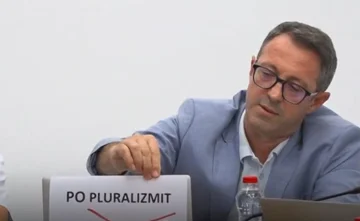
KU RTI: Talks between technical groups led by the chief negotiators are under way in Brussels. The success of negotiations and the normalisation of relations between Kosovo and Serbia depend primarily on Belgrade's readiness to change its approach and itself. In Serbia there is no pluralism. You have a party. That party is the State. And that country is the church. And this church is the party. There is no pluralism. They just act like they're democracy.
POBYDA: Do you have the impression that Prime Minister Edi Rama is better understood with the president of Serbia than with you?
KU RTI: Recently, the Government of the Republic of Kosovo and the Republic of Albania had a joint meeting, during which we together with Prime Minister Rama and his ministers signed thirteen new co-operation agreements. The meeting of two governments and signed agreements are in the background of EU integration, which is our perspective. Agreements like these will allow us to translate visions and programs of both governments into more concrete actions so that they are efficient and productive.
POBIDA: You didn't answer my question, so let me try this: Prime Ministers Rama, Zoran Zaev and President Vuciq propose to the Western Balkan countries the “Open Balkans project” Is that an acceptable idea for Kosovo?
KU RTI: We cannot have the Balkans open until Serbia is closed to Kosovo until passports, identification documents, diplomas, certificates and Kosovo seals are accepted. The Open Balkans are more like a Balkans that is open to influences from the East, especially the Russian Federation and China; open to autocratics, corruption, war criminals... All of this contrary to European values of democracy and rule of law. In a way, from Serbia's perspective, the Open Balkans means that other Western Balkan countries remain open to the Russian Federation and China as Serbia is open. Kosovo opposes that goal, insisting that Europe is our continent and the EU is our destiny.
POBJADA: To what extent has the EU's incompatibility and inaction contributed to the destabilisation of the region?
KU RTI: Some EU member states have turned consensus as inclusion into a “arme veto”, which is being misused by both Serbia and Russia.
DO YOU understand this, the new American administration? What do you expect from their return to the Balkans?
KU RTI: We always welcome American engagement in the Balkans, but the US decides on the kind and intensity of engagement itself. The Kosovo government is working closely with the administration of President Biden to strengthen democracy, implement reforms needed for NATO and EU membership, and deepen friendship so that lasting peace and security can be ensured in the Western Balkans and Europe. The presence of American troops in Kosovo is a manifestation of America's commitment to Kosovo and its sovereignty, but also to peace in the region and Europe, as well as the fight against preventing the spread of malicious factors of third parties.
As our strategic partner, the US has given confidence to our country, so the Kosovo Security Force for the first time is part of the “Defeder Europe 21” training on the territory of our Republic. The participation of Kosovo forces in the exercise, in which 27 states participated, while 16 of them were economics, clearly testifies to Kosovo's intention to create a safe and peaceful environment in Europe and beyond. US military support during this training is a link in the US support chain for the development of our country, and especially for building the military capacities of the Kosovo Security Force.
The KSF served peacefully during its first joint landing with the US Army in Kuwait and helped US and NATO partners evacuate Afghan refugees, demonstrating its ability to serve side by side with NATO member states.
POBJADA: A new European Commission progress report on Kosovo said that “political instability in Kosovo has limited the government's action, including EU-related reforms”. The situation in northern Kosovo was described as “challenge”, especially in terms of corruption, organised crime and conditions for freedom of expression. Are you satisfied with the EC report?
KU RTI: The annual report measures progress in two six - month periods before and during our government, which differ as day and night. In the last six months of our government, we have institutional stability, democratic legitimacy and high trust in institutions on the part of citizens, which is a great social progress. In the area of rule of the law, in the first six months of our governance we adopted the Law Rule Strategy, Criminal Procedure Code and Law for Anti-Corruption Agency, we finalised draft documents for verification and the first draft law on verification and confiscation of unjustified property. All of this will strengthen and improve the judicial system and fight against crime and corruption.
In the field of fighting organised crime and corruption, 519 raids and 283 police shares were conducted from April 1st to September 30st. We have also intensified the fight against smuggling, tax evasion and crime throughout the territory of the Republic of Kosovo.
In the area of vaccine and pandemic management during November 2021, we've had a single death rate from David-19; we've given over 1.6 million doses of vaccine, 64 percent of the population over 16 years of age are in one dose, and 57 percent have received two doses. We are still the first country in the region in terms of population vaccine, which is an undisputed progress.
POBYDA - What Are Economic Indicators?
KU RTI: The competitive economy and economic development are important criteria for progress towards the EU. Based on current projections and statistics for economic development, we expect that by the end of this year we will have an impressive, qualms that will strengthen us as the country with the highest percentage of economic development in Europe. According to the Kosovo Central Bank's assessment, our economy will grow by 9.9 percent. Budget revenues have increased by one third, we have greatly reduced government spending, and the Assembly has approved the budget for 2022, which is 8.7 per cent higher than the year-on-year budget revision. Economic rotation increased by 30 percent, exports 68 percent.
POBYDA: Why, then, did Vetevendosje win only four municipalities in Kosovo's October 17th local elections? What was not clear to citizens?
KU RTI: There may have been concessions on our part, on the part of our structures. However, I believe that citizens no longer want the Vetevendosje Movement. On the contrary. In the 17 October elections, we were the first with the total number of votes at the country level, as in parliamentary elections. However, local elections, unlike parliamentary elections, are another type of game and election rules. It's kind of like tennis, where you can get a lot of genes, but at the end of the set. According to the total citizens' votes, we are the first in the Republic in local elections, although mayors will have only four municipalities. Where we are in opposition we will make a good and strong opposition; Where we are in power, we will make a good and efficient government.
Serbs in Kosovo are not second-hand citizens
POBYDA: What is the status of Serbs in Kosovo? Are they, as Belgrade claims official, citizens of the second order?
KU RTI: They're not. Serbs in Kosovo make up five to six per cent of the population and are not discriminated against. As the Government of Kosovo, our programme will help Serbs as much as Albanians. If you ask Serbs in Kosovo what their main complaints or demands are, they will tell you work and justice.
Interestingly, no Serb in Kosovo has protested that the Serb majority municipality community has not been implemented. Belgrade is the one who is always angry. What Serbia is trying to impose Kosovo's citizenship and our constitutional order is not the will or will of Kosovo Serbs, but the expression of Serbia's hegemonistic aspirations.
We are committed to affirmation of Montenegrin community
POBYDA: How would you assess relations between Kosovo and Montenegro after the change of government in 2020?
KU RTI: The Republic of Kosovo and Montenegro have close co-operation in many areas. The reform agenda is promising because we have room to intensify co-operation in fighting crime and corruption, which we have to fight together on both sides of the border. Also, more can be done to facilitate the free movement of citizens and remove barriers to greater economic development and investments in both countries. We are willing to co-operate and co-ordinate the activities of the Government of the Republic of Kosovo with Montenegro Government in regional initiatives. We are grateful to Montenegro for its support and commitment to international organisations. Kosovo and Montenegro share common aspirations for EU membership and are partners in joint efforts for democratisation and development in the region.
POBYDA: The Montenegrin community in Kosovo, as has been warned in May this year, must become the constitutional category of the Republic of Kosovo as Serbs and Bosniaks and gain minority status. Do Montenegrins in Kosovo have minority status today?
KU RTI: Together with representatives of the Montenegrin community in Kosovo, we are committed to affirming the position of the Montenegrin community, as well as building trust and neighbourly relations between our two countries and our peoples.
We want Albanians in Montenegro and Montenegrins in Kosovo to enjoy all their collective cultural and political rights, which is a healthy basis for good relations between our two countries and a better future for both nations.