2 hours ago
KIPRED does research: Holding Vuciq-Putin meeting, disturbing Kosovo
Periskopi(5 years ago)
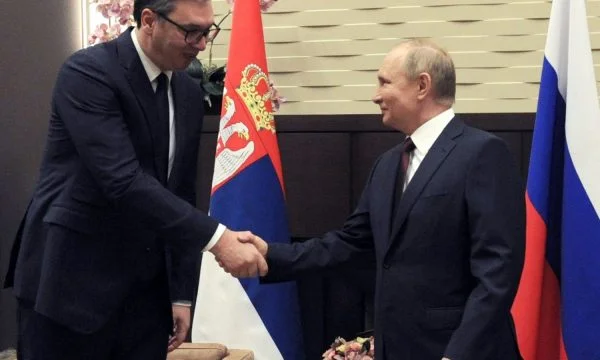
(5 years ago)The investigation of KIPRED: After the Vuciq-Putin meeting may have intensified co-operation against Kosovo intensification of Russian-Serbian co-operation against Kosovo's citizenship and stability and security in the Western Balkans, it could have occurred during Serbian President Aleksandar Vuciq's visit to Moscow and his meeting with Russian President Vladimir Putin on November 25th. This is [...]
Intensification of Russian-Serbian co-operation against Kosovo's citizenship and stability and security in the Western Balkans may have occurred during Serbian President Aleksandar Vuciq's visit to Moscow and his meeting with Russian President Vladimir Putin on November 25th.
This is the completion of a research conducted by the Kosovar Institute for Research and Development of Politics (KIPRED) presented in Pristina on 3 December.
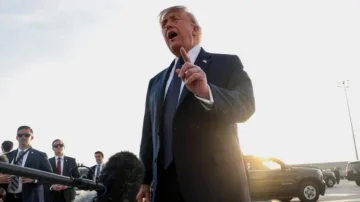
Serbia's president, Aleksandar Vuciq, has met with Russian President Vladimir Putin on November 25th in Soci and the topic of the meeting were political issues.
The Russian president stated that in terms of Kosovo, Russia's position is principled and in Serbia's support.
“As far as Kosovo is concerned, you know Russia's position is principled and is not subject to the current political situation. We support your position when it comes to resolving the problem with Kosovo and I hope that it will be resolved by adapting to the interests of all the people living there”, Putin said.
According to the KIPRED, the stagnation of dialogue between Kosovo and Serbia created good ground for Russia to intensify the diplomatic fight against Kosovo.
This war, according to research, is being made for the collapse of Western efforts to find a sustainable solution to disputes between the two neighbouring countries.
Talks on normalising relations between Kosovo and Serbia have started since 2011. A series of agreements have been reached since then, but most of them have not been implemented in practice.
Recently the obstacle in the dialogue was made to establish the Association of Serb majority municipalities in Kosovo.
The aim of the dialogue is said to be to reach a comprehensive and legally binding agreement for both sides.
Questioning the legitimacy of Kosovo's recognition by Western states, the Kremlin's policies aim to question both the currency of interstate borders not only of Kosovo and former Soviet states but also of Bosnia and Herzegovina, supporting separatist trends of Republika Srpska leader Milorad Dodik.
“Analysis of statements, of press conferences, and of other Russian foreign policy documents from August 15th to October 31, 2021, clearly indicate the continuation of the Narration intention to destroy the foundations of Kosovo's citizenship... as well as to accuse Kosovo authorities of exercising violence against the Serb community and of denying the right to fight organised crime in the entire territory of the country”, the KRED research says.
Russia's influence in the Western Balkans worries NATO.
Russia's influence, but also China's silent influence in the Western Balkans, is seen with concern by NATO as well.
Secretary - General NATO, Jens Stoltenberg, in his speech during the EU foreign ministers' meeting with NATO, said there has been tension in the situation in Kosovo and Bosnia and Herzegovina, while adding that foreign acts are trying to undermine progress in this region.
In this regard, the Government of Kosovo has told Free Europe Radio that it believes Russia's efforts in the Western Balkans “are known and evidenced”.
We're doing our best to resist these influences, always in collaboration with our international partners, with the United States, NATO and the EU” were the Kosovo Government's response on 2 December.
Russian Foreign Ministry's public activities against Kosovo have intensified since the second half of September 2021 with the beginning of the crisis in the northern part of Kosovo and with the expulsion of two Russian diplomats of Russia's Embassy Office in Pristina on 22 October.
Kosovo President Vjosa Osmani has announced that two diplomats of Russia's Interconnecting Office in Kosovo have been ordered to leave the country after being declared undesirable.
KIPRED, too, analysed the Russian media fight against Kosovo, adding that Russian state media attend the government and foreign policy narration, meanwhile, media as “Sputnik Serbia”, “Russia Today” and “T A The SS “focuses on the top of deinformation of public opinion.
Kosovo's <x0observer: Russian Diplomatic War and Dezinformation Media” It's a quarterly KIPRED report.