4 hours ago
Gerves in London: Serbia has launched systematic campaign to destabilise region
Periskopi(5 years ago)
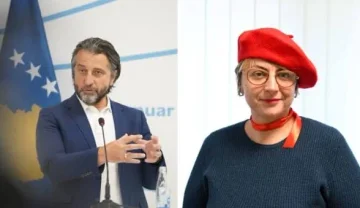
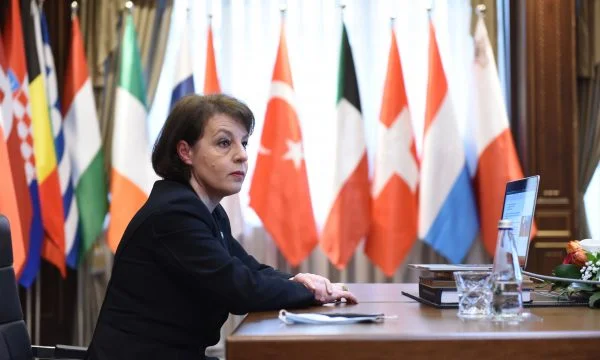
(5 years ago)Kosovo diplomacy chief Donika Grovalla declared today at the Western Balkan Foreign Ministers' Summit in London, that despite the progress that has been made since the formation of the new government, Kosovo has faced threats from Serbia. Gervala has pointed out that Serbia has sent armoured vehicles a few weeks ago, troops [...]
Kosovo diplomacy chief Donika Grovalla declared today at the Western Balkan Foreign Ministers' Summit in London, that despite the progress that has been made since the formation of the new government, Kosovo has faced threats from Serbia.
Gervala has noted that Serbia recently sent armoured vehicles, troops and fighter planes to the border with Kosovo.
However, Kosovo's top diplomat has said that Kosovo is not the only one threatened, but that there is an escalation of rhetoric from Serbia, even to several other countries in the region.
Serbian anti-nationalists are threatening Kosovo with war, provoke division in Bosnia and Herzegovina, as they did in 1991, and are trying to destabilise other countries as well. These are not isolated incidents; they are part of a systematic campaign for destabilising the region, undertaken by Russia and its representative Serbia. Just weeks ago, we were forced to leave our country with two Russian diplomats because they posed a threat to our national security”, Gervala said.
Gervala has also called the position of Serbian minister Vulin clear lies about the Recak massacre.
Full speech:
I am truly honored to attend this meeting as the United Kingdom guest, who became the savior of my people at the darkest moment in our history; we will never forget that.
We are gathered here today at an extremely crucial moment.
My country, Kosovo, has made a major turn after elections earlier this year, becoming the leader of democracy and rule of law in the Balkans. Since taking office, the new government has initiated a total of 1,401 cases linking to serious crimes, including corruption and organised crime. We are extremely committed to European values and are reorganizing our country the European way. This year we have seen a record 10% increase, as well as an increase in tax and customs revenues. As governments, we have a remarkable degree of approval.
When we mention these optimistic developments, we cannot close our eyes to reality in other areas.
Our northern neighbour, Serbia, has threatened our country with war weeks ago, sending armoured vehicles, troops and even fighter planes on our border, while the Russian ambassador to Serbia joined troops and welcomed this act of aggression.
Kosovo is not the only one threatened. We are dealing with a systematic escalation of rhetoric, where as fresh examples we can mention official praise given to war criminals like Ratko Mladic by a close ally of President Vuciq, Minister Voulin, and his pure lie just a few days ago regarding one of the most cruel massacres in Kosovo, the Recak massacre, which had sparked a rapid change in the stance of the West against Kosovo.
This isn't happening by accident. The current Serbian leadership is systematically increasing propaganda and hate speech under the government's programme to attack the West and NATO for humanitarian intervention and to treat Serbia behind an aggressive approach, again, against its neighbours.
In this direction, the Government of Serbia has also formally adopted a strategy that uses a reformed version of the ideology of “Greater Serbia”, which led to disaster in the Balkans in the 1990s. In 2021 a government official calls for the Serbian “Bot” and again Serbian nationalism says that all Serbs in the region must live under Serbian rule, as Voulin said in the summer of this year in the presence of Vuciq.
Serbian nationalists are threatening Kosovo with war, provoke division in Bosnia and Herzegovina, as they did in 1991, and are trying to destabilise other countries. These are not isolated incidents; they are part of a systematic campaign for destabilising the region, undertaken by Russia and its representative Serbia. Just weeks ago, we were forced to leave our country with two Russian diplomats because they posed a threat to our national security.
We have reached a phase that is far more dangerous than some are aware or willing to see, at least in the EU. But immediate action is needed, as well as clear communication with those who are threatening peace not only in Ukraine but also in our region.
If we are to save peace, we must act wisely and quickly. The United Kingdom will certainly be on our side in this battle for stability and peace. And for that, we are truly grateful. If we are successful, we will continue with what should be our main concern: cooperation for the good of our countries and our citizens.
Thank you very much.