2 hours ago
Serbian fight against Kosovo citizenship called for strategy, political unity in Pristina
Periskopi(5 years ago)
(5 years ago)With the year-long term of the one-year ceratorium signed at the White House in Washington, Serbia has returned to the old Avaz for fighting Kosovo's citizenship. Serbian warnings of attracting recognition to Kosovo are seen as disturbing to the country. Knowers of international relations seek real strategies from the Government to counter [...]
With the year-long term of the one-year ceratorium signed at the White House in Washington, Serbia has returned to the old Avaz for fighting Kosovo's citizenship. Serbian warnings of attracting recognition to Kosovo are seen as disturbing to the country.
International relations recognisers seek real strategies from the government to counter these Serbian claims. Although, statements by some neighbouring state officials that there are countries to consider recognising Kosovo's independence are also seen as propaganda.
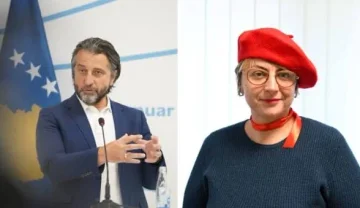
Researchers in the Group for Juridical and Political Studies, Arber Fetah, tells Kosovo that Kosovo has had to draft the strategy during the time it was in force to strengthen ties with countries that have fluctuations on Kosovo's status and new recognitions.
On the contrary, according to him, Kosovo is being placed in disadvantages, and Serbia is causing damage to the country's international prosperity.
“I believe it is disturbing to the fact that if the Government, respectively, does not have a strategy in response to this campaign, then Kosovo will be placed at a disadvantage. Serbia is causing damage to international prosperity and Kosovo's extradition as best in international society.
Lack of a strategy would have a negative impact on image and functionality in the international arena. Kosovo's government has had to have strategy in this 1-year-old moratorium as it has been, make plans and start making contacts with states that are closer to knowing Kosovo, or are more likely to know it.
Also, it has had to be that countries that have fluctuations on Kosovo's status with the completion of the mortorium have had to show their strategy and the resilience and increased bilateral relations with these states”, he says.
While Emir Abrashi from Democracy Plus says the Ministry of Foreign Affairs and Diaspora must form a department within the ministry to be taken into account only on the issue of recognitions and lobbie for new recognitions.
Abrashi says Serbia is lobbiing more on the African continent and the Pacific region. It is in those areas that Abrashi says that Kosovo is ambassadoring and is giving Serbia grounds for attracting recognitions.
It is important to operate within the MPJD a team that would only deal with the issue of recognition and make active lobbies for the new recognitions of Kosovo by visiting all angles of the world and by reaching the top institutional leaders. In this respect, the government should also seek the help of the opposition, considering that there are people in the opposition who have served in diplomacy and have worldly contacts. We should also have a union of opposition to achieve new recognitions. On the other hand, Serbia is campaigning savagely towards recognition...
We must be active, we must be present in the international arena. The withdrawal of ambassadors for such a long time creates an even greater space for Serbia to maneuver. States that are mainly African continent and the Pacific region, which are vulnerable to Serbia's campaign. And we, on the African continent, only have one embassy and we have it without ambassadors. While in the Pacific region, everyone is covered by the embassy in Australia, which is closed, without Ambassador”, Abrashi says.
Serbian claims on recognition, international relations professor Africa Hoti, are seeing them more under propaganda, until they urged the executive to focus more on new recognitions.
“We should not follow Serbia's trend and avaz, but the Kosovo government should have the strategy to get as much recognition as possible, as it is vital interest for Kosovo to have recognition. Not because Serbia did the opposite, but because we have to assume our deserved position in international relations. We definitely talk about propaganda and a special war that Serbs have been fighting for a long time.
If there was a Mr. Selankovic 12 degrees in his hand, it's naive to think he wouldn't use these. At the first possible moment, despite developments, he would publish these recognitions, I am making it conditional that through these he would advance his negotiating position”, says Hoti.
From the Ministry of Foreign Affairs have declared that the government is very committed to strengthening the Republic's international subjectivity in co-operation with international friends and partners, while accusing Serbia of never stopping the attacks on Kosovo.
Serbia has even in the past claimed to have persuaded different states to attract recognition of Kosovo. In September 2020, however, in the US, under Washington's agreement, Serbia pledged to halt the lobby for Kosovo's recognition. But, days ago, Serbia's Foreign Minister Nikola Saklakovic said there are about ten countries willing to reconsider decisions about Kosovo's recognition.