4 hours ago
A thrilling confession: Speaks of the woman surviving China's concentration camp for Muslims
Periskopi(5 years ago)
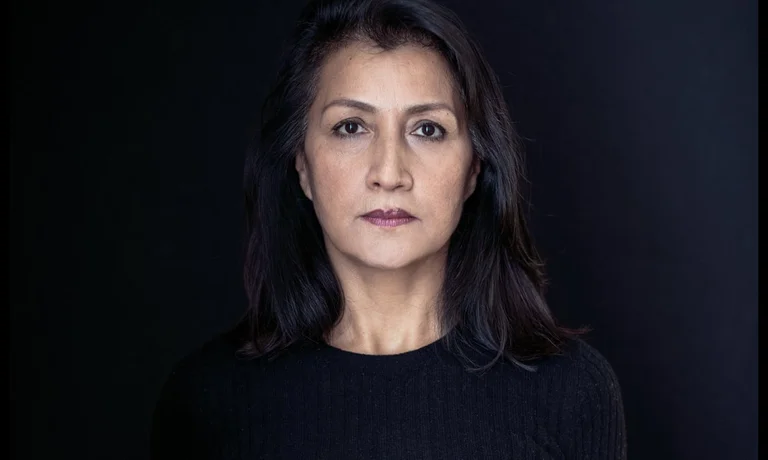
(5 years ago)After ten years of living in France, I returned to China for some documents and was immediately closed. For the next two years, they systematically dehumanized me, humiliated, and brainwashed me. The article translated from Periscope, from The Guardian. The man on the phone told me that he worked for a derivative company, “I'm counting, at the meal”. [...]
The article translated from Periscope, from The Guardian.
The man on the phone told me that he worked for a derivative company, “I'm counting, at the meal”. His voice sounded foreign. At first, I could not understand what he was talking about. It was November 2016, and I was on free vacation from the company since I left China and moved to France 10 years ago. It was hard for me to hear the person who called me.
You have to go back to Karamay to sign documents dealing with retirement you're expected, Mrs. Haitwaji,” told me. Karamay was a city in the western province of Xinjiang, where I had worked for a derivative company for more than 20 years.
In that case, I have to hire a lawyer,” I got him back. A friend of mine in Karamay cares about my administrative issues. Why do I have to come back for some letters? Why does all this work for so little? And now?
The man had no answer. He just said he'd call me in two days.
My husband, Kerim, had left Xinjiang in 2002 to look for work. At first, he tried in Kazakhstan but was disappointed after just one year. Then Norway. Then in France, where he applied for asylum. As soon as he settled there, I and the two kids joined him.
Kerim always knew he was leaving Xinjiang. The idea had taken root even before we were employed by the derivative company. We had met as students in Urumqi, the largest city in the province of Xinjiang, and as new graduates, we were looking for work. That was 1988. In newspaper work contests, there was a small phrase written: No glass accepted. This never got the husband out of his mind. When I tried to see the evidence of discrimination that followed us everywhere, with Krim, this became an obsession.
After graduation, we received job offers as engineers at the derivative company in Karamay. We were unfortunate. But then came the episode of the red envelope. In the new moon year, when the chief handed us our annual bonus, red envelopes given to the glass contained less than those given to our colleagues belonging to China's dominant ethnic group, inns. Shortly thereafter, all the glass was thrown out of the central office in a small town in the district. A small group refused, but I did not. Months later, when a high position opened, Kerim applied. He had all the right qualifications. There was no reason why he would not take that position. However, she was given to an inert worker who had no degree as an engineer. One night in 2000, Kerim came home with the announcement that he had resigned. “M've done enough,” he said.
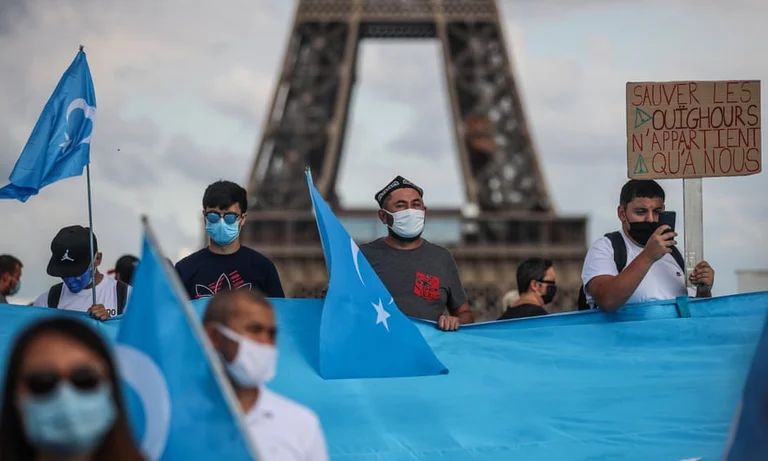
What my husband was experiencing was something very familiar. Since 1955, when communist China annexed Xinjiang as “the autonomous region”, we were seen as a thorn on the side of the Middle Kingdom. Xinjiang was the strategic and highly valuable corridor for the Communist party that dominated China. The party had invested a lot of “in its new road of silk”, with infrastructure projects targeting China's link to Europe through Central Asia, for which our region is an important axis. Xinjiang is essential to President Xi Jinping's big plans, a peaceful, business-opening Xinjiang, reflected by its separatist tendencies and ethnic tensions. In short, a Xinjiang without a glass.
I, with my chips, left in France to join the husband in May 2006, shortly before Xinjiang entered an unprecedented period of depression. My two chips, one 13 and the other eight years at the time, got refugee status, just like their father. Upon seeking asylum, the man made peace with his past. After receiving France's passport, he was stripped of Chinese citizenship. For me, returning my passport had a terrible implications: I could never go back to Xinjiang. How could I say good - bye to my roots, the most loved ones I had left there with my parents, brothers, sisters, their children? So I applied for residence permits that could be renewed every 10 years.
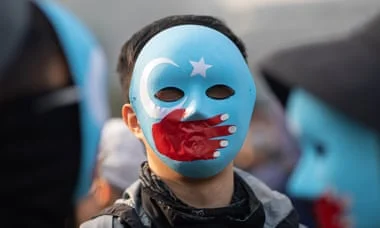
After that call, my head filled me with questions as I looked into the quiet salon in our apartment in Boulogne. Why did that man want me to go to Karamay? Was it a trick for the police to interview me? Nothing like that had happened to any water I knew in France.
The man in question even called me after two days. It's not possible to be represented by the lawyer, Miss Haitiwaji. You must come to Karamay personally.” And I went. After all, it was only a matter of few documents.
Okay, I'll be there,” said.
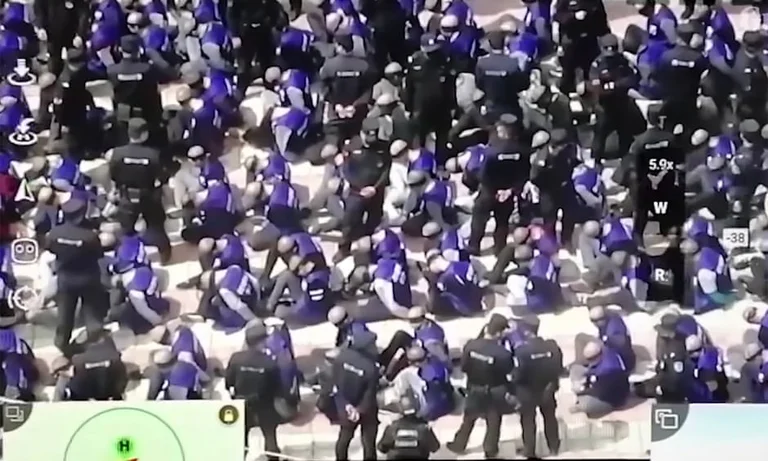
The summer of 2016 had seen another major player enter the battle between our ethnic group and the Communist party. Chen Quangwoo, who had made a reputation by imposing Dractonic supervisory measures on Tibet, was appointed leader of the Xinjiang province. With his arrival, the pressure on the waters was dramatic. Thousands of people were sent to <x0 school” built overnight in the middle of the desert. They were known as “transformation camps through education”. Prisoners were sent there to brainwash or worse.
I did not want to go there, but at the same time, I decided to go. The trip would take only a few weeks.
A few days after arriving in China on the morning of November 30, 2016, I went to the office of the drivate company in Karamay to sign documents.
The next phase occurred at Kunluni Police Station, 10 minutes trip from the company's central office. On the way, I prepared my answers to my questions. I was sent to the interrogation room. I've never seen one. One table separated the two police chairs from me. We discussed why I left China for France, my work in the oven, my coffee shop, and so on.
A police official took a violent photo of me under my nose. My blood heated up. I knew my face as well as mine: it was my daughter Gulhumar near a flag that symbolized the movement for the region's independence.
“You know, right?”
“Yes. It's my daughter. ”
You're a terrorist! ”
No. I don't know why he was on that demonstration. ”
I kept repeating that I didn't know why she was there, and that she had done nothing. The compound. My daughter was a terrorist. Neither does man.
I remember the rest of the interrogation. All I remember was that picture, the aggressive questions, and the pointless answers from me. I don't know how long it lasted. I remember when it was over. I told them, frustrated: Are we done here? One of them replied: “ ”
“Boys! Left! State! ” We were forty people in the room, all women, blue pajamas. It was a rectangular class. For eleven hours a day, we were reduced to this room alone. This was called “physical education”. It was actually equal to military training.
Our crushed troops moved through space in the union, back and forth, from side to corner.
It was June 2017, and I had been there for three days. After nearly five months in Karamay's police cells, I learned why, amid interrogations and ordinary acts of cruelty. I was told I was going to <x0... school”. Never heard of these mysterious schools or the courses they offered. The government had built them to correct the glass.
This “school” was in Baiiantan, district on the outskirts of Karamay. But this wasn't a school. It was a reform camp, with military regulations, and a clear desire to break us. Silence prevailed, but physically crushed, we did not feel inclined to talk. In time, our conversations wrinkled. The guards were always watching us; there was no way to escape that sight, no way to whisper.
With beatings we were ordered to deny who we were. Spit out our traditions, our beliefs. We criticized our tongue. To offend our people. Women like us who left these camps are no longer the same as they used to be. We are shadows, our souls are dead. They made me believe that my boyfriends, my husband and daughters, were terrorists. I was so far away, so lonely, so crushed and changed that I almost believed that. My husband, Kerim, my daughters Gulhumar and Gulnigari, I denied your <x0... I prayed that the Communist party would forgive me for the atrocities we had not committed.
They kept me there for two years. I was sentenced to seven. They tortured my body and brought me to the brink of madness. And now, after reviewing my case, a judge had decided not to, in fact, I was innocent. I was free to go. /Periscope