The diaspora vote count is continuing, VV achieves the 53rd term, PDK remains at 22, LDK falls to 18
 6 hours ago
 (6 years ago)
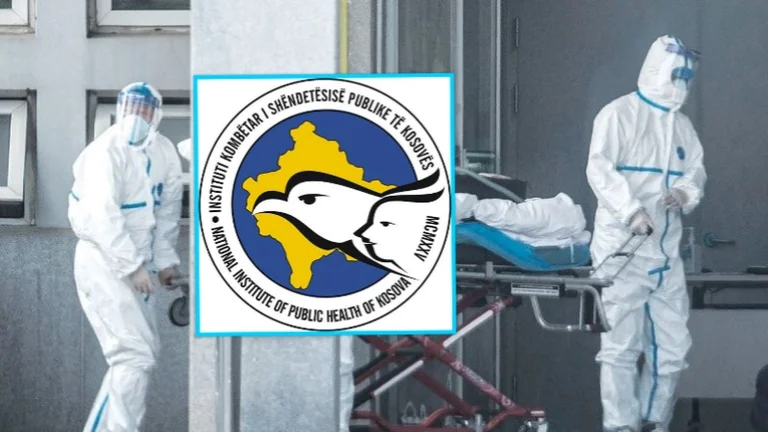
The leader of the World Health Organisation in Bulgaria, Skender Syla, has said the epidemiological situation in Kosovo is quite serious and the high number of deaths is disturbing. In an interview for Radio Free Europe, he said a large number of tests, isolation and quarantine should be more rigorous, [...]
In an interview for Radio Free Europe, he said a large number of tests, isolation and quarantine should be more rigorous, implementing other precautionary measures such as keeping distance, cleaning hands and wearing a mask, writes Radio Free Europe, broadcast Shneta newspaper.
Radio Free Europe: How do you assess the status of the pandemic in Kosovo, six months after presenting the first case with Coronavirus?
Skender Syla: Currently, the situation is very serious in Kosovo when the number of cases reported on a daily basis is known, and this significant increase in cases has increased after the release of measures, and to this day we have a three-story report of positive samples from the analysed samples.
The other fact that the devastating portion of hospital units' beds is occupied with patients who are treated by the effects of COVID-19 is even more severe in the health system to address other health problems facing Kosovo's population on a daily basis.
Radio Free Europe: Over 100 people have died in Kosovo in the past two weeks. How do you evaluate this situation?
Skender Syla: This clue is quite disturbing, and I use the opportunity to express comfort to all the families who have lost their loved ones.
Kosovo unfortunately has a relatively high death rate and by September 3rd is considered according to reported cases there are 320 deaths for 1 million people, which is the highest number if compared to neighbouring states surrounding Kosovo, when it is known that Kosovo has the newest population in Europe, these figures are disturbing and distressing.
Radio Free Europe: According to health professionals, the majority of victims from the Coronavirus are on average aged 30 to 50. How do you assess that fact, taking into account the new Kosovo population?
Skender Syla: I haven't seen any official report about the age groups of patients who ended up fatally, and their situation that might have been associated, so I can't comment on the interpretations of health professionals on the issue.
But I consider that a literal analysis of all cases that have ended fatally to come to an end for these aspects should be done, and I cannot comment hypothetically without having the opportunity to analyze any official report that analyzes all deaths on scientificly defined criteria.
Radio Free Europe: In Kosovo it has repeatedly been the high number of infected people, while the number of tests has not passed 500 a day? Should the test number increase?
Skender Syla: It should be noted that testing is only a link to the control of pandemic. In the current state of epidemiological situation Kosovo is going through, there is no doubt to be a significant addition to tests (Real Time PCR), which indicate acute or current individual infection.
The World Health Organization does not recommend serological tests for any purpose other than study or epidemiological research or to study population immunity.
These studies, if accomplished, must be done with rigorous scientific methodology. I consider that in the current epidemiological situation, a significant increase in testing and increased testing capacity should be made within the framework of Regional Public Health Institutes.
Aside from testing, it must be continued with active tracking of cases by rigorously implementing their isolation, which is the necessary prerequisite for controlling pandemic, along with other measures of prevention recommended on daily grounds by Kosovo authorities, such as regular hand cleaning, keeping distance and using the mask when distance cannot be respected
Radio Free Europe: The large number of infected is among the health workers in Kosovo, about 1,300 doctors and nurses. How do you comment?
Skender Syla: First I want to express a deep thanks to all health professionals of all levels who for the past few months have done titanium work on providing healthcare for people affected by COVID-19.
Even at the global level we have alarming numbers of those infected under health professionals so Kosovo is no exception. If you refer to global figures reported, it is considered that 10 percent of all cases reported so far are among health professionals.
There are very disturbing figures of infection within health professionals, and in this regard, WHO is providing all necessary assistance to inform decisionmakers, but health professionals on the way to prevent infections within health institutions.
In the European region, countries have reported up to 27 percent of infections that have occurred within the framework of health professionals, and there is no doubt a major concern as they are the frontline to provide assistance to patients.
Radio Free Europe: What do you think the reasons are? Is special training needed for nurses and doctors who are in contact with infected persons?
Skender Syla: The reasons are numerous and the virus is widespread in the community in Kosovo and health professionals, except that they can be infected in their workplace, they can be infected in families, communities and other environments.
In this context, a particular importance should be devoted to protecting health workers at all health care levels. Masks must be used constantly by all without exception, including technical assistance personnel as well as patients who frequent health institutions.
O The BSH has conducted numerous online training for preventing infections within health institutions, as well as adequate use of protective equipment for health staff.
I strongly recommend to health staff in Kosovo that I attend these online training on daily grounds to update their knowledge of ways to prevent infections and protection of health personnel from COVID-19.
Radio Free Europe: How do you assess the management of pandemic in Kosovo by Kosovo institutions?
Skender Syla: Understandably, this is a major challenge for all states, even those countries that have greater financial and human resources. Even in Kosovo numerous efforts have been made from the start to address problems, but I think additional commitment is needed in implementing the previous measures.
Kosovo has good laws, strategies, even very good material for communication with the public, but it seems that we are being blocked to adhere to these strategies that are properly compiled. Countries that have succeeded in managing pandemic have had a blend in implementing measures undertaken by governments and embracing and pro-active access by the community. This approach should also be in Kosovo, because this is a marathon and it's not a spring.
Radio Free Europe: When can the vaccine against the coronary be cut?
Skender Syla: It's not exactly dated or months when we're gonna have the vaccine against COVID-19, but currently the world's scientists are making superhuman efforts to get an efficient and secure vaccine.
Currently, over 200 vaccine candidates are in different stages of development and three or four of them are in the third final stage, and we can expect that before the end of the year we will have the vaccine available which is understood to be safe and efficient and that next year will begin the vaccine in different parts of the world. Logistic capacity for their production is also needed.
Radio Free Europe: How can Kosovo provide the vaccine when it enters into use?
Skender Syla: No conditions. WHO has since the beginning of the pandemic lobbied for vaccines to be accessible in all countries of the world despite material conditions and other resources. So on the global level, there is a platform called Kolaks, which is helped by rich states in order to help countries that have more limited resources and in this direction, Kosovo will not lag behind as has been the case even during the H1N1 pandemic when vaccines have been provided for the population of Kosovo at the time.
Even this time it will be available for countries in the region, as will Kosovo, because O's approach The thing is, nobody should be left behind. Understandably, the vaccine is taken into several stages, initially a smaller percentage to vaccinate priority categories, such as health professionals, and then other categories on the basis of availableness. But I am convinced that when vaccines for the rest of the world will be available, Kosovo will not lag behind.
Radio Free Europe: In the end, what are your recommendations for Kosovo health institutions for better management?
Skender Syla: As we are gradually approaching the autumn and winter season and there will be other flu viruses in circulation, an important step is for Kosovo to vaccinate as many people as possible against the seasonal flu.
Also, a significant increase in testing, isolation and rigorous quarantine of cases, implementation of other prevention measures such as keeping distance, cleaning hands, and wearing a mask.
The mask is not a decor, to be placed on the beard or elbow. It should be used just as foretold by instructions given through numerous videos. However, it is not enough to apply just one measure; all of it must be applied - and rightly - for proper success. /European. org
 8 hours ago

 10 hours ago