The diaspora vote count is continuing, VV achieves the 53rd term, PDK remains at 22, LDK falls to 18
 6 hours ago
 (6 years ago)
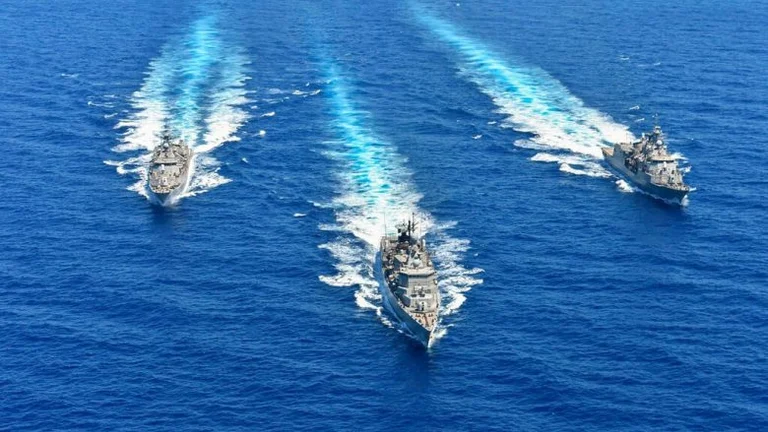
NATO's two allies, Greece and Turkey are already facing a new and dangerous crisis. In this throne game, Germany alone seems to be able to enable the conversion of both sides to normal. In essence, natural resources are often the motives of dangerous disputes between countries in the world and [...]
NATO's two allies, Greece and Turkey are already facing a new and dangerous crisis. In this throne game, Germany alone seems to be able to enable the conversion of both sides to normal.
In essence, natural resources are often the motives that begin dangerous disputes among countries in the world, and in this case are rich gas deposits discovered over the past decade in the eastern Mediterranean, writes the New York Times.
Greece claims that its many islands in that region give it the right to explore in the waters around the area, a stance widely supported by international law. Meanwhile, Turkey blocked, it sent ships accompanied by warships to track natural resources in Cyprus.
The disputes between Greece and Turkey are nothing new. What is further complicating the current situation is that gas reserves are being monitored by other countries as well. In principle, large reserves must unite these sites so that they can share each of their assets on their shores. In fact, most countries such as Greece, Cyprus, Israel, Egypt, Italy and Jordan have even applied this method.
Turkey in this case has felt itself excluded, due to Greece's territorial claims.
Further complication of this issue is that Turkey, although a NATO member, is not part of the European Union; Cyprus is an EU member but not a NATO member, while Greece is a member of both. There is the fact that Cyprus is divided south with Greeks and in the north with Turks, although no one but Turkey recognises the Turkish part as a particular state, reports the New York Times.
An effort by Germany to resolve this knot between the two states arose when Greece entered an agreement on natural resources with Egypt, which effectively claimed rights over the wide sea area -- a similar deal had occurred between Turkey and Libya. Thus, Turkey resumed exploration and operations, which were monitored by a Greek naval ship.
Meanwhile, on August 12th, the Greek warship managed to impact a Turkish ship, and things began to become tense.
France, which was angry with Turkey for its support of Libya, briefly sent several warplanes and warships, where they are also doing operations together with Greece, Italy and Cyprus, to prevent further research by Turkey.
Greece, meanwhile, announced the extent of territorial waters on its western coasts up to 12 miles to warn Turkey that the same could do the same on the Aegean Sea to its eastern part, this action will not be tolerated by Turkey, writes the New York Times, records Telegrafi.
What seems strange is that Mediterranean countries and Europeans are sinking into external tensions, where there are so many serious crises, such as the economy, pandemic, clashes in Belarus, and Russia's threat of intervention in Belarus.
Thus, amid tensions between Greece and Turkey, Germany appears to be taking responsibility for resolving these current problems that are occurring between the two states.
It will at least try to invite the two countries to the negotiating table, reports the New York Times, broadcast Telegrafi.
Although international law is mainly on the side of Greece, Turkey's explorations in disputed waters have not yet crossed a red line.
On Friday, EU foreign ministers met in Berlin and effectively supported Germany's role in the middle, prompting any discussion of sanctions against Turkey until the EU heads of states meet at the end of September.
When tensions reach the Eastern Mediterranean level, as German Foreign Minister Heiko Maas has said, “and the smallest spark could lead to a catastrophe”.
Germany has called on all sides to immediately halt provocative military exercises, a step that must be followed with halting activity for the search for controversial waters.

 9 hours ago


 10 hours ago