3 days ago
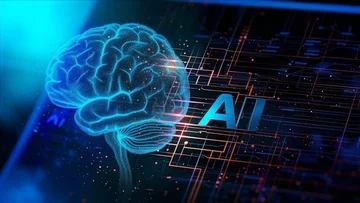
EPOCAL: Robots with Artificial Intelligence learn from “light speed” and without supervision
Periskopi(6 years ago)
(6 years ago)Scientists have achieved an age-old discovery in the development of artificial intelligence using light instead of electricity to perform estimates. This new effort has also significantly improved the speed but also the efficiency of cars learned by the neural networks a form of artificial intelligence that attempted to replica [the] functions.
This new effort has also significantly improved the speed but also the efficiency of cars taught by neural networks a form of artificial intelligence that attempted to replicate functions performed by the human brain in order to teach itself a duty without supervision.
Thus much-used learning machines are limited to shaping complex operations by the power required to process data, writes Independent, translates Periscope.
The more intelligent the task, the more complex the data, and therefore the greater the power required.
Such networks are also limited by the slow electronic transmission of data between processor and memory.
Researchers from George Washington University in the U.S. found that the use of photons inside the neural network (sight called) in processing units (TPU) can overcome these restrictions and create more power and more efficiency in artificial intelligence robots.
A newspaper describing today's published research reveals that its TPUs based on photons were able to perform between 2-3 orders of a higher than electric TPU.
This is expected to have a tremendous impact on the world of technology. /Periscope