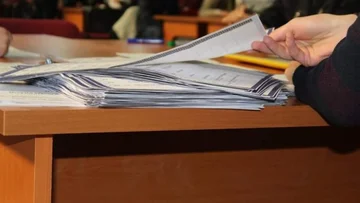
The diaspora vote count is continuing, VV achieves the 53rd term, PDK remains at 22, LDK falls to 18
 7 hours ago
 (6 years ago)
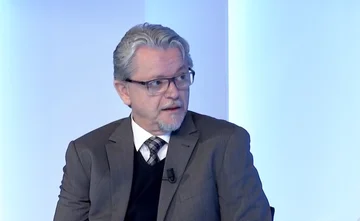
Experts from the Council for Foreign Relations in the United States, Charles Kupchan, believes that at the June 27th meeting at the White House in Washington, the Kosovo delegation and Serbia's delegation can come up with a preliminary agreement that paves the way for the final agreement. In an interview for the Balkan Service [...]
In an interview for the Balkan Radio Service Free Europe, Kupchan said he believes a meeting of this format would be strange to organise if everyone, in the end, returned home without having what to present.
Radio Free Europe: On June 27th, the Kosovo delegation and Serbia's delegation meet to launch a new round of negotiations supported by the United States. This is happening at a time when the European Union has intensified efforts to get the parties back to the negotiating table. What is your view of the June 27th meeting?
Charles Kupchan: I think a lot of things are coming together to set the floor for the meeting. One is the change of government in Kosovo where you had Prime Minister (Albin), Kurti, a person who was more hesitant in terms of dialogue and who was not willing to lift trade sanctions imposed on Serbia. We still do not know exactly where the new prime minister (Avdullah) Hoti stands on certain different issues. He has made a statement that seemed to show the distance between him and President (Hashim) Thaci, but Thaci clearly continues to be in control and to lead negotiations with Belgrade. So one issue is that you have a change of government and you have even the removal of the fee, which opens the door to move.
The second is that (Richard) Grenelli has left the ambassador's position in Germany, and he has no more time and energy to dedicate the Balkans and is clearly entering the issue.
Third, I think the President (Donald) Trump would be happy to have a victory, a kind of diplomatic progress at his hour, because he didn't have much success in diplomacy.
Radio Free Europe: Until Miroslav Lajcak came to Kosovo on Tuesday in an effort to revive negotiations on normalisation of the reports, it is not clear whether there will be a split dialogue in two or the processes will complement each other. What will be the role of the EU in these talks that will take place in Washington in a few days?
Charles Kupchan: I think we are witnessing how dialogue between Kosovo and Serbia is becoming a trap, which I would consider the lowest point of reports between the US and the EU in many decades, perhaps since World War II. It is no secret that the president's administration (Donald) Trump has taken a view in relation to Europe that most Europeans consider difficult even when it comes to trade, climate change, or even nuclear agreement with Iran. And Grenelli, while ambassador to Germany, was almost person “non-grata” in Germany because most Germans considered him useless and simply couldn't support the way he did things.
Thus, we have dialogue between Kosovo and Serbia playing another element in unfriendly relations between the US and the EU. In this concrete case, I think there are differences of opinion. We don't know where Mr. Green is in exchange for territories because he hasn't spoken much about the matter. On the scale he has spoken of, he seems more focused on economic ties than on territorial compromises.
Radio Free Europe: What can negotiations in Washington produce? Is it possible that Kosovo and Serbia will leave behind past disputes?
Charles Kupchan: I'd be very surprised if we were dating Washington. Such achievements do not usually appear overnight. I think that this, especially is true in a case like Kosovo and Serbia, where it has to carry out many house tasks to get the domestic population ready, the involvement of parliament, and the establishment of domestic support for the agreement. So, more is to get the table ready to move forward, but we'll see.
From what Greenell has said, they want to focus here on economic rather than political compromises. This would be consistent with the approach of Presidential Administration (Donald) Trump in relation to the Palestinian-Israel conflict, where they initially focused on economic assistance to Palestinians, that is, creating economic conditions to achieve peace. The goal here is to improve the economy in Kosovo and Serbia, find people good jobs, and if that happens, it will be easier to become a political agreement.
Radio Free Europe: If there's only access to the economy. Can compromises be ruled out?
Charles Kupchan: Economic inclusion and economic development now is a replacement for political solutions. We learned that on many occasions. Joint investments between Bosnian Serbs and Bosnian Muslims have not helped. We have joint investments between Palestinians and Israelis, but it doesn't really help that much. Japan and China trade and invest with each other, but their relationship is very poor. So, at the end of the day, the establishment of reports between Serbia and Kosovo will be related to policy and normalisation. It will not depend on trade and investment. When I say that, trade and investment can help, they can push the report in the right direction. It can create moments that may be necessary when leaders make difficult decisions and need to sell to the public.
Radio Free Europe: Former Kosovo Prime Minister Albin Kurti has accused Richard Grenelli of rushing into reaching the agreement between Kosovo and Serbia, as well as that the agreement will include changing borders. Will this be on the agenda?
Charles Kupchan: It's hard to speculate. I believe we know that the issue of border correction or exchange of territory has been a topic for a long time. It's an extremely controversial issue, until the U.S. administration of Trump and the U.S. Government opted to oppose it. Of course, there would be many controversities in Kosovo and to a large extent in Serbia. I guess it's on the table, and I guess only because we know Thaci and Vucinq have explored this idea in the past, just from some of the reports we have. I'm someone I believe should be at the table, not because I hope that's how negotiations will go. I'm not a follower of the exchange of territories, but still my view is that if a territory exchange offers the only way for two states to get closer to each other and to have lasting peace, then let's have it part of the discussion.
Radio Free Europe: What the Washington meeting looks like. President Donald Trump will be involved. Can he view this as an opportunity to meet or take photos with the parties?
Charles Kupchan: I think we still don't know the exact contract of the meeting. We don't know the results. I don't think anyone knows. It is possible that participants will surprise us and leave this visit with a plan for agreement. We never know. Green has been involved for a long time. He's had a success, for example, to finish his airline job. I doubt all this commitment and the question could be made that much, if there were not at least hope that a substantial progress could be achieved.
Radio Free Europe: Do you think the Trump administration would only be enough to resume dialogue or target something more concrete, as far as the final agreement between Kosovo and Serbia is concerned?
Charles Kupchan: Anyone could speculate that the outcome would be a concrete agreement, say specifically in business matters, perhaps even cutting off the communication campaign and a guide on how to get from here to full normalisation. This guide will then serve as a basis for ongoing discussion to move forward. It seems to me that these talks should include the EU.
Radio Free Europe: In Serbia's case, Serbia estimates that it will at least take something to cure “pride”, as it may sooner or later recognise Kosovo and in return reckon to benefit something. Vuciq has said it is much more important that in the battle of elephants Serbia remains unscheduled. How should this statement be viewed?
Charles Kupchan: The trip to Washington is an important step that causes headaches in Europe, but I do not expect it to be a movement to permanently put Europe aside. I expect it to be a continuous and strong diplomatic process between the EU, Pristina and Belgrade.
Radio Free Europe: Kosovo President Hashim Thaci has earlier stated that there is nothing to negotiate with EU envoy Miroslav Lajcak. But, just as President Thaci and Vucic seem to prefer US-backed negotiations. How should these attitudes and the role of the EU be viewed?
Charles Kupchan: Lajcak is a professional. He knows what he's doing. It is in the interest of Pristina and Belgrade to work closely with and with the EU. Are we now seeing an animation from Washington and the US playing the leader's role in reaching the deal? Yeah. Can we expect this to follow with a return to the European Union? Yeah. That's because the Balkans are part of Europe. The Balkans are aiming for EU membership, so the EU should be part of this equation.
Radio Free Europe: Official Moscow has announced it supports an agreement that is acceptable to Serbia. Before leaving for Washington, President Vuciq will remain in Moscow. Is he trying to get support from Russia on this issue?
Charles Kupchan: Vucinqi has always tried to defend his decision and maintain close ties with Russia. Russia always aims to have presence in the Balkans. We have seen Russia's involvement in Montenegro before NATO membership. We know they are involved in Greece and Northern Macedonia before the resolution on the name issue. Vucinqiki is very good at playing with different audiences. When he wants to play in Europe, he plays with Europe. When he wants to lean on Putin, he does so very well. When he wants to be in front of the United States, he does that too. It's one of his political assets.
Radio Free Europe: Can President Donald Trump's election campaign have a positive impact on any possible reaching agreement between Kosovo and Serbia?
Charles Kupchan: The U.S. is now being dominated by two very important issues. The first is pandemic and the other is racism, the protests that are being held throughout the country. I think these two issues will continue to dominate until the November elections. Foreign policy can take a little bit of focus, but not much. I believe Trump could use something of it to say that I was able to reach a deal, I'm a good negotiator, an understanding of the agreements. At the moment, there's nothing I can use. So maybe he in this direction is looking towards the agreement between Kosovo and Serbia. But even if he succeeded, it would have a very modest or little impact on the outcome of the November elections.
Radio Free Europe: Do you believe that President Trump would be pleased with only the launch of talks between Kosovo and Serbia or that he needed at least something tangible?
Charles Kupchan: I expect there to be something at least. It would be strange to arrange a big meeting like this and to return home without having anything to present. I expect at least a tangible progress on economic issues and then a guide or a timetable for what will happen in the future.
Charles Kupchan is a senior associate at the Council for Foreign Relations in the United States, as well as professor of international affairs at Georgetown University in the United States.
 9 hours ago
 11 hours ago