8 minutes ago
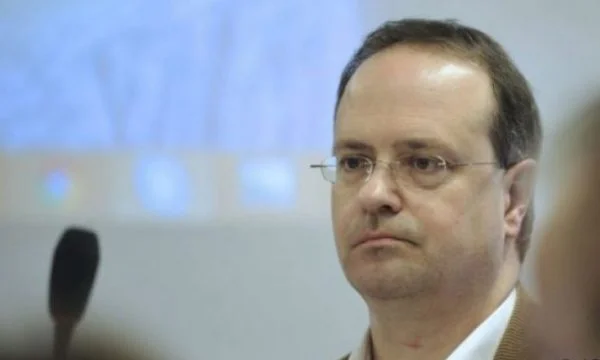
Weber: Berlin and Paris will take the key role in Kosovo- Serbia
Periskopi(6 years ago)
(6 years ago)Political analyst at the German Council for Democraticisation, Bodo Weber, has said Germany and France's warning of greater involvement in dialogue should be interpreted as calling to resume negotiations immediately. “Article is first a strong recommendation from Berlin and Paris to take the lead role in dialogue, and for [...]
Political analyst at the German Council for Democraticisation, Bodo Weber, has said Germany and France's warning of greater involvement in dialogue should be interpreted as calling to resume negotiations immediately.
“Article is first a strong recommendation from Berlin and Paris to take the lead role in dialogue, and to stress that dialogue in the past has been, and remains the one led by the EU. Second, the most important sentence for me is the insistence that there are no short solutions and quick adjustment”, Webster said.
In a published opinion, French Foreign Minister Jean-Yves Le Drian, and German man Heiko Maas have said they are determined to resolve all remaining obstacles between Serbia and Kosovo.
A serious approach requires well structured, deep negotiations with the EU as a play mediator. A more solid mediating and political determination is needed, which you can expect from Miroslav Lajcak and his team with the support of High Representative Borrell, as well as the Berlin and Paris”, they wrote.
Weberi says the statement clearly refers to the fear raised in recent days, that if there may be a renewed push for a quick and false adjustment, “means agreement on exchange of territories, ahead of US presidential elections, in August-September”.
German analyst estimates that obstacles could be presented in trying to reach the agreement.
“Taking into account various possible scenarios related to the Constitutional Court's upcoming decision to resolve the situation after the no-confidence motion vote -- on the one hand, and June parliamentary elections in Serbia on the other -- a new round of Brussels negotiations cannot happen before July, with August” realistic, Eeber said.
According to him, the main obstacles on one side are the performance of US envoy Green, “that undermines the EU's main role in negotiations and creates maneuvering space for political elites in Kosovo who pursue domestic political goals, and on the other hand, the confusion produced by the EU itself over its determination to lead negotiations on a final, inclusive agreement based on the principles and goals that make up political dialogue in 2012-13x1>.
Weber says the EU is trying to end Serbia's hostile approach that opposes Kosovo citizenship.