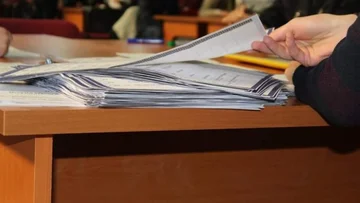
The diaspora vote count is continuing, VV achieves the 53rd term, PDK remains at 22, LDK falls to 18
 7 hours ago
 (6 years ago)
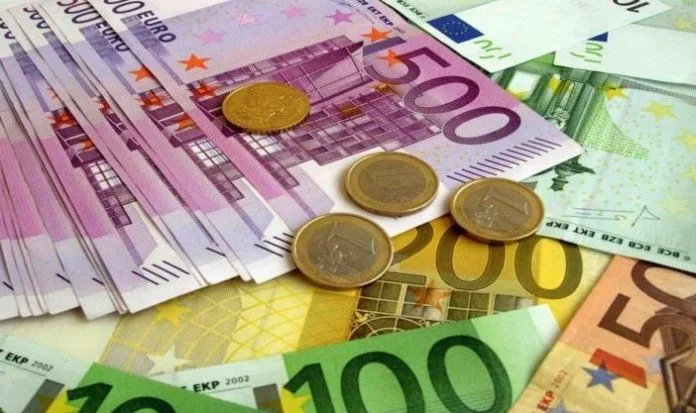
Kosovo is going from one political crisis to another, and this has narrowed the economy, which is expected to be hit the hardest in the past ten years, economic experts say. Experts consider the losses in the economy to be even greater during and after the COVID-19 pandemic, until institutions and [...]
Experts consider the losses in the economy to be even greater during and after the COVID-19 pandemic, as institutions and political leaders in Kosovo prioritize political issues and put economics behind them.
This situation, economic experts say, has hampered institutions in finding alternatives to helping the economy at this time of crisis from the pandemic, though Kosovo's incumbent government officials disagree with this assessment.
Safet Gerjaliu, an expert on economic issues, tells Radio Free Europe that many economic processes in Kosovo during this time have remained hostage to a political instability that has been created in Kosovo.
“We are witnessing a bitter reality created in Kosovo. It must be acknowledged that Kosovo has entered from the crisis to the economic crisis. Political instability in a psychological way is narrowing the hope of citizens. Many processes have remained hostage to such political discourses. What's most disturbing is that even the pandemic as the pandemic is politicised”, Gerjaliu says.
Kosovo has been operating with government in office since March 25th, after voting in the assembly of no-confidence motion against the government, which is led by incumbent Prime Minister Albin Kurti.
Gerxhaliu adds that all of this political situation, which has dominated the country, has caused to lack exit strategies for the problems facing Kosovo's economy during the time of the coronary pandemic.
“Policy should be in the function of sanctioning and not in the function of protagonizing and exploiting this pandemic for populism. The challenges are great, and we need to learn from the experiences of various countries. Economics and economic development should be priorities, and only in this way can negative effects” be minimized, Gerjaliu says.
Government officials in office, meanwhile, say the political agenda has in no way hampered steps that have had to be taken during the time of pandemic, economically.
Kryeziu, the government's acting spokesman, told Radio Free Europe that they have adopted a Fiscal Emergency Package worth about 180m euros, which is under way and that they are drafting the second package, which has only economic recovery in focus.
This, according to him, shows that Kosovo's incumbent Government has not forgotten its responsibility for economic health.
But Kryeziu adds that if it were another political situation, it could take more effective steps.
“If there was a better interpolitical approach, undoubtedly attention would be even greater in economic terms, but we have acted in a polarised economic environment, in a parliament that does not express readiness to help the country's economy through co-operation with the Ministry of Finance and Transferes”, he says.
International financial institutions have approved loans for Kosovo to cover losses from the COVID-19 pandemic, but this money cannot be taken, as such agreements require ratification in the Kosovo Assembly and the votes of two-thirds of all MPs.
The government is the main sponsor of laws that are adopted in the assembly, but it is unclear whether the current government in office can do so.
Economic associations in Kosovo, on the other hand, have asked Kosovo's institutional leaders to focus on its economy and recovery after the losses that have been caused.
According to some data that Finance and Transfers Minister Besnik Bislim presented in an interview for Radio Free Europe, losses are great for Kosovo and that of up to 6m euros a day.
American Economic Oda in Kosovo (OEAK), through a public announcement sent last week, has called on the country's institutions to demonstrate strong will and serious commitment to achieving overall political stability.
“Political stability is key to boosting domestic investment and attracting foreign investment”, an OECA statement said.
Kosovo's economy has been unable to ease economic and social problems over the years with an average economic growth of 4 per cent, which it has marked in recent years.
After the pandemic, predictions for Kosovo's economy are grim.
The International Monetary Fund after the pandemic has projected Kosovo's economy to shrink by 5 percent.
 9 hours ago

 11 hours ago