an hour ago
About 1 million doses per month, British companies prepare for coronary vaccine
Periskopi(6 years ago)
(6 years ago)A British producer who is expected to take over the production of the vaccine that British scientists are developing against coronarys says that within May, he hopes to confirm whether he can produce a million doses of vaccines a month. The idea is to create sufficient supplies of the vaccine to be ready for use once given [...]
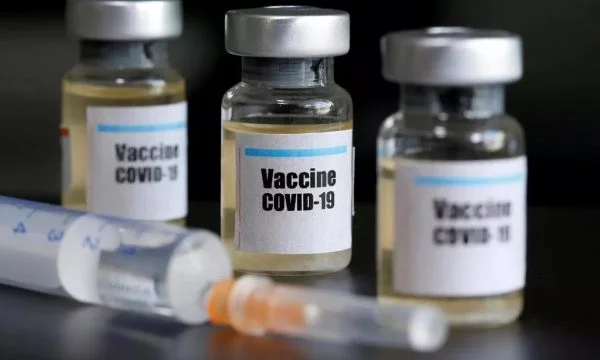
A British producer who is expected to take over the production of the vaccine that British scientists are developing against coronarys says that within May, he hopes to confirm whether he can produce a million doses of vaccines a month.
The idea is to create sufficient reserves of the vaccine to be ready for use once approved by authorities.
Cobra Biologists is one of the firms that can obtain authorization to produce ChAAux1 nCV-19 vaccines that scientists are developing at Oxford University.
The company's executive chief, Peter Coleman, said the firm does not take over the efficiency of the vaccine, since it is up to Oxford's scientific team to conduct evidence to prove that the vaccine works.
But he said that in mid-May, 200 liters of production will be tested. If the evidence succeeds, the company will be ready to produce 1 million doses of vaccines a month.
These doses are enough for clinical trials, but maybe as a good start for the reserves needed for commercial application”.
We're operating at a much faster rate than usual. The fact that we can start creating vaccine reserves before the first phase (the clinical trials) is very unusual,” said Mr. Coleman of the Reuters news agency.
Cobra Biologists is not the only producer. A number of pharmaceutical labs and producers have been committed to supporting British scientists' efforts to a coronary vaccine.
Despite the acceleration of the vaccine development rate, British Foreign Secretary Dominic Raab said it is unrealistic to expect a vaccine before the end of 2020.
Let me speak clearly on this subject. Tests and vaccines are very important, and we're doing our best to do it. But it would be unrealistic to expect a vaccine in action before the end of the year. Therefore, testing, identifying and tracking contact of infected persons are the best measures we have at this time,” said Mr. Raab.
The vaccine work continues at a number of labs in the world. In response to the size of the current crisis, authorities in a number of countries have eliminated several bureaucratic barriers to the development of the vaccine, however, the medical protocol requires that the evidence be conducted in periods of several months, which extends the process.