4 hours ago
German ambassador criticises the EU for Kosovo's visa non-liberalism: We did the job.
Periskopi(6 years ago)
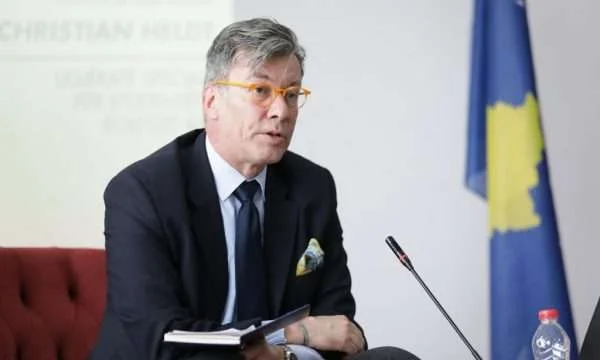
(6 years ago)Germany's ambassador to Kosovo, Christian Heldt, has said that there is a continuing membership of visa liberalisation for Kosovo, as well as many people from political forces in Germany and Brussels. He was reluctant, however, to talk about the date, but stressed that Germany's chairmanship will begin in July. Ambassador [...]
Germany's ambassador to Kosovo, Christian Heldt, has said that there is a continuing membership of visa liberalisation for Kosovo, as well as many people from political forces in Germany and Brussels. He was reluctant, however, to talk about the date, but stressed that Germany's chairmanship will begin in July.
Germany's Ambassador to Kosovo, Christina Heldt, explained on show D The ESK in KTV, the situation about visa liberalisation for Kosovars, and carefully made it clear that the priority for now is pandemic, and liberalisation remains for the German presidency in the EU.
I'm very careful about this because I know what a complex process this is. At least, the only thing I can say is that I regularly arrive for this, and by political forces in Germany and in Brussels there are a lot of people who have opened up for it. Politicians who have been here in Kosovo and who know the situation from all parties”, he has said.
Asked whether it was optimistic that member states might agree on the issue of liberalisation, he has said that “really hopes”, though he has not wanted to give the date.
Now, we are faced with the impact of the chorus on decision-making troops. We will now move behind the Croatian EU presidency, where they also had to postpone the Western Balkans Summit. From July 1st on we will enter the German presidency. I really hope so, but I'm not going to make the mistake of talking about dates and the correct perspective”, he said.
Heldt has also talked about the way the European Union operates. He mentioned three pillars.
“is the European Commission, the European Parliament and the so-called European Council, which in essence are member states”, he has said, continuing that the European Commission had done its work in 2018, with the recommendation.
Heldt, as if all EU officials so far left the responsibility for what is seen as failing to keep promises and disappointment for Kosovars to the European Council -- that is, to member states for failing to realise liberalisation so far, despite the fulfillment of obligations and positive assessment of them by the EC and EP.
The European Parliament carried out its work by the end of 2018 with positive votes at the plenary session and in all relevant commissions. Those who haven't done their job are us, member states”, he said.