The diaspora vote count is continuing, VV achieves the 53rd term, PDK remains at 22, LDK falls to 18
 4 hours ago
 (6 years ago)
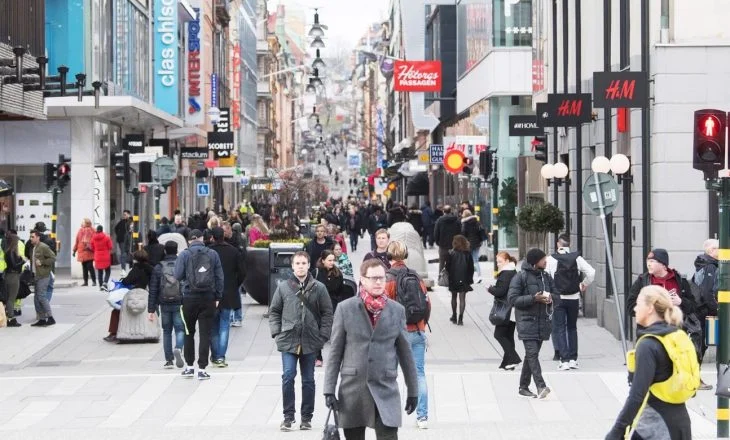
While most of Europe imposed major restrictions on public life to curb the spread of the choreographer, one country stood out to the contrary. Sweden did not get into a deadlock and imposed strict social distance policies. Rather, it mobilized the population, basing its confidence in its citizens. He advised [...]
Sweden did not get into a deadlock and imposed strict social distance policies. Rather, it mobilized the population, basing its confidence in its citizens. He advised older ones to avoid social contact and recommended that people work from home, wash their hands regularly, and avoid unnecessary travel. Also, schools for children under 16 remain open, as do many businesses, including restaurants and bars.
But this approach is highly critical. Among them are 22 high profile scientists who wrote in the Swedish newspaper Dagens Nyheter last week that public health authorities had failed, and urged politicians to take stricter measures.
The architect of the strategy is Anders Tegnell, an epidemiologist at the Swedish Public Health Agency. Tegnell said: “I think what happens is overrated. As in many other countries, we aim to level the curve, slowing the spread as much as possible, otherwise the health care system and society are in danger of collapse. This is not a disease that can stop or disappear - at least until a vaccine is produced. We need to find long-term solutions that keep the spread of infection at a normal level”.
What every country is trying to do is keep people away, using different measures and based on the traditions and customs each country has. That's why we ended up doing things a little different. Swedish laws on infectious diseases are largely based on voluntary measures and individual responsibility. Clearly, it is said that the citizen is responsible not to spread a disease. That's the point from which we're headed because there's not much legal opportunity to close cities in Sweden, using actual laws. Karantina may be considered for people or small areas, such as a school or a hotel. But we can't close an entire geographic area.
What evidence did Sweden base on this approach?
It's hard to talk about scientific basis with this type of disease, because we don't know much about it, and we're learning as we're acting, day. The closure of borders has no scientific basis, in my opinion. We've been monitoring many European Union countries to see if they've published any analysis of the effects of these measures before they started and we didn't see any place to support border closure on scientific grounds.
The closure of borders, in my opinion, is ridiculous because COVID-19 is in every European country now. We have more concerns about movement within Sweden. As a society, we are more at attracting attention: constantly reminding people to use measures, improving day-to-day measures, where we see they need to be adjusted. We don't need to close everything because it would be counterproductive”.
 6 hours ago

 8 hours ago