39 minutes ago
124 years ago, modern Olympic Games began
Periskopi(6 years ago)
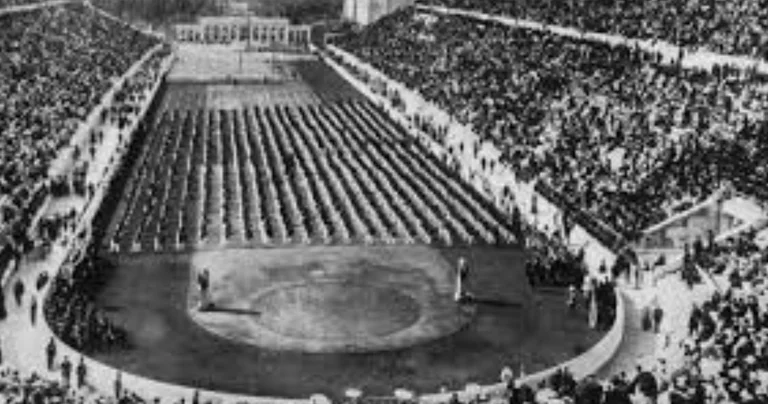
(6 years ago)The 241 racers could not imagine the history they were doing when they gathered at the “Panathenic” stadium in Athens to mark the opening of the 1896 Olympics on April 6, writes “Yahoo! Sports”. Even the view of the Olympic flame was more than half a century away - and issues like therapy for [...]
The 241 racers could not imagine the history they were doing when they gathered at the “Panathenic” stadium in Athens to mark the opening of the 1896 Olympics on April 6, writes “Yahoo! Sports”.
Even the view of the Olympic flame was more than half a century away - and issues such as the therapy to lower hormone levels were not at all at the time, since all contestants were male.
Conveniating Pierre de Coubertin's vision at the first modern Olympic Games were ten sports, although sailing left the programme because of a lack of competitors.
Because of the organisers' refusal to build a pool, all four swimming disciplines were held at sea. According to stories that circulated many years later, the only American racer, Gardner Williams, was thrown into the sea for the start of the race in 100 meters and immediately came out of the sea saying: It's ice! ”
Weightlifting competitions were divided into one hand and two - hand - lifting disciplines. It was there that the first Olympic champion from Britain, Lawnceston Elliot, a Mumbai-born contestant, emerged.
Elliot won one hand's weight - lifting gold while having to enjoy the silver in two hands. In this discipline, he raised weight the same as that of Danish Viggo Jensen, but Jensen was given gold for the superior style of standing up.
Elliot also competed at 100 meters of running, which Tom Burke won, traveling the distance for 12 seconds and also on rope climbs, where racers tried to climb a 13 - foot - high [14 m] high rope at the earliest possible time.
Only two racers finished the 12-hour cycling race, where British Frederick Keepingh crossed Austrian Adolf Schal.
The tennis tournament, in which there were no British or American contestants who were leaders, had a surprising winner. Bonyak from Dublin, John Boland, who was taking a break in Athens, triumphed.
Pushing him to take part in the tournament despite his modest and inexperienced international reputation, Boland triumphed in individual competition before winning gold in couples in tandem with German Fritz Traun.
Despite financial concerns, the 1896 Olympics resulted in success, evidently more than those that followed in 1900 and 1904. The boys who attended in 1896 secured the site in history.