8 hours ago
New York Times: America's Coronavirus helped overthrow Kurti Government
Periskopi(6 years ago)
(6 years ago)The U.S. newspaper, New York Times, has published a writing about the collapse of Kurti's government at the time of the pandemic on the globe. The President writes that the fall came with little help from the United States. Kosovo's prime minister lost in the vote of confidence Wednesday, in part for the way he reacted to the pandemic. Critics say [...]
Kosovo's prime minister lost in the vote of confidence Wednesday, in part for the way he reacted to the pandemic. Critics say that even American diplomacy played a role.
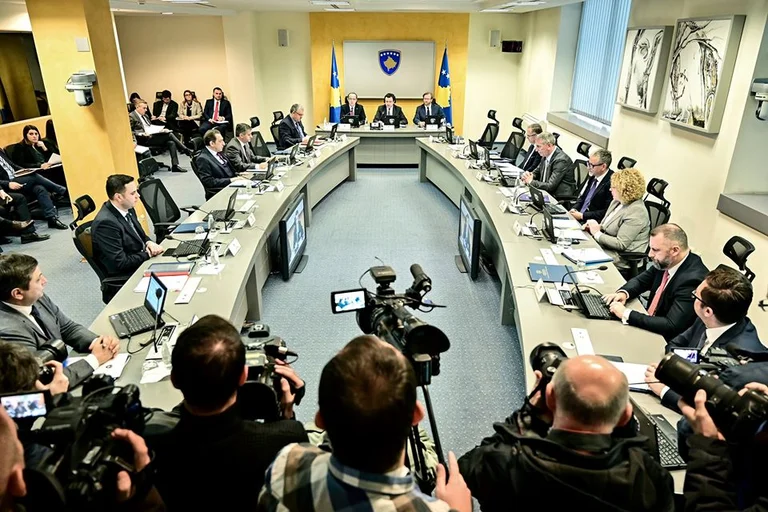
The coronary crisis contributed for the first time to the collapse of a national government Wednesday after a majority of lawmakers in Kosovo voted to oust the country's ruling coalition, following a political dispute that was partly linked to pandemic.
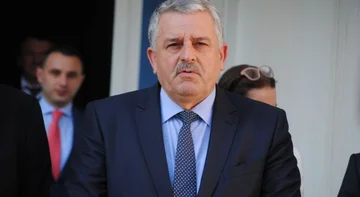
Prime Minister Albin Kurti's administration collapsed after his main coalition partners joined opposition parties in a no-confidence vote against their government, defeating Mr. Kurti by a vote of 82 to 32, the NY Times wrote.
Mr. Kurti remains the interim prime minister until a new government is formed. But his government's collapse leaves Kosovo without strong leadership, at a time when most other national governments are seeking to extend their powers to fight pandemic.
The vote was welcomed by the United States, whose diplomats have decided Mr. Kurti under great pressure since his government was sworn in last month due to his opposition to the aspects of an American peace agreement in the region.
But she was sentenced by France and Germany, who issued a joint statement criticising the ruthlessness of the collapse of a government during a pandemic.
Kosovo needs a stable and fully functioning government to deal with this crisis,” said in the statement.
The vote was partly the result of a recent dispute between Mr. party. Kurti and her new coalition partners on how to limit daily life in the country to about 1.8 million people in response to the corruption. More than 60 people in Kosovo have tested positive for the virus, and one person has died from it, according to the World Health Organisation.
To slow the spread of the virus, Mr. Kurti implemented restrictions on the movement of citizens this week but without adopting a state of emergency.
His coalition partners supported implementation of a state of emergency that would give greater power to Mr. Kurti, President Hashim Thaci, who usually plays a largely ceremonial role in Kosovo's political life.
To show their contempt for political clashes, Kosovars dropped pots and pans from their windows over the past few days. More than 10,000 also signed a petition condemning the initials in the no-confidence vote for a “lack of responsibility for public interest and civic welfare”.
The vote has also attracted attention to the administration's diplomacy of Trump in the Balkans.
Although the Coronavius was a major factor in its beginning, the vote of no-confidence against Mr. Kurti was also prompted by a much deeper dispute on how to resolve a decades-old stalemate between Kosovo and Serbia. The debate pitted Mr. Kurti, an old activist, against Mr. Thaci, former guerrilla leaders, as well as the Trump administration.
This is very clear as a consequence of the strong game Americans are now playing”, said Wolfgang Petritsch, a former European Union envoy to Kosovo.
An American-led bombing campaign helped free Kosovo from Serbian rule in 1999, but Balkan neighbours have never signed a final peace treaty.
Serbia has successfully lobbied in dozens of countries not to recognise Kosovo as a sovereign state, limiting Kosovo's ability to operate on the world stage. In return for revenge, Kosovo set large tariffs for Serbian goods; obligations have cost the Serbian economy at least 160m euros (about $175m), according to the GAP Institute, a Kosovo research group.
Before Mr. Kurt entered office, the Trump administration tried to conduct dialogue by mediating a deal between Mr. Thaci and Serbian President Aleksandar Vucic.
As a step in a final solution, the United States urged Kosovo to lift tariffs in a gesture of goodwill for the Serbian government. Hoping to reach a quick deal, American diplomats even discussed the once unthinkable idea of Kosovo's return parts to Serbia, alarming European leaders who feared the move could resurface ethnic conflict.
But after forming his coalition in February, Mr. Kurt immediately worked to slow down the process, putting it on track to confront Washington.
Amid fears that Mr Thaci may have secretly agreed to partition a part of Kosovo, Mr. Kurti used his constitutional right to lead negotiations instead of Mr. Thaci and keep the tariffs as a means to keep pressure on Serbia's government.
This is not a matter for our president and the president of Serbia that time has passed, said Mr. Kurti in an interview for The Times in Kosovo last month. Our “government, with me as prime minister, will lead the next dialogue between Kosovo and Serbia. Kosovo's president is a part of foreign policy, but he cannot create foreign policy. “
That attitude put Mr. Kurti in direct conflict with Mr. Thaci and Richard Greenell, who serves as a special American envoy on this issue, in addition to his roles as American Ambassador to Germany and the director of the National Intelligence task.
To force Mr. Kurti to lift tariffs, the United States froze millions of dollars in Kosovo's help. Donald Trump Jr., who has no official role of government, was also publicly hired by an American senator who suggested the withdrawal of American peacekeepers from the country. These comments terrified Kosovars, who see an American military presence as a vital guarantor of the country's security.
US pressure was specifically cited by former coalition partners of Mr. Kurti as another reason to withdraw from his government this week.
This is a type, as I should say,” Rambo “diplomacy,” said Mr. Petritsch, comparing American access to the protagonist of a popular American serial.
“As a collateral damage,” added Mr. Petritsch, the “ata will remove a democratically elected government. ”