6 hours ago
The Health Ministry official gives 10 reasons why we should not be panicking by the coronary
Periskopi(6 years ago)
(6 years ago)Kosovo has already been affected by the COVID-19 virus known as Coronavirus. So far the number of people affected by this virus in our country has reached 13. Faik Hoti of the Ministry of Health through a Facebook post has published ten reasons why this coronary should not panic. The first is [...]
Kosovo has already been affected by the COVID-19 virus known as Coronavirus. So far the number of people affected by this virus in our country has reached 13.
Faik Hoti of the Ministry of Health through a Facebook post has published ten reasons why this coronary should not panic.
The first is we know what the virus is in question, the second we know how to detect the virus, the third is that the situation in China is improving, over 80% of the cases are easy, people are healing and so on,
It's also important not to panic. It would be wrong to say that there is good news from COVID-19, but there is reason for optimism; reason to think there might be ways to contain and conquer the virus. There are also lessons to learn about the future”, wrote Hoti.
Full Posting:
Coronavirus: Ten Reasons You Should Not Fear
The rapid spread of the new coronary pandemic is a serious matter. In less than two months, the virus has spread over several continents. Pandem means sustainable and continuous transmission of the disease, simultaneously in more than three different geographic regions. Pandemia refers, not to the mortality of a virus, but to its transmitability and geographic alignment.
People are experiencing fear of pandemic. The entire media across the planet is covered by the topic of the Coronobrus. So far there is a deep concern and massive planning for the worst possible scenarios. And, of course, the consequences range from the global sphere of health to business and politics.
But it is also important not to panic. It would be wrong to say that there is good news from COVID-19, but there is reason for optimism; reason to think there might be ways to contain and conquer the virus. There are also lessons to learn about the future.
- We know what it is.
The first AIDS cases were described in June 1981 and took more than two years to identify the virus (HIV) that causes the disease. With COVIED-19, the first cases of heavy pneumonia were reported in China on December 31, 2019, and by January 7th the virus had already been identified. Genome was available on the 10th day.
We already know it's a new coronary from group 2B, with the same family as SARS, which we called SARSCoV2. The disease is called COVID-19. It's thought to have something to do with the coronary from the bats. Genetic tests have confirmed that it has a recent natural origin (between late November and early December) and that although viruses live by mutation, its mutation rate may not be too high.
- We already know how to detect the virus.
As of January 13th, the test is available to detect the virus.
- The situation is improving in China
Strong measures of control and isolation imposed by China are paying off. For a few weeks, the number of cases diagnosed each day is decreasing. A very detailed epidemiological escort is being carried out elsewhere; explosions are very specific for areas that can allow them to be controlled more easily.
4.
80% of cases are easy.
Disease does not cause symptoms or is easy in 81% of cases. Of course, at 14% it can cause serious pneumonia and 5% can become critical or even fatal. Still unclear is what the mortality rate may be. But it may be lower than some present estimates.
- People are healing
Much of the reported data has to do with increasing the number of confirmed cases and the death toll, but most infected persons recover. There are 13 times more cases of cure than death, and that ratio is increasing.
- The symptoms in children are easier
Only 3% of cases appear in persons under 20 years of age, and mortality under 40 is only 0.2%. Symptoms are so easy for children that they can go unnoticed.
- The virus can be cleaned
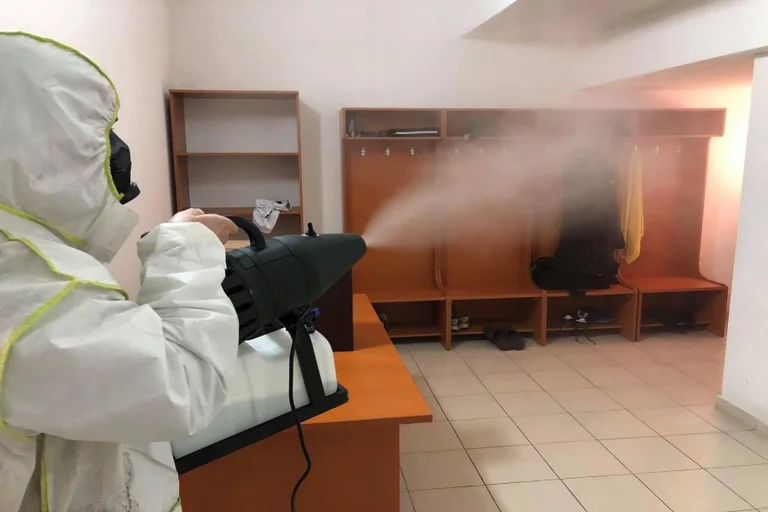
The virus can be effectively deactivated by surfaces with a solution to ethanol (62-71% alcohol), hydrogen peroxide (0, 5% hydrogen peroxide), or sodium hypocle (0.1% bleach), in just one minute. The frequent washing of hands with soap and water is the most effective way to avoid climbing.
- Science is researching it globally
It is already the age of international scientific co-operation. After approximately a month, 164 articles can be accessed in PubMed for COVID19 or SARSCov2, as well as many others available to the items that have not yet been reviewed. It's preliminary works on vaccines, treatments, epidemiology, genetics and philogenics, diagnosis, clinical aspects, etc.
These articles are written by some 700 authors, scattered throughout the planet. It's cooperative science, shared and open. In 2003, the SARS epidemic took more than a year to reach less than half of this number. Moreover, most scientific magazines have left their publications as open access to the topic of coronarys.
- Already there are prototypes of vaccines
Our ability to create new vaccines is remarkable. More than eight projects are currently under way, seeking a vaccine against the new coronary. There are groups working on the vaccine projects against similar viruses.
The Queensland University vaccine group in Australia has announced that it is already working on a prototype using the technique called <x0 capepe molecular”, a new technology. This is just one example that can allow the production of vaccines in record time. Protoipes can soon be tested on humans.
- Antiviral tests are under way
The vaccines are preventative.
For now, treating people who are sick is important. There are already more than 80 clinical trials that analyze coronary treatments. These are antivirals used for other infections that have already been approved and known to be safe.
One of the ones that has already been tested in humans is the remdesivirier, an antiviral still under study that has been tested against Ebola and SARS / MERCS.
Another product is chloroquin, an antimalatic that is also seen as having a powerful antivirus activity. It is known that chloroxine blocks viral infection by increasing the pH of endosome, which is necessary for the melting of the virus with the cell, thus preventing its entry. It has been demonstrated that this compound blocks the new coronary in vitro and is already being used in coronary pneumonia patients.
Other proposed tests are based on the use of orltamivi (used against the flu virus), interferron-1b (antiviral function), antiserra by persons who recovered or monoclonal antibodies to neutralise the virus. New therapies have been proposed by restraining substances, such as barctinibine, chosen by artificial intelligence (selcted by artificial intelligence).
The 1918 flu pandemic caused more than 25 million deaths in less than 25 weeks.
Could something similar happen now? Surely NO; we were never better prepared to fight a pandemic.
(Translating by Dr. Queen Turjaca)