11 minutes ago
Golden Dawn: How did one nationalist and violent party manage to drive Greece all around?
Periskopi(6 years ago)
(6 years ago)Periscope has translated the following article from The Guardian, with the original title “Golden Dawn: the rese and fall of Greece's neo-nazis” [q. Golden Dawn: Greece's rise and fall neo-Nazis. After slaughtering Pavlos Füssas in the chest, letting him die of bleeding, Giogios Roupazias [...]
After slaughtering Pavlos Füssas in his chest, leaving him to die of bloodbath, Giogios Roupatas quietly returned to his car and waited to be arrested. Don't forget me. I'm one of you,” he said, according to a police official at the scene.
What do you mean, are you a cop?
No, I'm Golden Dawn. ”
Roupakias, a driver of an unemployed truck, would later claim that he committed the murder in self - defense. He said he had simply been caught in a regular street fight in the Greek town of Piraeus [Piraeus], shortly after midnight on September 18, 2013. What he had said to the police officer, who was heard by numerous witnesses, actually suggested everything else. Golden Dawn was a neo-Nazi party that was strongly established after Greece's economic crisis. The party had passed by the country's 20 thousand-level victory in 2009 to 7 per cent of the vote, and to 18 parliamentary seats in 2012. No fascist party in Europe had achieved such great success in general elections for years.

Party chairman
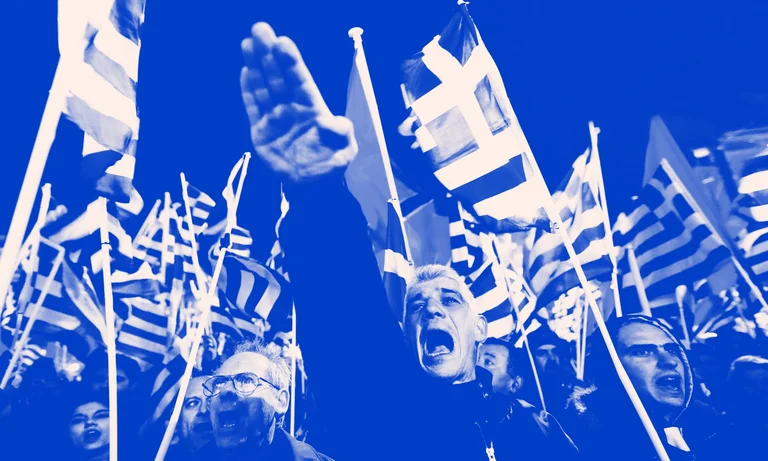
Although members of Golden Dawn played the game of moderate politics, they were not just extreme right-right populists; they were the type of Nazis you could read about in history books. Stirred by deep racism and conspiracy antisemitic theories, with great worship for Hitler, Golden Dawn combined street violence with big protests with flag waves and extreme rhetoric. One of the MPs from this party had promoted civil war “to a BBC rapporteur, while a candidate had promised ahead of a documentary team for a “coming to the gas rooms” for immigrants as reference to what Nazi Germans had done to Jews, Roma communities and other minorities during the Holocaust. “Europe of nations has returned,” had declared party leader Nikolaos Michaloliakos at a press conference in May 2012. “Greece is just the beginning. ”
In the years leading up to the election success of Golden Dawn, its political officers were intimated, beaten, and, in some cases, almost killed. Once party candidates had entered parliament, this type of verbal violence only seemed to increase. Party activists like Roupazias seemed to believe they were tolerated, even supported, in their actions in Greece. But that night's events in September 2013 changed everything.
On the evening of September 17th, three Golden Dawn supporters were watching football at a bar in Keratsini, a local area in Piraeus, when they saw Fussas, the 34-year-old rapper in a nightclub with his friends. Fussas, whose name was Skanic Killah P, was known as a hip-hop promoter and anti-racism activist with a support in Greek working class youth. The Golden Dawn Three began making phone calls; wiretapping showed that communications went up to the top of the party hierarchy.
At 11:28 p.m., wiretaps indicated that a telephone message was sent by the telephone allegedly belonged to Giorgos Patelis, the leader of the Golden Dawn branch in Nicaia, to dozens of different contacts: “All gather at local offices. Whoever's close. We won't wait for those far away. Now.” Roupacas, who had been home watching TV, was one of the people who responded. Just before midnight, a crowd of Golden Dawn supporters with motorcycles, with Roupacaias following them in his car, arrived at Keratsin. Witnesses saw the Golden Dawn group before threatening Füssas and his friends to follow a corner and then to the main street, Tsaldari Avenue. As his friends fled, Füssas stopped and faced his attackers, who quickly backed him against the wall.
The images showed what happened next. As Füssa was attacked by groups of men in pairs and three, in a coordinated form, the car driving from Roupazias stopped. He goes out to her, approaches the Fussians and, as he embraces her, gives him the fatal blow. Doctors who had treated Füssas later said his slaughter looked like a “professional blow”.
Earlier in 2013, two men associated with Golden Dawn had stabbed him, killing a Pakistani man on the streets of Athens. That murder was not even mentioned in Greek media, let alone international. The murder of Füssas, however, made headlines worldwide.
The murder investment soon became an investigation into Golden Dawn itself, and the result was a major criminal judgment of the Nazis since Nuremberg, according to lawyers representing some of the victims of Golden Dawn. More than six years later, the trial is only now reaching its end. 68 people are charged with running or belonging to a criminal organization. The defenders, who include the entire Golden Dawn leadership and all their former deputies, are being charged with other criminal activities as tribute, attempted murder, weapon posts. Everyone has denied these accusations.
In the last general election, Golden Dawn lost in the general election. Most of the media already follow the judgments only Sporaticly. According to a political centrit commentator, Yannis Palaiologos, Greece now has the opportunity to draw the border of both the left and right-wing populism, but also the political right-wing.
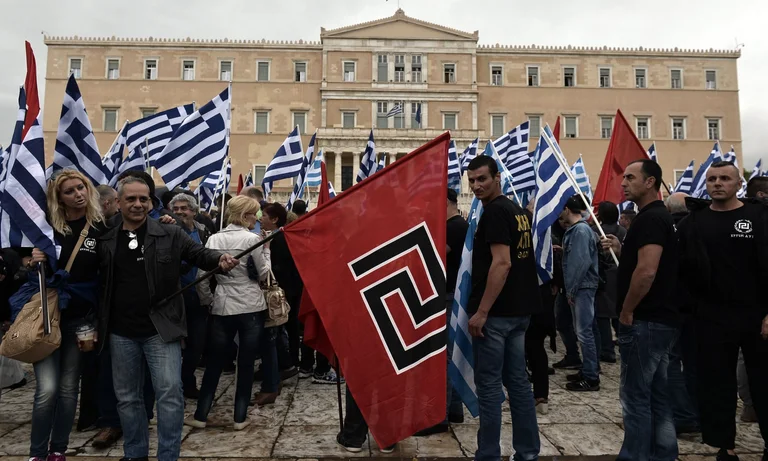
Greece's political and media class, however, was divided over the way Golden Dawn should be treated, since the Greek constitution did not allow the ban of political parties. When in late 2013 parliament had voted to suspend state funds for the party and lift its deputies from criminal persecution, this move had been rejected by a minority leftist, one of whom argued that Golden Dawn “was not a classic Nazi party”, as it had put itself against “dominated the debt. ”
However, Golden Dawn had won 17 out of 18 seats in the Greek Parliament even in the January 2015 general elections. These elections were won by Syriza, who had formed a coalition between the left and the right.
Fascism, more than any other political current, is a struggle over memory as much as it is for the present. Fageism seeks to colonize our identity and belonging myths, to turn them into its own destructive purposes. They start by promising to clean up your neighborhood, your town or even your country. You say that the nation is for you, and only for people like you and that their violence will only be directed to people who don't matter: strangers, foreigners, inferiors. But there is no end. /The Guardian/Periscope