The diaspora vote count is continuing, VV achieves the 53rd term, PDK remains at 22, LDK falls to 18
 4 hours ago
 (6 years ago)
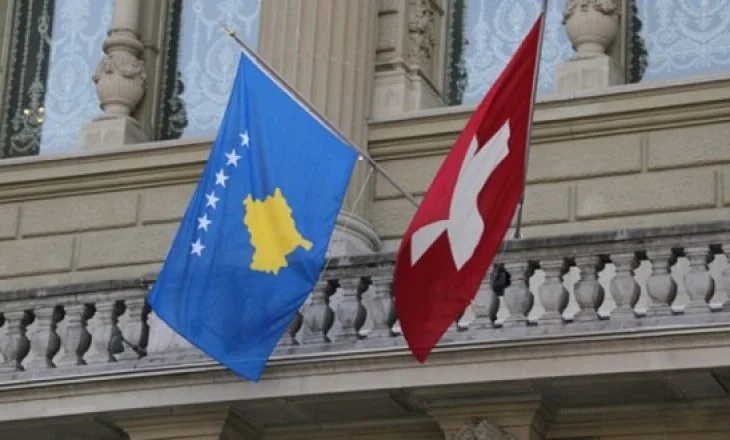
By the end of 2019, there were 2 million and 111 million foreigners in Switzerland. Of this number, 323,683 are citizens of Italy, 309,388 from Germany, 262,926 from Portugal, 139,646 from France, and 113,800 from Kosovo in 2019, migration to Switzerland has been without any major change compared to [...]
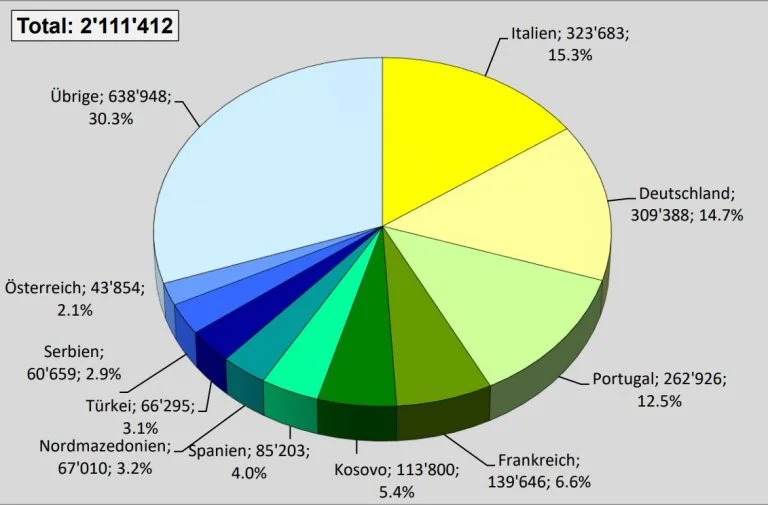
By the end of 2019, there were 2 million and 111 million foreigners in Switzerland. Of this number, 323,683 are citizens of Italy, 309,388 from Germany, 262,926 from Portugal, 139,646 from France, and 113,800 from Kosovo
In 2019, migration to Switzerland has been without any significant change compared to 2018 (+ 0.3%). With 5,000 people, the migration balance has also been approximately at the level of a year ago (+ 0.5%). Imigration of EU Citizens / EFTA has increased by 1.3 percent, while that of citizens of third countries has dropped by 1.8 percent. At the end of December 2019, 2 million of 1112 foreigners lived in Switzerland, said a communiqué of the Federal Bureau for Statistics (BFS).
In 2019, 140 554 persons had migrated to Switzerland, 467 more than in a year earlier (+ 0.3%). Of them, 97 556 people (+1264) have emigrated from EU or EFTA states, while 42 998 people from third countries receive albinfo.ch. At the same time, 79 973 foreign nationals have left Switzerland. As a result, migration has dropped by 1 percent over a year ago.
The migration balance of the permanent foreign population has been 55,017 people. This corresponds to a total increase of 254 persons (+ 0.5%) compared to the end of December 2018. The migration balance in terms of EU member states and EFTA was 31.965 people (+1085; + 3.5%). This increase is largely marked because of permits for workers from Romania and Bulgaria, albinfo writes. Ringinging to the communique mentioned. Citizens of these two EU countries have enjoyed full freedom of movement only beginning on June 1st, 2019. Meanwhile, the migration balance for third-nation citizens has dropped by 3.5 percent.
The main reasons for immigration, both short and long - term, remains employment in Switzerland. Some 78 percent of foreigners have emigrated to Switzerland from the EU /EFTA to work: 23 percent in the consulting and technology sector, 22 percent in the hotel and tourism branch, and 15 percent in the industrial sector and construction. The number of foreign workers has increased by 1.9 percent compared to the end of 2018.
In 2019 the family reunion was 29 percent of long - term immigration cases, writes albinfo.ch. In Switzerland, for the purpose of family reunion, 40,197 foreigners, 20 percent of whom were members of a Swiss citizen.
At the end of December 2019, 2 million and 111 foreigners in Switzerland lived in Switzerland. Of this number, 323.683 are citizens of Italy, 309,388 from Germany, 262,926 from Portugal, 139,646 from France, and 113,800 from Kosovo. A year earlier, the number of Kosovo citizens in Switzerland had been 113 thousand 482 or 5.4 percent of foreigners, writes albinfo.ch. That same percentage, (5.4%) according to the Federal Bureau for Statistics Kosovars, arrives at the end of 2019. The increase in the number of Kosovo citizens over a year resulted in a total of about 300 people.
The statistics mentioned say that by the end of 2019, over 67 thousand Macedonian citizens lived in Switzerland, making up 3,2% of all foreigners. As it is known, the vast majority of them are of Albanian ethnicity. But, as in the case of Kosovo citizens, Switzerland's official statistics do not refer to ethnicity, but to state affiliation.
 6 hours ago

 8 hours ago