7 hours ago
Special Denying KLA leaders to see family members during detention at The Hague

Periskopi(6 years ago)
(6 years ago)No one can visit physically in The Hague's detention former KLA leaders who are being charged by the Special Court. The specialist has shown why and how she is compensated for the absence of visits from family and relatives. Former political and military leaders of the Kosovo Liberation Army being held in the custody of the Court [...]
No one can visit physically in The Hague's detention former KLA leaders who are being charged by the Special Court. The specialist has shown why and how she is compensated for the absence of visits from family and relatives.
Former political and military leaders of the Kosovo Liberation Army, which are being held in custody of the Special Court in The Hague, can currently contact their family and relatives only through video calls.
The Special Court has indicated that currently family members of those being charged and held in custody at The Hague cannot be physically visited by anyone. The expert says she pays the detainees a reasonable portion of the phone calls.
“generally, personal visits to the detention institution are currently not possible due to measures related to COVID-19. Instead, to facilitate regular contact with family and loved ones, The DHSK facilitates meetings through video connections and pays for a reasonable number of phone calls for arresting”, Special spokeswoman Angela Grieep told Gazeta Express.
Seven former political and military leaders of the Kosovo Liberation Army (UÇK) are being charged with a series of works, out of those of fear of witnesses weighing down on the former heads of the War Veterans Organisation and the murders and cruel treatment of people that former KLA leaders such as Hashim Thaci, Kadri Veselin, Jakup Krasniqi, Rexhepi and Salih Mustafa are accused.
The Special Court's detention facility is located at the Haagladen prison complex in The Hague. This prison is unique in the Netherlands, and the only one in which there are 24 hours of physical and psychiatric treatment services offered for detainees. Haagladen is located in Scheveningen and can accommodate about 200 people.
According to Haagladen Prison's internal rules, visits to the target are usually an hour a week.
Treatment in detention where former KLA leaders are being held
There are also several health centers in this detention, where to get in and out of them, some checks must be passed that begin through the biometric scan of the finger.
But for the treatment they are making to Special Court security members had complained in their first statements to the two former KLA leaders, former President Hashim Thaci and former Prime Minister Jakup Krasniqi.
While the head of the Vetevendosje Movement Parliamentary Group, Rexhep Selimi, in his first appearance before the Special Court had no remarks on dealing with him. Unlike his two former fighters, Selimi had said he understands the rules and no remarks in this regard.
I understand the rules to come all the way here, so there's nothing I can point out as warning”, Selimi had declared.
Unlike Selimi, Krasniqi, who was first presented to the Special by the four former KLA leaders involved in a joint indictment, had expressed outrage at the treatment he received. He said he never treated anyone that way himself.
I want to declare today that never in my life, in no single case have I treated people as much as you treated me from the prison building to this building. I stress, never in my life have I treated people this way”, Krasniqi had declared.
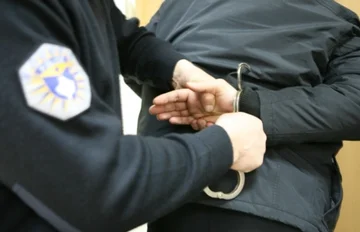
While David Hooper, lawyer for former President Hashim Thaci, had expressed concern over his client's reputation, while he had labelled Thaci's transfer with handcuffs to his hands from the detention facility to the courtroom.
“I hope that in time this person's reputation will be restored. It was a shame to see him in handcuffs”, attorney Hooper said.
The Special Court had argued the behaviour of security members of this institution in relation to the two former KLA leaders, saying they follow the highest international standards for dealing with the detainees.
The Specialised Chambers apply and rely on the highest international standards in the detention institution, as well as on transportation from the detention institution to the courtroom and vice versa. A series of safeguard clauses are set for this purpose, including internal and external supervision by the International Committee of the Red Cross (ICRC) and the Ombudsman of Specialised Chambers. Moreover, at any time the defender of an accused has the right to present statements to complain about arrest or detention”, the Special Court's response said.