The diaspora vote count is continuing, VV achieves the 53rd term, PDK remains at 22, LDK falls to 18
 an hour ago
 (6 years ago)
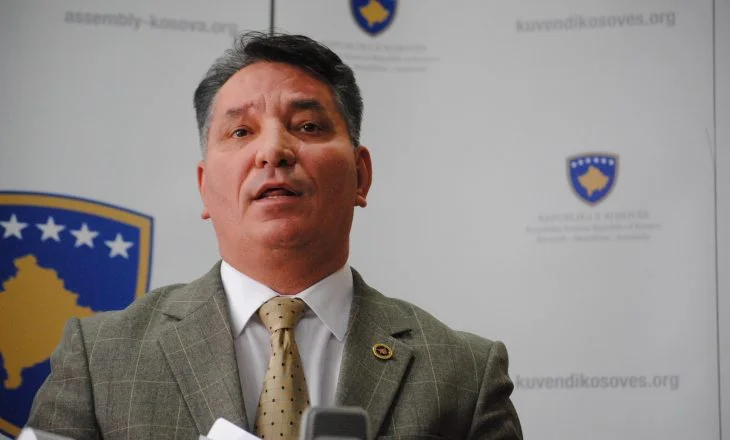
The agreement, aimed at reopening the Pristina-Belgrade airline, signed at the US Embassy in Berlin, is considered defacto as Serbia's recognition of Kosovo. Acting Minister of Infrastructure Pal Lekaj, in an interview for Online Economy, has called it a good event for both countries. He has said this [...]
The agreement, aimed at reopening the Pristina-Belgrade airline, signed at the US Embassy in Berlin, is considered defacto as Serbia's recognition of Kosovo.
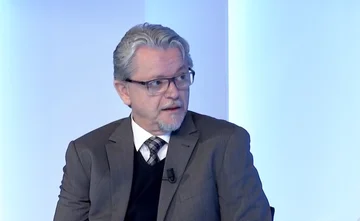
Acting Minister of Infrastructure Pal Lekaj, in an interview for Online Economy, has called it a good event for both countries.
He has said that this agreement is the approach of the final agreement between Kosovo and Serbia, so that dialogue can be completed and finalised with mutual recognition.
The “is a first step of alignment and a final agreement on airspace and the binding of corridors because we have every time insisted that Kosovo get the competencies for airspace. Based on this, we've just taken the first step of alignment and it's a very good event for the two countries”.
The “is, however, a step forward for a final agreement between two states, and I think this is a push for this process to be finalised with mutual recognition. Yes, because after 21 years, we have an agreement between two states that you know so far has not recognised our ethnicity or the authority of Pristina Airport and after 21 years, Serbia recognises Kosovo as a state, and that is a historic agreement. This agreement also draws together knowledge between the two posts. When I say that, because Serbia has recognised the reality created and Pristina Airport as part of Kosovo and not as part of Serbia as aloduar”, Lekaj has said.
Lekaj has said that from this agreement Kosovo benefits in two dimensions, that of time-producing and lowering ticket prices.
“What I can say is an approach to resolving the issue of airspace because if we agree in the near future, Kosovo benefits in many dimensions. If we take advantage of the right to violate Serbia's airspace as a state of Kosovo, the distance is reduced by 20-30 minutes, and that this has a positive impact even on lowering ticket prices and therefore citizens benefit in time and prices, and in no way is a unilateral interest but benefits Kosovo citizens”, Lekaj said.
According to him, Serbia has recognised Pristina Airport as part of Kosovo and not as part of Serbia.
“Yes, because after 21 years, we have an agreement between two states that you know so far has not recognised our ethnicity or the authority of Pristina Airport, and after 21 years, Serbia can recognise Kosovo as a state, and that is a historic agreement. This agreement also draws together knowledge between two countries. When I say this, because Serbia has known the reality created and Pristina Airport as part of Kosovo and ko as part of Serbia as aloduar”.
Lekaj has said that this relationship is only for the Pristina-Belgrade line and vice versa, not for other countries.
He has said that on this agreement, if travellers travel to this relationship, then the state of Serbia must recognise the passports of the Republic of Kosovo.
The agreement was signed at the US Embassy in Berlin, by State Secretary in the Serbian Ministry of Economy Milun Trivunh and Eset Berisha director of the Kosovo Civil Aviation Authority. At the signing ceremony, the US ambassador to Berlin, Richard Green, who is also President Donald Trump's special envoy for the Kosovo-Serbia talks, as well as American National Security Adviser Robert O'Brien.
Pristina-Belgrade flights and vice versa will be realised by the German company “Lufthansa”
 3 hours ago

 5 hours ago