3 days ago
Do you know where the colors are coming from?
Periskopi(6 years ago)
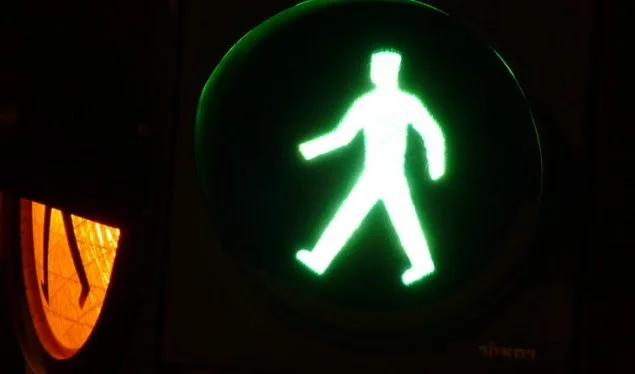
(6 years ago)Red, yellow, green that's why these colors are used in traffic lights around the world. Throughout the country, traffic lights help maintain the order by signaling when it is time to stop (red), slow down, or keep moving. According to the Mental Flos Web site, the lights stem from railway systems [...]
Throughout the country, traffic lights help maintain the order by signaling when it is time to stop (red), slow down, or keep moving.
According to the Mental Flos Web site, the lights stem from railway systems since the early 19th century. Train engineers needed a way to know when to stop the locomotives, and when it slowed down, KosovoPress broadcasts.
Red has been chosen to stop because most people associate it with something potentially dangerous or serious. More important, the red has the longest wave in the color spectrum, and it can be seen from longer distances, enabling drivers to start braking early.
White light was used to allow the train to go, and green light was careful.
Because both lamps had a colored filter, there would be confusion if one of the lens fell, revealing white light. For example, if the red filter was damaged, the driver would see a white light and think it was safe to go, and it wasn't.
To avoid this problem, white was eliminated, yellow was careful, and green showed it was safe to pass.
When “system breaks”
The first traffic light actually took place in London in 1868. It was actually a gas lamp system, so it was not long before everything exploded.
When Ford Model T was introduced in 1913, there were more than 4,000 victims on the road, mainly because of fights at intersections.
Only until 1920 when a Detroit police officer named William Potts proposed a three - color system of red, yellow, and green.
Because the same colors were not used everywhere, the United States made them red, yellow, and obligatory green in 1935.