an hour ago
Attention! Hygienic paper doesn't save you from bacteria, it's their number 1 source.
Periskopi(6 years ago)
(6 years ago)Using a public toilet is not a clean and pleasant experience. But when you feel uncomfortable, you need to go to one. But to do that, we often cover the toilet with toilet paper to prevent germs from entering our skin. Well, [...]
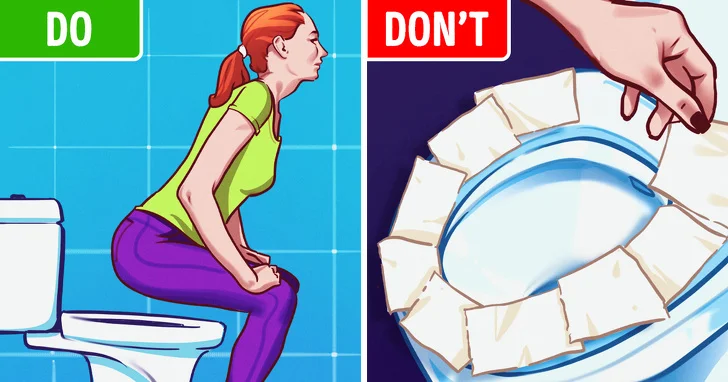
Using a public toilet is not a clean and pleasant experience. But when you feel uncomfortable, you need to go to one. But to do that, we often cover the toilet with toilet paper to prevent germs from entering our skin. Well, some research suggests this may not be the best way.
We need to find out the truth about the safety and purity of the toilet.
There are bacteria everywhere
Every time we go to the toilet, fecal bacteria enter the air before being placed in all objects near the toilet. You can find bacteria in the bathroom itself, toilet walls, and even toilet paper. The paper absorbs moisture very well and is an excellent environment for bacteria to breed. So when you cover the toilet with toilet paper before you sit on it, you're just covering an area that is contaminated with an even more contaminated material.
In some public baths, toilet scrolls are covered with a plastic shield that protects them from bacteria.
The toilets aren't as dirty as we thought.
Surprisingly, the toilet jar is not the most unclean place in a bathroom. A microbiologist named Charles Gerba believes that the most affected surfaces represent the highest threat. For example, people are more likely to touch door handles, sinks, and scrolls of toilet paper with their bare hands, placing additional germs. As for toilets, they rarely come in direct contact with our skin or some other part of our body, and many people also wipe them out with a napkin before they use it.
Placing toilet paper won't help
The use of toilet paper placed in the toilet jar will not diminish your chances of being contaminated. The letter does not serve as a protective layer because it has already been contaminated with the same germs. Instead, you can keep hygienic tissue and use it to cover the toilet site to potentially reduce the number of bacteria that come in contact with your skin. If they are not in your hands, it may be best not to touch your seat at all.
It's very hard to get bacteria from the toilet.
True, toilets are full of bacteria, but you don't have to be paranoid. If your immune system is healthy and strong and you follow simple hygiene rules, there are very little chance of getting anything. Most viruses and bacteria can survive in the toilet area only for a short period of time. Moreover, there is only the risk of infection if bacteria somehow enter your uretral or genius leaflet. If you have damaged skin in your buttocks or thighs, germs can be introduced that way, but that too is quite impossible.
How to Use a Public Bathing Safely
As we said, it's very difficult to get a bacteria in a public bathroom if you follow simple hygienic rules:
The most important thing to remember is to wash your hands properly. Just washing hands with water won't cheat. You should use soap and wash your hands for about 20 30 seconds. If there's no soap, at least use your hand stanitizer.
After washing your hands, don't touch your tap. Use a napkin or a piece of toilet paper to prevent the return of germs into your hands.
Do not put things on the floor or near the sink. It's better if someone can keep them for you while you wait outside.
If possible, avoid touching anything in the bathroom with your hands and never touch your face, eyes, or nose before you wash them.
Never touch your face, eyes, or nose before you wash them.