The diaspora vote count is continuing, VV achieves the 53rd term, PDK remains at 22, LDK falls to 18
 8 hours ago
 (6 years ago)
Hussan Osman, 25-year-old from Syria, has managed to enter Kosovo on Friday morning illegally from Albania. He was later detained by Kosovo Police and after an interview, sent to the asylum centre in the village of Vranidol in Pristina municipality. He says to come to Kosovo he had [...]
He says he had paid an Albanian for coming to Kosovo with 200 euros, who has shown an illegal mountain route to Kosovo. Osman in Albania had spent 3 days, until he was out of the asylum camp in Greece, where he had been sheltered in advance, he had paid 1,000 euros.
I have fled Syria because of the war. I first went to Turkey and then to Greece, Albania and now to Kosovo. I want to go to Switzerland, help my family and take my family to Switzerland”, Osman says.
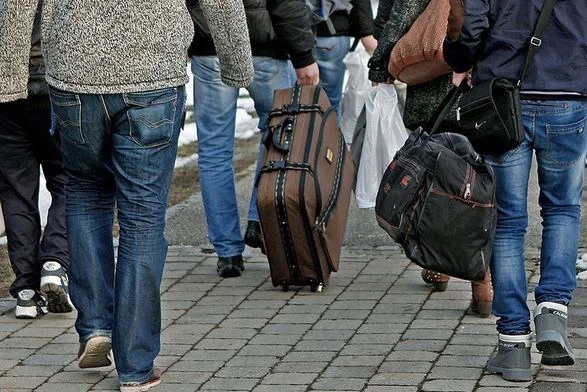
More than 300 people, mainly from Syria, have entered Kosovo illegally during January 2020 and have sought asylum. Kosovo institutions say they have accepted and provided the necessary conditions for all those persons who have sought to stay in Kosovo.
Valon Krasniqi, director of the Department of State, Asylum and Migration, says that at the beginning of this year, there has been a trend of increased asylum seekers compared to the past two years.
As in 2019, even this year the Syrians dominate, the largest number is from Syria or about 60 percent. We have asylum requirements, as well as other citizens from Algeria, Morocco, the Palestinian Authority, Iraq, then we have Iran and other countries”, Krasniqi suggests.
It shows that most of these persons have illegally entered from Albania's territory related to Kosovo.
The “is being used what is called the Western Balkan route from Greece to Albania, Montenegro towards Bosnia and Herzegovina. This is the main road that immigrants cross. A large part of them, even last year, are exploiting Kosovo. They entered from Greece to Albania and later from Albania to Kosovo”, Krasniqi stressed.
Mustafa Anis, a 22-year-old, is another asylum seekers coming from the Palestinian Authority. It has been four days since Anice is staying in Kosovo, but does not plan to stay long. He says that at the first opportunity to be given, he will head towards Serbia for his favourite country, Germany, even though there is no kind of travel documents.
I want to go to Germany, my brother and sister are in Germany. From Serbia to Hungary and then to Germany. I don't know how, I'm going in a bus or a taxi, I don't know”, he says.
In contrast, Ammar Bero, 30, says he has fled his country, Syria, for more than six months, from one country to another. He has been in Kosovo for three days. To come to Kosovo from Albania, it was forced to stay awake two nights during which it has travelled. He too has the goal of the state of Germany, but how he will get there, I do not know.
“I want to go to Germany, my family is in Syria, there I left a two-year-old girl”, Bero relates.
Interior Ministry officials say that Kosovo, as well as other countries in the region, is being used by migrants as a transitor country to move later to other destination countries.
The area where most migrants have been caught entering Kosovo's territory is the green area in Vremica, the village in the Prizren municipality, near the Kosovo-Albanian border crossing.
The average time of a asylum seeker's stay in Kosovo has been 12 days to 14 days”, says Valon Krasniqi.
According to data from the ministry, asylum seekers when they want to leave Kosovo, initially as a destination have Serbia, where they continue towards developed European countries.
Kosovo institutions, years ago, have arranged a centre for asylum seekers with a capacity for 100 people in the village of Magure in the Lipjan municipality.
But because of increasing the number of asylum seekers, another centre for immigrants in the Pristina municipality's village of Vranidol has opened last year, where about 100 people are currently standing.
The centre has sufficient capacity for the current number, but with the rise and number of asylum seekers, it can be overcrowd.
Fitim Zariqi, director of the Centre for Asylum in the village of Lipjan and already open at Vranidol, tells REL that as the number of asylum seekers increases, efforts to manage the situation are also increasing.
So far we don't have a lot of trouble, we're in order to manage all the other objects that are, except for the asylum center in Magur. Now the number has grown and is continuing to grow”, Zariqi says.
The executive director of the Council for Protection of Freedoms and Human Rights in Kosovo, Behxhet Shala, says conditions at asylum seekers' centres in Kosovo are good, and asylum seekers are well treated.
Kosovo's “options, asylum seekers treat better than all other countries. There are no cases when strength is used against them, as has happened in Bosnia, Montenegro, Croatia and other countries, so they are treated and as long as they stay here they have no problem”, Shala says.
Migrants or asylum seekers after receiving an ID, they have the right to remain in Kosovo free until a legal decision on their status.
They, during this time, can move free across Kosovo from 7am to 22 p.m.
According to statistics, in 2018, asylum in Kosovo has required 600 people. In 2019, 2,100 people, and now in 2020 [only in January] more than 300 people.
 10 hours ago


 12 hours ago